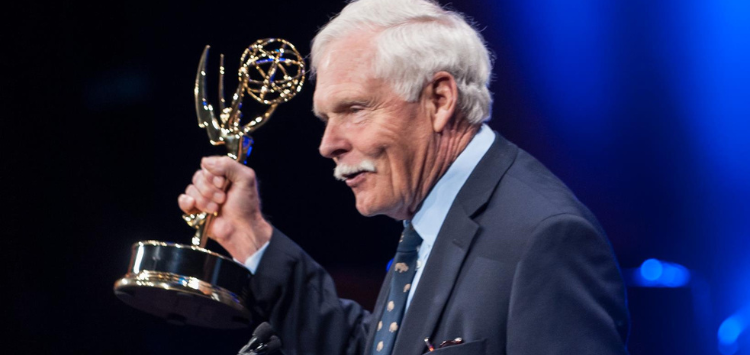
Ted Turner, the media mogul who founded CNN and pioneered the 24-hour news cycle, has died at the age of 87. Turner passed away on Wednesday at his home near Tallahassee, Florida, according to a family spokesperson.
Phillip Evans, speaking on behalf of the family, confirmed Turner’s death. Turner had publicly disclosed in 2018 that he was living with Lewy body dementia, a progressive condition that affects cognitive function and movement.
Turner’s death marks the passing of a figure widely credited with reshaping television news and building one of the most influential media empires of the late 20th century.
A New Era of Television News
Turner launched CNN in 1980, introducing continuous news coverage at a time when most television networks aired only scheduled bulletins. The concept was initially viewed as risky, but it gained traction as audiences turned to the network for live updates during major global events.
CNN’s model of round-the-clock reporting changed how news was delivered and consumed. It also pushed competing networks to expand their own coverage, setting a new standard that continues to influence both broadcast and digital journalism.
Turner later expanded the CNN brand with additional channels, including CNN Headline News and CNN International, extending its reach to global audiences.
Building a Media and Entertainment Empire
Beyond news, Turner developed a broad portfolio of media assets under Turner Broadcasting System. He established TBS as a national “superstation,” bringing sports and entertainment programming to audiences across the United States. He also launched TNT, another major cable network.
Also Read: Why Trump Is Clashing With CNN Over Iran and Control of the War Story
In 1985, Turner acquired a large film library from MGM, which later became the foundation for Turner Classic Movies. He also purchased the Hanna-Barbera catalog, using it to create Cartoon Network in 1992.
His business expanded further in 1996 when Turner Broadcasting merged with Time Warner, forming one of the largest media companies at the time. The merger reflected a broader trend toward consolidation in the media industry.
Sports, Sailing, and Public Life
Turner’s interests extended beyond broadcasting. He owned the Atlanta Braves baseball team and used his television platforms to increase its national visibility. His approach helped turn the Braves into a widely recognized franchise.
He was also active in competitive sailing, captaining the winning yacht in the 1977 America’s Cup. In later years, Turner became known for his philanthropic work, particularly in environmental conservation and global initiatives.
Despite stepping back from day-to-day business operations, Turner remained a prominent public figure, often speaking about media, politics, and environmental issues.
Also Read: CNN Reporter Detained by LA Riot Police During a Live Coverage
Health and Final Years
Turner revealed his diagnosis of Lewy body dementia in 2018, bringing attention to a condition that is less widely known than other forms of dementia. The disease can cause memory problems, confusion, and changes in behavior.
According to his family, Turner spent his final years largely out of the public eye. His death has renewed attention to the condition and its impact on patients and families.
Turner’s legacy is closely tied to how modern audiences consume information. The 24-hour news cycle he introduced continues to shape media coverage, influencing television networks, online platforms, and social media.
His model of continuous reporting has influenced how political developments are covered, including during the administration of Donald Trump, in which real-time updates and rapid analysis have become central to public communication.