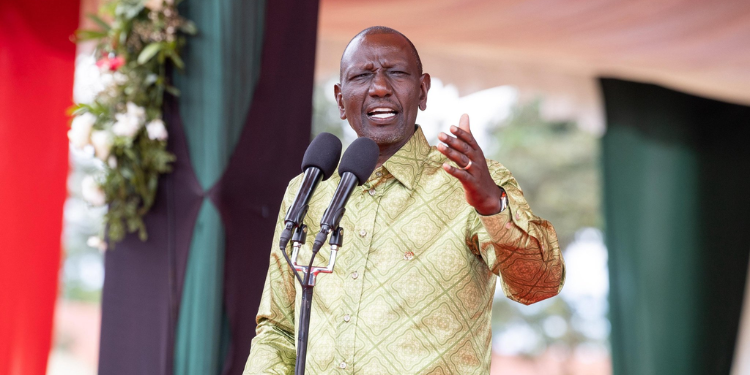

The Energy and Petroleum Regulatory Authority (EPRA) Director General, Daniel Kiptoo, Energy and Petroleum Regulatory Authority (EPRA) Director General, Daniel Kiptoo and Petroleum Principal Secretary Mohamed Liban, and Kenya Pipeline Company (KPC) Managing Director Joe Sang have officially resigned.
In an announcement by the Executive Office of President William Ruto on April 4, the three officials resigned amid allegations of irregularities in the petroleum supply chain.
“His Excellency the President has received the resignation of Mr Mohamed Liban, Principal Secretary, State Department for Petroleum; The Board of the Kenya Pipeline Company PLC (KPC PLC) has received the resignation of Mr Joe Sang as Managing Director; The Board of the Energy and Petroleum Regulatory Authority (EPRA) has received the resignation of Mr Daniel Kiptoo Bargoria,” read part of the announcement.
Further, the order signed by Chief of Staff Felix Koskei indicated that the State Department for Petroleum has taken administrative action against Deputy Director of Petroleum Joseph Wafula, while the Kenya Pipeline Company has commenced due process against Joel Mburu, Supply and Logistics Manager.
Investigative agencies, on the other hand, shall continue their inquiries to ensure full accountability.
The government reaffirmed its commitment to protecting national interests and safeguarding the public good, warning that any acts of economic sabotage will be thoroughly investigated and met with decisive action against those found culpable.
Additional updates will be provided as investigations progress, including administrative measures to ensure accountability, such as reversing irregular fuel shipment requisitions and aligning them with the contracted G2G framework.
Also Read: Energy PS, EPRA Chief, and KPC Director Resign
Govt Explains Why Energy PS, EPRA Boss, and KPC Director
Ruto noted that their arrests followed after a government inquiry into the procurement of an emergency fuel shipment that was allegedly obtained in breach of the Government-to-Government (G2G) fuel supply framework, at inflated prices and of substandard quality.
In the order, the president reiterated that such actions constitute to serious breaches of public trust and may amount to economic crimes under the Anti-Corruption and Economic Crimes Act and the Penal Code.
Investigative agencies have been tasked with a comprehensive inquiry, with all governance actors required to provide full access to relevant information to ensure accountability.
Ruto added that Kenya entered the G-to-G fuel supply arrangement in 2023 to stabilize the market, cushion against global price volatility, and mitigate foreign exchange constraints.
Since its inception, the arrangement has maintained relatively stable fuel availability and consistent pump prices, despite global disruptions in the Middle East.
Also Read: How Two Petrol Shipments Imported Outside G-to-G Entered Kenyan Market
How the Fuel Was Flagged
Earlier, Business Daily reported that the three officials were linked to two fuel shipments imported outside the Government-to-Government (G2G) framework, which were found to contain substandard fuel.
Further, it noted that last month the shipments were supplied by One Petroleum and Oryx, each delivering about 60 tonnes of petrol.
One of the shipments was sold at USD 290 (approximately KSh37,690) per tonne, more than three times the USD 84 (approximately KSh10,917.48) per tonne under the G-to-G deal.