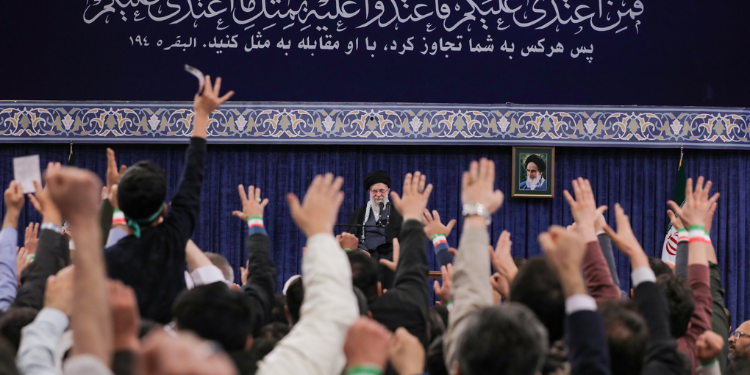
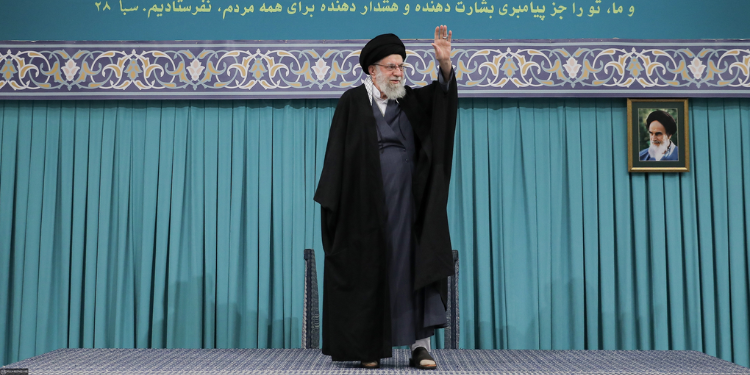
Iran has finally confirmed that its Supreme Leader, Ayatollah Ali Khamenei, is dead. Iranian state TV on March 1, 2026, confirmed that the longtime Iranian leader died following airstrikes during the escalating conflict involving Tehran, the United States and Israel.
The announcement marks the first official confirmation from Iranian authorities after hours of conflicting reports about Khamenei’s fate following strikes that targeted key locations in Tehran.
In a tearful address, a state TV presenter, while announcing Khamenei’s death, said the country will enter 40 days of mourning.
The presenter previously read a statement by Iran’s Supreme National Security Council (SNSC) officially confirming the death of the Iranian leader, blaming the US and Israel for his death.
SNSC’s statement said that Khamenei’s “martyrdom” will be the beginning of “an uprising in the fight against the oppressors”.
The supreme leader was an Iranian cleric and politician who had ruled Iran since 1989 and was among the Islamist activists who played a central role in the 1979 revolution that overthrew the U.S.-backed Shah Mohammad Reza Pahlavi.
Khamenei was a close ally of Iran’s first supreme leader, Ayatollah Ruhollah Khomeini and rose through the new political system to serve as president from 1981 to 1989.
He became the supreme leader when he was appointed Supreme Leader by the Assembly of Experts after Khomeini’s death later that year.
During decades in power, the Ayatollah consolidated control over Iran’s political and security institutions, presiding over repeated crackdowns on dissent and maintaining a hardline posture toward the United States and Israel.
Ali Khamenei profile
He was the longest-serving head of state in the Middle East and held the highest authority in Iran, with final authority over government, military and religious institutions.
Khamenei was born in Mashhad into a religious family and qualified as a cleric at a young age.
He later studied in the holy cities of Najaf and Qom under Ayatollah Ruhollah Khomeini. Before the 1979 revolution, he was arrested and tortured multiple times by the Shah’s secret police because of his political activism.
Also Read: Iran’s Supreme Leader Khamenei Names Successors Should US and Israel Eliminate Him
Khamenei later served as Iran’s third president from 1981 to 1989, leading the country during the Iran-Iraq War.
As supreme leader, he exercised direct authority over the Islamic Revolutionary Guard Corps and Iran’s broader security structure.
Following the confirmation, Iran’s official Supreme Leader communication channel, which publishes news, messages and statements from Imam Sayyid Ali Khamenei, issued a post on X quoting the Quran alongside a photograph of the fallen leader.
The statement read:
“In the Name of God, the Compassionate, the Merciful
Among the faithful are men who fulfill what they have pledged to Allah: there are some among them who have fulfilled their pledge, and some of them who still wait, and they have not changed in the least.”
Earlier, state media said that Khamenei’s daughter, son-in-law and grandchild were also killed in the attacks.
According to the Fars News Agency, which is affiliated with the Islamic Revolutionary Guard Corps, there are reports that one of Khamenei’s daughters-in-law has been killed as well.
Trump confirms killing
The confirmation comes after U.S. President Donald Trump publicly declared that the 86-year-old had been killed in the attacks.
Trump said the killing represented justice for victims of Iran’s leadership worldwide and described the operation as a joint effort between the United States and Israel.
“This is not only justice for the people of Iran, but for all Great Americans, and those people from many countries throughout the World, that have been killed or mutilated by Khamenei and his gang of bloodthirsty thugs,” he said.
He added that U.S. intelligence and close coordination with Israel ensured Khamenei could not escape.
“He was unable to avoid our Intelligence and Highly Sophisticated Tracking Systems and, working closely with Israel, there was not a thing he, or the other leaders that have been killed along with him, could do.”
Trump described the killing as a historic opportunity for political change inside Iran and said some Iranian security forces were already seeking immunity.
“We are hearing that many of their IRGC, Military, and other Security and Police Forces, no longer want to fight, and are looking for Immunity from us,” the president added.
He also warned that U.S. military operations would continue.
The White House earlier said Trump had spoken with the leaders of the United Kingdom, Kuwait and Türkiye following the escalation.
Earlier conflicting reports
Before the Iranian confirmation, reports about Khamenei’s fate had been highly contested.
A senior Israeli official told Reuters that Iran’s Supreme Leader had been killed and that his body had been found.
Israeli media also reported that the military had presented Prime Minister Benjamin Netanyahu with footage showing Khamenei’s body after the strikes.
Also Read: Trump Confirms Khamenei is Dead as Iran Launches Second Barrage of Missiles
Earlier Israeli assessments suggested Khamenei may have been injured in attacks targeting his compound in Tehran.
Iranian officials initially rejected the reports.
Iranian Foreign Minister Abbas Araghchi told NBC News that “as far as I know,” Iran’s supreme leader and other senior officials were alive.
A statement from Khamenei’s public relations office dismissed the reports as psychological warfare, warning that:
“The enemy is resorting to mental warfare, all should be aware.”
Iran’s semi-official Tasnim and Mehr news agencies also reported that the supreme leader was “steadfast and firm in commanding the field.”
However, the claims have now been overtaken by the official announcement from Iranian state television confirming his death.
Follow our WhatsApp Channel and X Account for real-time news updates.