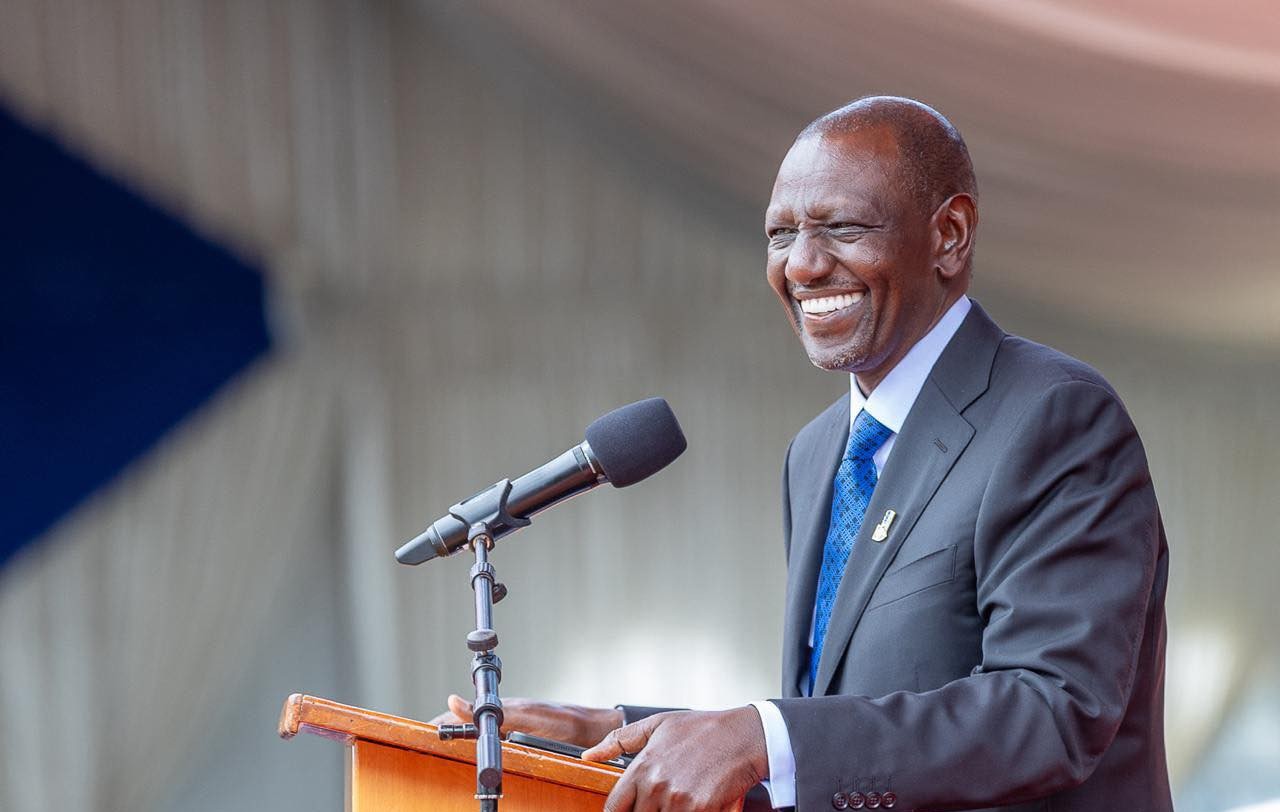
President William Ruto has appointed members to the Governing Council of Kenya’s National Infrastructure Fund, following the enactment of the National Infrastructure Fund Act, 2026.
In a statement dated April 1, 2026, President Ruto named the members.
“IT IS NOTIFIED that His Excellency the President has appointed members to the Governing Council of the National Infrastructure Fund. This presidential action follows the coming into force of the National Infrastructure Fund Act, 2026 (Act No. 4 of 2026) pursuant to Article 116 of the Constitution,” the statement read.
The Governing Council will have a mandate to oversee the recruitment of the Fund’s Board of Directors, which shall, in turn, recruit the Chief Executive Officer to drive the operationalization of the Fund.
Also Read: Govt Secures Fuel, Fertiliser, and Trade Amid Middle East Crisis
National Infrastructure Fund Governing Council
In the appointment, the head of state has named John Mbadi Ng’ongo as the Chairperson of the Council, who also serves as the Cabinet Secretary for the National Treasury, and will be joined by other statutory members.
- Dr. Kamau Thugge, CBS – Governor of the Central Bank of Kenya
- Hon. Dorcas Agik Oduor, SC, EGH – Attorney-General of the Republic
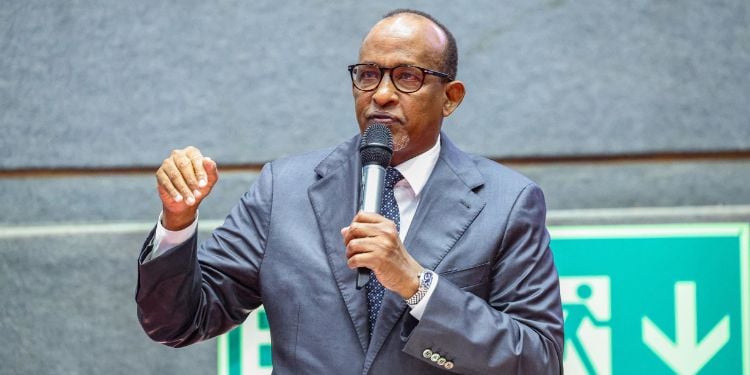
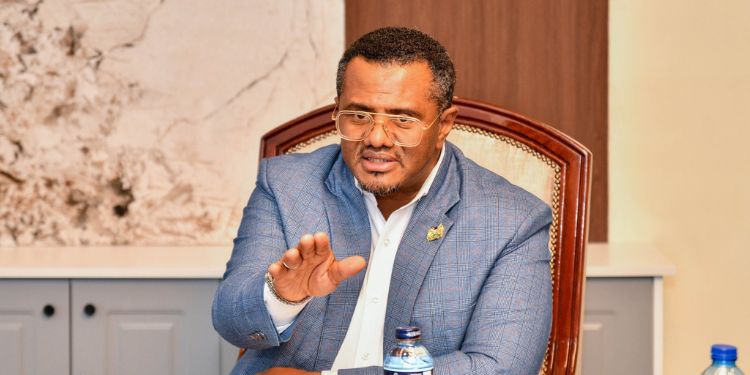
In addition to the statutory members, the Council includes four independent experts with extensive experience in finance, banking, and development:
- Prof. Benedict Oramah, GCON – Former President of Afreximbank, Chair of the Fund for Export Development for Africa (FEDA) and the African Medical Center of Excellence (AMCE).
- Mrs. Faith Boinett – Advocate of the High Court of Kenya and Chairperson of Kenya Pipeline Company Limited, with a strong background in public sector governance.
- Mr. Paul Russo, EBS – CEO of KCB Group PLC and Chairperson of the Kenya Bankers Association Governing Council, brings decades of banking experience.
- Mr. Richard Etemesi – Chairperson of Liberty Holdings Limited, a financial services executive with over 30 years of experience across Africa, Asia, and the Middle East.
According to the government, the establishment of the Fund is a transformative step in the nation’s journey towards inclusive development.
What’s the Infrastructure Fund Bill?
The National Infrastructure Fund Bill, 2026, is a key legislative initiative in Kenya, designed to establish a structured and sustainable mechanism for financing critical national development projects.
Sponsored by the Leader of the Majority Party, Hon. Kimani Ichung’wah, the Bill introduces the National Infrastructure Fund (NIF) to mobilize private capital and non-traditional financing sources, including domestic institutional investors such as pension funds and collective investment schemes.
Furthermore, the NIF is established as a sovereign investment vehicle with the authority to invest in catalytic infrastructure, enter commercial agreements, manage assets, and utilize both equity and debt financing.
It aims to enhance Kenya’s capacity to structure and execute large-scale infrastructure projects while prioritizing commercially viable investments that generate sustainable returns.
In addition, the Fund incorporates a corporate governance structure with an independent board, accountability mechanisms, and alignment with the Public Finance Management Act.
Consequently, it positions the NIF as a reform-oriented financing platform rather than a conventional government spending entity.
Also Read: Zimbabwean Tycoon Praises Ruto After a Good Time at State House
How the KSh 400 Billion Will Be Invested Every Year
According to the framework outlined in the National Infrastructure Fund Bill, the Fund will channel KSh 400 billion annually into four key catalytic sectors: transport, energy, water and irrigation, and agribusiness infrastructure.
These sectors are prioritized because they drive productivity, support industrialization, enhance food security, boost trade competitiveness, and help stabilize the cost of living.
Investments will follow a structured, disciplined approach in line with the Bill’s provisions and guided by a five-year investment policy.
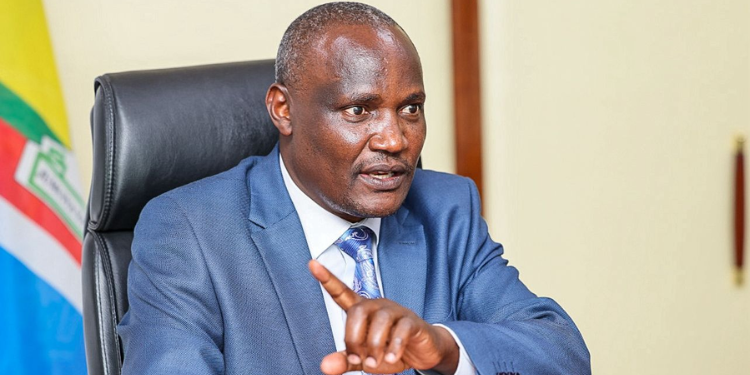
National Treasury Cabinet Secretary John Mbadi. PHOTO/National Treasury