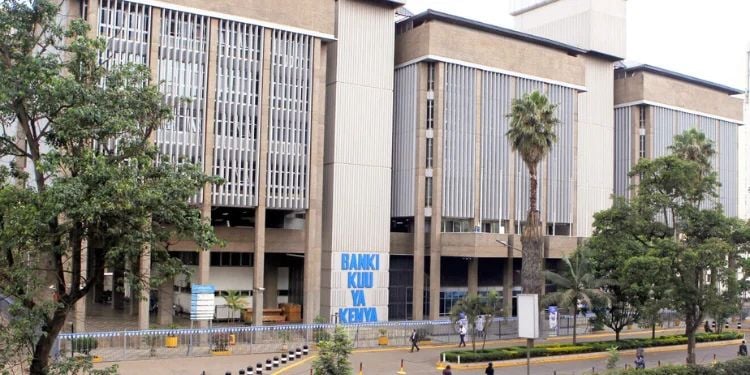
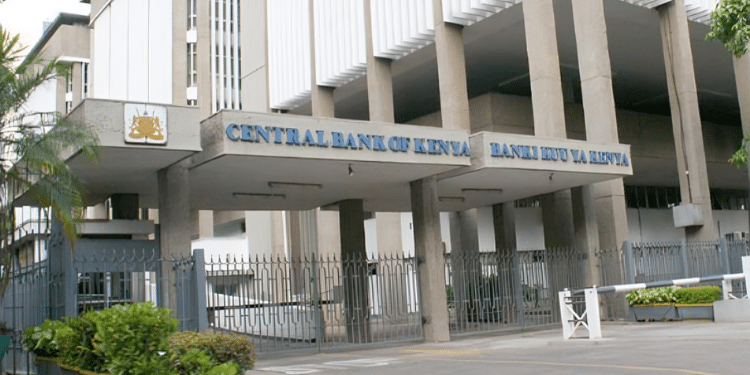
The Central Bank of Kenya (CBK) has lowered its benchmark lending rate again, offering fresh relief to borrowers.
The Monetary Policy Committee (MPC) announced that it had reduced the Central Bank Rate (CBR) by 25 basis points from 9.25 per cent to 9 per cent, following its December 9, 2025, meeting.
In a statement, the MPC said the decision was driven by the need to support lending to the private sector while keeping inflation expectations firmly anchored.
“The Committee concluded that there was scope for a further easing of the monetary policy stance,” the MPC said, noting that the move would complement earlier actions aimed at stimulating economic activity.
CBK lowers lending rates again as inflation drops
The cut comes at a time when inflation remains comfortably within target. Kenya’s overall inflation dropped to 4.5 per cent in November from 4.6 per cent in October, staying below the mid-point of the CBK’s 5 ±2.5 per cent target range.
Core inflation also eased to 2.3 per cent, largely due to declining prices of processed foods such as maize flour and sugar. While non-core inflation edged up slightly because of higher vegetable prices, the CBK expects overall inflation to remain stable, supported by lower food prices, stable energy costs and an improving exchange rate.
The MPC also pointed to improving signs of economic momentum. Kenya’s economy expanded by 4.9 per cent in the first half of 2025, driven by stronger industrial activity, steady agricultural output and resilient services.
Also Read: Why Bankers Want CBK to Lower Lending Rates Again
Indicators for the third quarter show continued improvement, with GDP forecast to grow by 5.2 per cent in 2025 and 5.5 per cent in 2026.
“This outlook is subject to risks, including adverse weather conditions, elevated trade policy uncertainties, and geopolitical tensions.”
CEOs and Market Perceptions Surveys
Survey data collected in November reflected widespread optimism among businesses and market players. Respondents in the CEOs Survey and the Market Perceptions Survey expressed confidence in growth over the next 12 months, citing a stable macroeconomic environment, low inflation, and a strengthening credit market.
Declining lending rates and resilient agricultural production were also cited as key drivers of optimism. However, some respondents raised concerns about weak consumer demand and global uncertainties stemming from higher tariffs and geopolitical tensions.
The agricultural sector, too, is expected to support short-term price stability. According to the November Agriculture Sector Survey, food supply is projected to improve following recent harvests, especially of maize.
Many respondents, however, warned that festive-season demand and rising vegetable prices could exert mild upward pressure on inflation in December.
Also Read: Banks Issued With Ultimatum to Implement New Model for Setting Lending Rates
External accounts remain broadly stable despite widening import volumes. The current account deficit stood at 2.2 per cent of GDP in the 12 months to October, compared to 1.5 per cent a year earlier, reflecting higher imports of intermediate and capital goods.
Exports rose by 6.7 per cent, boosted by horticulture, coffee, manufactured goods, and apparel, while services receipts increased by 4.8 percent and diaspora remittances by 5.8 percent. The deficit is expected to stabilize at 2.3 per cent of GDP in both 2025 and 2026, with the CBK projecting a balance-of-payments surplus of $1.94 billion in 2025.
Foreign exchange reserves remain solid at $12.09 billion, equivalent to 5.25 months of import cover, providing what the MPC described as “an adequate buffer against short-term domestic and external shocks.”
The banking sector continues to show resilience, with improved asset quality and strong capital buffers. The ratio of non-performing loans fell to 16.5 per cent in November, down from 17.6 per cent in August, with declines seen in sectors such as mining, energy, household lending, and transport. Commercial banks have also increased loan-loss provisioning.
Private-sector credit growth
Meanwhile, private-sector credit growth has strengthened, rising to 6.3 per cent in November compared to 5.9 per cent in October and a contraction of -2.9 per cent in January. Lending rates have eased steadily, dropping to 14.9 per cent in November from 17.2 per cent a year earlier.
With the revised Risk-Based Credit Pricing Model set to become fully operational by March 2026, the CBK expects even better transmission of monetary policy to commercial lending rates.
The MPC says it will keep a close watch on both domestic and global developments as it moves into 2026. “The Committee will continue to monitor the impact of this policy decision and stands ready to take further action as necessary,” it said.
The next MPC meeting is scheduled for February 2026.
Follow our WhatsApp Channel and X Account for real-time news updates.