


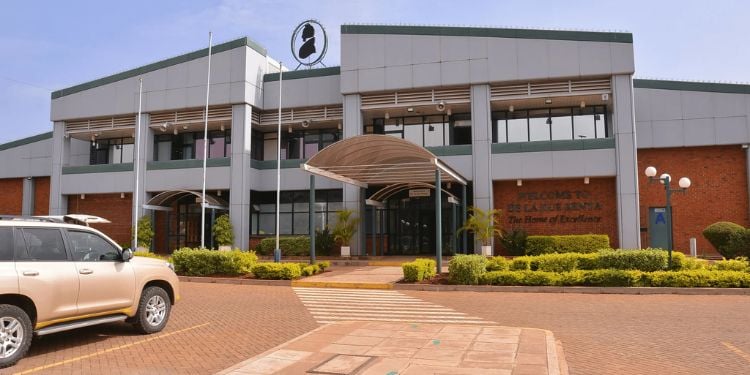
For more than 200 years, De La Rue has been at the forefront of the global security printing industry, producing banknotes, passports, stamps and other secure documents for governments and central banks around the world.
From its humble beginnings as a small printing business in the Channel Island of Guernsey, the British company has grown into the world’s largest commercial banknote printer, serving dozens of countries across Europe, Africa, Asia, the Americas and the Middle East.
Although many Kenyans associate De La Rue with printing the country’s currency, the company’s history stretches back more than a century before it established operations in Nairobi.
How De La Rue Began
The story of De La Rue dates back to 1813 when founder Thomas de la Rue launched his first commercial venture, Le Miroir Politique, a newspaper published in Guernsey.
Eight years later, he moved to London where he initially manufactured straw hats before venturing into commercial printing.
The business quickly expanded into stationery and playing cards, introducing innovations in colour printing that helped distinguish the company from competitors.
In 1832, De La Rue received a Royal Letters Patent from King William IV, marking one of its earliest recognitions for innovation in printing.
By the mid-19th century, the company had diversified further, printing railway tickets, envelopes, greeting cards and postage stamps.
Its breakthrough came in 1855 when it secured its first postage stamp contract, laying the foundation for what would become its global security printing business.
Five years later, De La Rue printed its first banknotes for the Government of Mauritius, marking its entry into currency printing.
Those early contracts opened doors to governments across the British Empire and beyond, transforming the company into one of the world’s leading suppliers of secure printed documents.
Becoming a Global Security Printing Giant
Over the following decades, De La Rue expanded both organically and through acquisitions.
The company acquired several established security printing businesses, including Waterlow & Sons, Bradbury Wilkinson & Co., Portals Group and Harrison & Sons.
These acquisitions strengthened its expertise in banknote production, security paper, passports and authentication technologies.
Its innovations also extended beyond printing.
In the 1960s, De La Rue helped develop one of the world’s first through-the-wall automated teller machines (ATMs) in partnership with Barclays Bank in the United Kingdom.
The company later pioneered advanced banknote security technologies, including holograms, polymer substrates and sophisticated security threads now used by central banks worldwide.
Today, its products include banknotes, polymer substrates, passport solutions, authentication technologies, banknote security features, cash cycle analytics and consulting services for governments and central banks.
Also Read: Meet the Two Men Who Took Over Money Printing Company De La Rue
How De La Rue Entered Kenya
De La Rue’s relationship with Kenya dates back to the colonial period through security printing contracts.
However, its biggest investment came in 1991 when the company established a modern printing facility in Nairobi after the Kenyan government launched initiatives aimed at positioning the country as a regional trade and manufacturing hub.
The Nairobi facility became one of De La Rue’s most important operations in Africa, producing banknotes and other secure documents for Kenya and export markets across the continent.
The company operated in 33 African countries at the time, with Kenya serving as a regional manufacturing and distribution hub for many of its products.
For more than two decades, the Nairobi plant supported hundreds of direct jobs while creating thousands more through local suppliers and service providers.
According to the company, its operations contributed approximately KSh1.25 billion annually to the Kenyan economy through wages, procurement and other economic activities.
In April 2019, the Government of Kenya acquired a 40 per cent stake in De La Rue Kenya EPZ Limited for KSh660 million, creating a joint venture between the British company and the State.
Under the arrangement, De La Rue Kenya continued managing the day-to-day operations of the business while appointing three of the five directors to the joint venture’s board.
The investment was aimed at securing local currency printing capacity while strengthening Kenya’s position as a regional centre for security printing.
Later that year, the Competition Authority of Kenya approved the acquisition of De La Rue’s identity solutions business by HID Corporation, an American technology company, as part of a broader global restructuring.
Tax Dispute and Its Exit From Kenya
De La Rue’s challenges in Kenya deepened following a prolonged tax dispute with the Kenya Revenue Authority (KRA).
In June 2021, the Tax Appeals Tribunal ordered De La Rue Kenya EPZ Limited to pay KSh1.1 billion in taxes following an audit covering the period between 2013 and 2017.
The company challenged the decision, but on January 12, 2023, the High Court upheld the tribunal’s ruling.
The dispute centred around payments made by the Kenyan subsidiary to its parent company, De La Rue PLC. The tribunal ruled that the company could not treat the remittances as allowable expenses under Section 15(1) of the Income Tax Act.
It also found no evidence that the payments qualified as royalties, noting there was no record of intellectual property rights used under the agreement to justify the deductions.
Following the High Court decision, De La Rue said it was disappointed with the ruling and announced that its Kenyan subsidiary would appeal.
De La Rue suspended its currency printing operations in Kenya on January 21, 2023, citing reduced orders and difficult business conditions.
Also Read: Former Safaricom CEO Michael Joseph Lands Role at Giant Money Printer De La Rue
Company’s Financial Issues
Despite its long history, De La Rue has experienced periods of financial difficulty.
In 2018, the company wrote off £18 million after Venezuela’s central bank failed to settle outstanding payments.
During the same period, it reported a pre-tax loss of £12.1 million for the six months ending September 28, compared to a £7.1 million profit posted during the corresponding period the previous year.
The banknote printer also faced investigations by the United Kingdom’s Serious Fraud Office over allegations linked to contracts in South Sudan.
These problems prompted a restructuring programme aimed at improving profitability and refocusing the business on its core currency and authentication operations.
Ownership Changes
De La Rue was originally established as a family business and became a private company in 1898 before transitioning into a publicly owned company in 1921 after the founding family exited the business.
The company was listed on the London Stock Exchange in 1947, giving public investors an opportunity to own shares in one of Britain’s oldest printing firms.
In recent years, De La Rue has streamlined its operations through a series of asset sales.
In 2024, it agreed to sell its Authentication Division to Crane NXT for £300 million.
A year later, the company agreed to a takeover valued at more than £260 million by US investment firm Atlas Holdings, marking a fresh chapter in its more than two-century history.
Global Operations
Today, De La Rue supplies products and services to governments, central banks and state printworks across the world.
Its operations focus on the design and production of banknotes, security features, polymer substrates, authentication technologies and cash management solutions.
The company also develops software that enables central banks to analyze cash circulation, detect counterfeiting risks and improve currency management.
Follow our WhatsApp Channel and X Account for real-time news updates.




![Tsc Jss Teacher Qualifications 2026: Kcse Grades, Degrees And Subjects Required [Full List]](https://cdn.thekenyatimes.com/2026/07/Stakeholders-TSC-X-2026-06-09-36.png "Tsc Addresses Circular On Deployment Of Degree And Diploma Teachers To Junior School")