The government is scaling up support for exporters to expand value‑added agriculture, reduce Kenya’s import bill, and strengthen the country’s position in international markets.
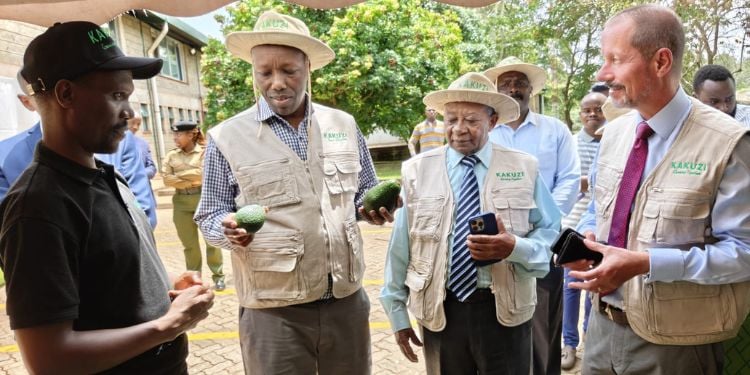
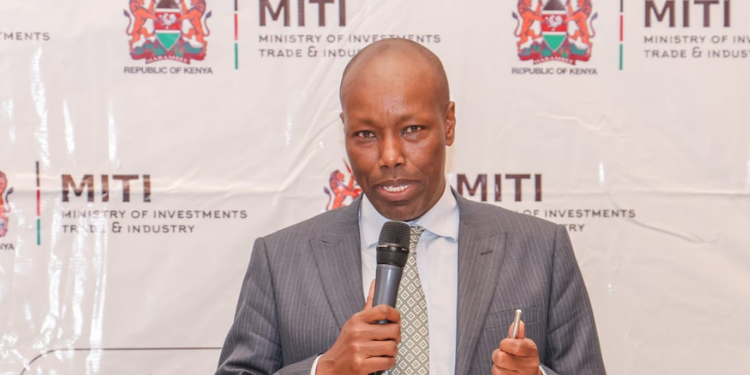
Speaking during a visit to Kakuzi Plc’s agribusiness operations in Murang’a County, Investments, Trade and Industry Cabinet Secretary Lee Kinyanjui outlined the State’s focus on policies that promote agro‑processing, increased production capacity, and export‑oriented investment. The approach, he said, aims to reduce reliance on imported agricultural products while boosting foreign exchange earnings.
During the tour of Kakuzi’s orchards and processing facilities, Kinyanjui pointed to Kenya’s strong potential to process crops such as macadamia and avocado locally into higher-value products, including edible oils.
He noted that expanding domestic production and processing would support import substitution, create employment opportunities, and strengthen rural economies.
“The government will continue to support investors in exports as we open international markets through economic partnership agreements. At the same time, we must ensure that our producers have the capacity to meet demand,” he said.
Kinyanjui observed that Kenya currently spends more than KSh500 billion annually on agricultural imports, including edible oils that can be produced locally.
He added that ongoing reforms are intended to shift the economy towards becoming a net exporter of agricultural, manufactured, and valued products.
Also Read: Kenya Moves to End Raw Exports as Talks for Regional Currency Gains Momentum
Government Focus on Agro‑Processing and Export Growth
Agro‑industrialisation remains a key pillar of the government’s economic agenda and is being advanced through partnerships with the private sector, including Special Economic Zones, Export Processing Zones, and County Aggregation and Industrial Parks.
Kinyanjui commended Kakuzi Plc’s investment in value addition, including the processing of macadamia into kernels and cold‑pressed oil, noting that such initiatives align with the government’s industrialisation goals.
“I am impressed by the scale of manufacturing and agribusiness value addition that Kakuzi is undertaking, including the daily production of cold‑pressed macadamia oil,” he said.
Kakuzi Plc is Kenya’s largest avocado producer and the country’s largest single macadamia orchard estate. The company plans to double its export capacity to more than US$100 million annually in the medium term.
It is also investing more than US$15 million this year to expand its blueberry orchards from 10 hectares to 100 hectares as part of its diversification strategy.
Also Read: Ruto’s Government Cuts Development Spending to Ksh20 Billion as Debt Payments Surge
Company Expansion and Valued Products
Kakuzi Plc Managing Director Chris Flowers said the company is pursuing a products‑and‑markets diversification strategy aimed at serving both domestic and export markets while boosting earnings and shareholder value.
According to Flowers, Kenya’s geographic position gives it a competitive advantage in supplying high‑quality agricultural products to markets in Europe, the Middle East, Asia, and the United States.
“Kakuzi’s growth and diversification strategy is anchored in promoting locally produced, export‑grade, value‑added products,” he said.
As part of its value-addition drive, the company has integrated a macadamia processing plant with a cold-press oil extraction unit, with an installed capacity of 2,000 tonnes of saleable kernel. Kakuzi has also expanded into packaged tea, ready‑to‑eat macadamia products, and blueberries for the local market.
The government maintains that closer collaboration with export‑focused firms will be central to growing industrial output, supporting employment, and strengthening Kenya’s export performance.