
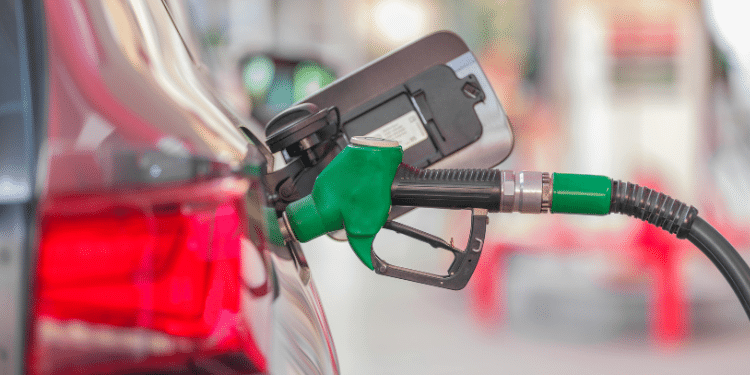
Kenyans are facing a petrol shortage crisis as select petrol stations across the country have been forced to close temporarily due to fuel stockouts.
Reports indicate that several distributors are rationing supplies, while others have temporarily run out of stock.
Petroleum Outlets Association of Kenya Chairperson, Martin Chomba, while speaking to Bloomberg, stated that the nationwide fuel shortage is having severe consequences, particularly in rural areas.
Fuel Stockouts Force Rural Petrol Stations in Kenya to Temporarily Close
He noted that several petrol stations in these regions have been forced to temporarily close due to stockouts.
“The biggest fuel suppliers to Kenya are rationing products. A few distributors are experiencing stockouts in the villages,” said Chomba.
Kenya imports fuel through the port city of Mombasa, home to a dormant refinery that shut down due to unprofitability.
The country renewed supply contracts last year with Saudi Aramco, Emirates National Oil Co., and Abu Dhabi National Oil Co.
Kenya, which consumes about 100,000 barrels of fuel each day and imports all of it, requires importers to hold 21 days of stock, leaving the country vulnerable if even a single shipment is delayed.
By comparison, the International Energy Agency (IEA) requires members to hold at least 90 days of net oil imports; no African country is a member of this global energy watchdog.
Oil marketing companies in Kenya are required to maintain a three-week operational stock, but the countdown on this reserve begins the moment an expected fuel cargo fails to arrive.
Also Read: Frustrations as Kenyan Petrol Stations Start Rationing Fuel Ahead of EPRA Review
IEA Announces Release of 400 Million Barrels of Oil
This comes after the IEA announced the largest release of government oil reserves in its history, two weeks after the United States and Israel launched strikes on Tehran, marking the start of their war on Iran.
In retaliation, Tehran has carried out strikes on Israel as well as US military assets and energy facilities in Gulf countries, and has closed the Strait of Hormuz, a critical artery in the global oil supply chain. The move has driven crude prices above $100 per barrel.
“The war in the Middle East is creating the largest supply disruption in the history of the global oil market,” the IEA said in its monthly market report.
Also Read: Moses Kuria Reveals Deal Ruto Made With Arab Investors to Avoid Fuel Price Hike
The IEA’s 32 member countries announced they would release nearly 400 million barrels of emergency crude, equivalent to one-third of the grouping’s total government reserve holdings of 1.2 billion barrels.
Before the US and Israel attacked Tehran on February 28, Brent crude was trading at around $65 per barrel.
It has now surged past $100, with Iranian leaders warning that they will not allow “one litre of oil” to pass through the Hormuz Strait if attacks continue, and that prices could soar above $200 per barrel.
Brent crude rose by more than 9% in Asian trading to surpass $100 per barrel, while West Texas Intermediate (WTI) crude futures jumped toward $95 per barrel on Thursday, March 12, marking a second straight session of gains.
Govt on Fuel Shortage and Price Review
Meanwhile, the government has assured Kenyans of adequate fuel availability, dismissing fears of shortages caused by the Middle East conflict.
Energy and Petroleum Cabinet Secretary Opiyo Wandayi, while speaking on Friday, March 13, said the government was working closely with international oil companies under the government-to-government arrangement to ensure that the country would not run out of fuel.
The Energy and Petroleum Regulatory Authority (EPRA) announced that fuel prices would remain unchanged for the March 15 to April 14, 2026, cycle.
Super Petrol remained at Ksh178.28, Diesel at Ksh166.54, and Kerosene at Ksh152.78 per litre