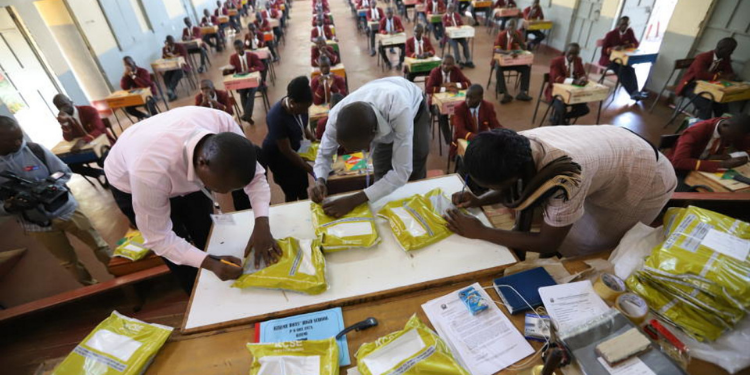
Kenya has made remarkable progress in implementing its 100% School Transition Policy, with 97% of learners who completed Grade 6 in 2025 successfully moving to Junior Secondary School (JSS).
This milestone reflects near-universal compliance with the Competency-Based Curriculum (CBC) framework and underscores the country’s commitment to ensuring that every child has access to quality education.
In a press statement issued on Sunday, January 18, the Ministry of Interior and National Administration, in conjunction with County Directors of Education, confirmed that Kenya is sustaining strong momentum in learner access, retention, and progression.
“We reaffirm the Government’s commitment to full transition as a national imperative: every child has a human and constitutional right to education, and we all should work together to avoid preventable dropouts driven by cost barriers, delayed placement, or social vulnerabilities. This progress reflects more than compliance; it reflects a growing national culture that recognizes education as the most reliable path to productivity, opportunity, and national transformation,” the ministry stated.
Also Read: Ministry of Education Allows Application for Grade 10 Placement Review at Senior School of Interest
Kenya’s Progress in School Transition
According to the ministry, 97% of Grade 6 learners from 2025 have successfully transitioned to JSS, marking a major achievement under the CBC framework.
The enrollment into Senior Secondary School is ongoing, with 61% of eligible learners already registered.
The ministry noted that reporting timelines have been extended in response to stakeholder concerns, allowing learners who face individual challenges more time to complete the placement process.
Near-universal transition underscores Kenya’s commitment to creating equitable learning opportunities for all children.
Also Read: Ministry of Education Announces Fully Funded Scholarships for Select Grade 10 Students
Interventions in Addressing Challenges
Despite progress, some barriers persist, including financial constraints, isolated cases of early pregnancies, learner absenteeism, and placement delays linked to families seeking alternative schools.
To support learners, the ministry has highlighted several ongoing interventions, including:
- Door-to-door tracing and household mapping to identify and re-engage learners
who have not reported. - Community sensitization forums through barazas, religious institutions, and local
platforms to mobilize families and guardians. - Bursaries and scholarships for vulnerable learners, coordinated through the County
Governments, NG-CDF, and NGAOs should minimize financial exclusion.
The ministry has also thanked Kenyans who support the interventions.
“We appreciate all Kenyans who are part of our community-led interventions anchored in local accountability. We are intensifying our targeted interventions to ensure every eligible learner transitions smoothly across all pathways,” read part of the statement.
The measures are designed to ensure every eligible learner transitions smoothly, with special attention to children at risk of dropping out due to social or economic challenges.
Follow our WhatsApp Channel and X Account for real-time news updates.