Under the Kenyan constitution, a Kenyan Citizen aged 18 years and above must hold a valid Identity Card (ID) issued through legal registration.
The registration process is carried out by the National Registration Bureau (NRB) under the Ministry of Interior and National Administration.
The system operates under a structured framework that combines regional allocation, batch issuance, and centralized database control.
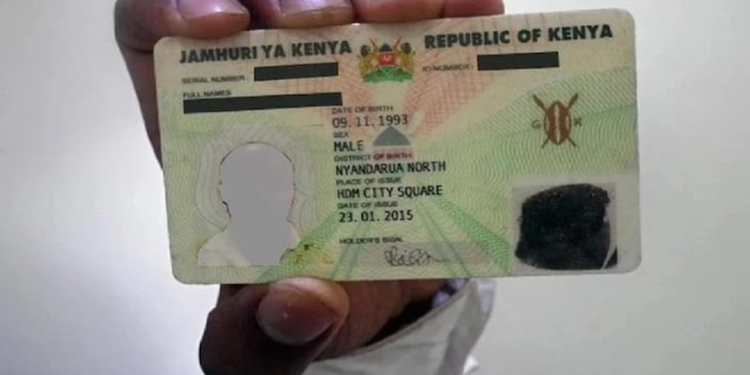
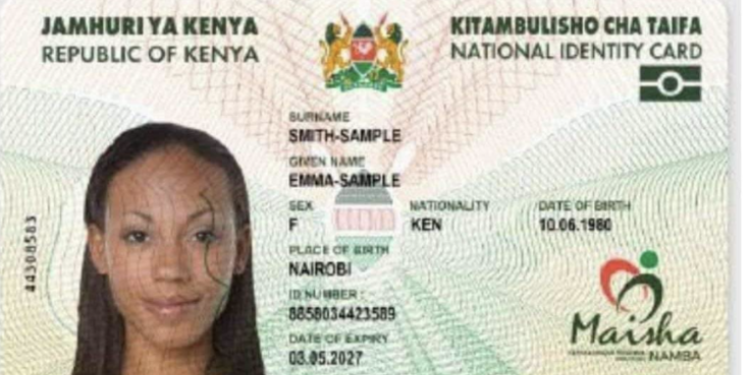
Kenyan ID cards contain the holder’s name, ID number, date of birth, sex, district of birth, and a passport-sized photograph, with a fingerprint impression.
The document serves as the primary identification for accessing all government services. It is also used to open bank accounts, register for mobile phone SIM cards, register for a KRA PIN, SHA, and vote in elections.
How ID Numbers Are Generated Under the NRB System
When an applicant registers, their information is first captured at a local registration center.
Also Read: How to Correct or Change Your Birth Certificate Details in Kenya
At this stage, the system assigns an identity number generated from a pre-established coding structure.
The number includes a regional or administrative identifier followed by a sequential series assigned within that registration batch.
Individuals registering in the same area during the same period may receive numbers that appear close in sequence.
Once generated, the number is linked permanently to the individual’s biometric and demographic data stored in the central database.
The NRB system is integrated into a broader civil registration framework that ensures each citizen’s identity record is unique to prevent duplication and ensures that identity records remain consistent.
Why ID Numbers Are Not Chronological
ID number registration occurs simultaneously across multiple centers in different counties, generating multiple batches of numbers at the same time.
Two individuals who register on the same day in different parts of the country may receive different number ranges.
To apply for a valid ID card, one must be a Kenyan citizen aged 18 years or older and present their original birth certificate, parents’ national ID cards, a sworn affidavit if parents are deceased, and passport-sized photographs.
Applications are processed through the National Registration Bureau, usually located within County Commissioners’ offices or Chiefs’ camps, and vetting is then conducted at the village, sub-location, and location levels to verify the applicant’s identity and citizenship.
Also Read: How to Change Name and Other Details on Your Kenyan ID Card
Backdating, Corrections, and Safeguards Against Duplication
Under NRB protocols, once an ID number is generated and assigned, it cannot be reused or reassigned to another individual.
If a registration file is processed later than the first application date, the system still issues a new unique number based on the current batch sequence.
To prevent duplication and fraud, the system relies on centralized verification, biometric capture, and cross-referencing of applicant details.
This ensures that even if individuals attempt multiple registrations, the system can detect inconsistencies and block duplicate issuance.
The registration framework is also supported by national identity databases that link records across all government institutions.
Follow our WhatsApp Channel and X Account for real-time news updates.