Under the Kenyan laws on land inheritance, the law states that daughters have equal rights to inherit their father’s land and property regardless of their marital status.
The Constitution of Kenya 2010 and the Law of Succession Act, Cap 160, are the legal frameworks that are used in the cases of disputed inheritances.
Currently, the law protects the rights of married daughters to inherit land in Kenya, and they can legally seek their shares.
Articles 27 and 60 of the Kenyan Constitution 2010 guarantee equality before the law and prohibit discrimination in land and property inheritance.
Further, the Law of Succession, where a will by the parent had not been presented, advocates that the surviving spouse receives both personal and household effects as well as a life interest in the estate if applicable.
In Sections 35 to 38 of the Act, children of the deceased share the remainder of the inheritance in equal portions upon the death of the spouse of the deceased or if the spouse remarries.
“Where an intestate has left a surviving child or children but no spouse, the net intestate estate shall, subject to the provisions of sections 41 and 42, devolve upon the surviving child, if there be only one, or shall be equally divided among the surviving children,” the Law of Succession Act dictates.
Also Read: What Kenyan Law Says About Workplace Relationships and Dating Colleagues
Steps to Claiming Land Inheritance
For a daughter to claim any land inheritance or property left by their deceased parent, despite their marital status, they are expected by the law to provide a death certificate of the parent.
In addition, the daughter needs proof of parentage and birth certificates to verify the relationship.
Further, the law requires that the person claiming the land inheritance provide title deeds and land ownership documents.
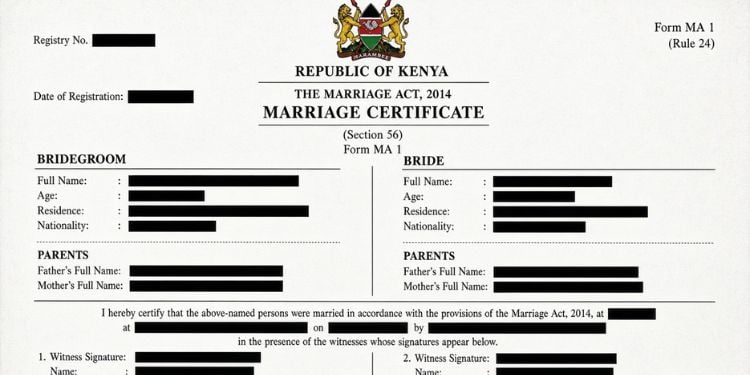
A marriage certificate is required if the daughter is married at the time of the inheritance claim; if unmarried, no certificate is required.
Additionally, daughters claiming the inheritance are bound by the law to provide a list of all surviving heirs and dependents.
Upon submission of all the relevant documents, the daughter claiming the inheritance determines the type of succession that they are eligible for
If a valid will exists, they are advised to apply for a Grant of Probate, and by doing so, the daughters can challenge unfair provisions in the will made by the executors named to handle the distribution of the inheritance.
On the other hand, where no will is present, daughters apply for Letters of Administration, and any interested party to the Inheritance can petition.
However, the Letters of Administration prioritize following the inheritance chain of the spouse before children under Section 66.
After determining the type of succession, a petition is filed with the High Court in the family division, accompanied by supporting affidavits and consents, where possible, and a schedule of assets.
The application is advertised in the Kenya Gazette for at least 30 days to allow objections; however, if no valid objections are made, the court issues the grant.
According to the law, the grant is temporary and is confirmed after six months for immovable property.
Confirmation of Grant
Following the request and confirmation of a grant, the administrator can transfer the land inheritance by obtaining the confirmed grant and preparing the transfer instrument.
Further lodging of documents with the Land Registry for new titles in the beneficiary’s name or in trusts, if minors are involved, is carried out.
The beneficiary claiming land inheritance or property must pay stamp duties as well as the registration fee.
Also Read: How Kenyans Can Arrest a Public Figure Without Breaking the Law
Dealing with Land Inheritance Disputes
Disputes that may arise during the process of claiming the inheritance by daughters due to unregistered lands can lead to ineligibility for inheritance if not legally processed.
Daughters facing disputes in claiming their inheritance under the law are advised to file a protest or objection within the gazettement period.
Further, they can seek revocation of grants obtained fraudulently under Section 76 of the Law of Succession Act.
Additionally, daughters have the right to apply for injunctions to prevent the illegal sale or occupation of the lands before grants are issued.