President William Ruto has signed into law changes that will affect how the Kenya Revenue Authority (KRA) distributes air passenger service charges.
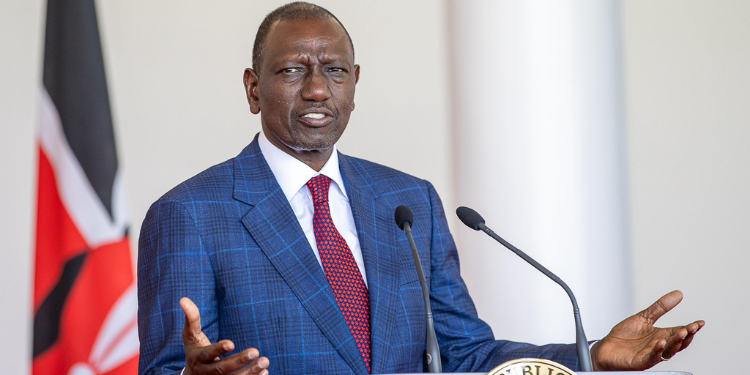
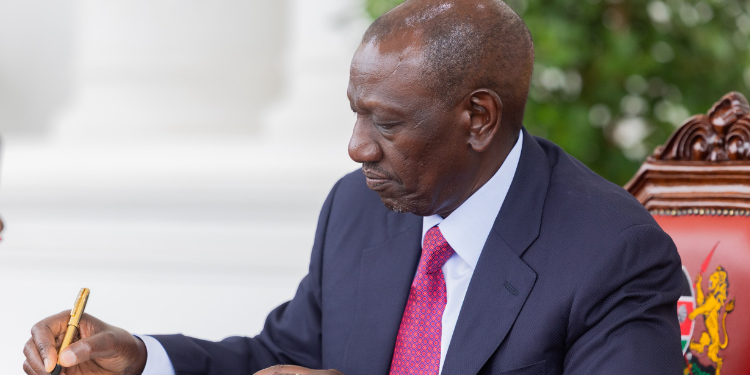
Assenting to the bill at State House on September 8, Ruto said the Air Passenger Service Charge Amendment Bill streamlines the administration of the air passenger charge.
“The new pieces of legislation mark a major step forward in strengthening governance, accountability and service delivery in our country,” Ruto said.
Ruto Assents Changes on How KRA Remits Air Passenger Charges
The new law requires KRA to remit the money directly to the Kenya Airports Authority, Kenya Civil Aviation Authority and Tourism Promotion Fund instead of first paying it into the Kenya Airports Authority Fund.
KRA will deduct its expenses for collecting the charges before sending the remaining funds to the three agencies.
The amount given to each agency will be based on a formula set by the Cabinet Secretary through a notice published in the Kenya Gazette.
The changes are contained in the Air Passenger Service Charge (Amendment) Act, 2026, which amends the law governing charges paid by passengers travelling by air.
Previously, KRA was required to pay all the money collected into the Kenya Airports Authority Fund after deducting its collection expenses.
Also Read: New Bill to Ban Teachers Strikes During Specific Calendar Dates
What the New Law Will Require
The new law removes this requirement and allows direct payment to the agencies meant to benefit from the charges.
It also changes the Kenya Airports Authority Act to recognize that KAA will only receive the portion of the charges allocated to it under the Air Passenger Service Charge Act.
The law does not change the amount passengers pay.
Travellers on international journeys will continue to pay $50 or its equivalent in Kenya shillings, while those travelling on domestic routes will continue to pay Sh600.
The changes are intended to clarify how the money collected from passengers is shared among the three agencies and to simplify the payment process.
The law also states that it does not require additional public spending, affect county government functions, or limit fundamental rights and freedoms.
Also Read: C Plain Set as Minimum Grade for Teacher Training Under New Bill
Other Laws Assented
President William Ruto has also assented to the National Council for Population and Development Bill, the Public Finance Management Amendment Bill 2025 and the Trust Administration Bill.
The National Council for Population and Development Act gives the council a statutory foundation and assigns it a central role in coordinating population and development issues.
The law is intended to bring population considerations into national development planning by providing a framework for the implementation and coordination of population policies and programmes.
It also gives the council a role in promoting the use of demographic data and research in planning, while advising on population growth, demographic changes, and their impact on development.
The Public Finance Management Amendment Act introduces changes to the legal framework governing the management of public funds at both national and county levels.
The amendments aim to improve financial accountability and strengthen oversight of how public resources the collected, allocated, and used.
Additionally, the Trust Administration Act provides a legal framework for the creation, administration and management of trusts in Kenya.
It sets out clearer requirements for trustees in managing trust property and outlines the legal relationship between trustees and beneficiaries, providing greater certainty in the administration of trusts.
Follow our WhatsApp Channel and X Account for real-time news updates.