
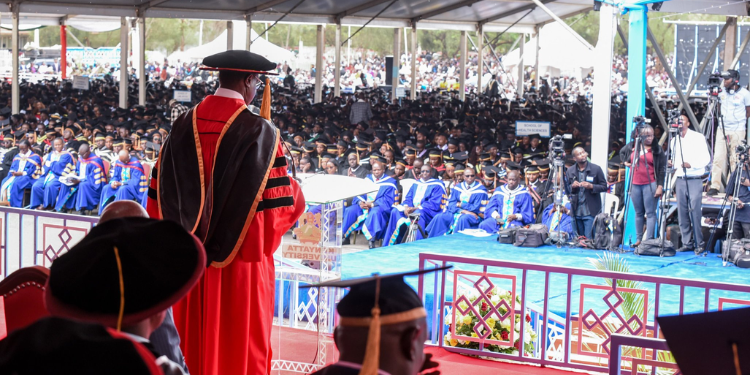
Young people represent Africa’s greatest resource and a powerful driver of its future. With approximately seventy-five per cent of the continent’s population under the age of 35, Africa’s youth have enormous potential to accelerate economic growth, foster innovation, and promote sustainable development, provided they receive quality education and are equipped with the knowledge, skills, and opportunities needed to succeed.
According to a 2025 UNESCO report, between 2020 and 2040, the number of young Africans completing secondary or tertiary education is estimated to more than double, rising from approximately 103 million to 240 million.
At the same time, Mohac Africa notes that in 2026, Sub-Saharan Africa remains home to nearly 30% of the world’s out-of-school children, with an estimated 98–100 million children and young people between the ages of 6 and 18 still excluded from formal education.
Despite significant and sustained growth in primary school enrollment over the past decade, the ongoing learning crisis continues to represent one of the most pressing challenges confronting the state of education in Africa.
“Only 9 per cent of young people in sub-Saharan Africa are enrolled in a university or college,” UNESCO,2026.
What Needs to Align with University Curricula
Institutions of higher learning should revise academic courses to align with current labour-market demands, provide students with practical entrepreneurial skills, and build strong partnerships with employers.
Students should have opportunities to gain practical work experience before completing their studies through internships, apprenticeships, workplace placements, and other forms of work-based learning.
Evidence from the International Labour Organisation (ILO) suggests that well-structured work-based learning can facilitate young people’s transition from education to employment.
Also Read: Role of African Youth to Achieve SDG 6: Needs and Challenges
Universities can strengthen these opportunities by developing partnerships with private companies, government institutions, NGOs, and professional organisations to jointly design relevant courses, offer internships, and create pathways to employment.
Universities need to promote entrepreneurship by equipping students with the knowledge and skills needed to develop business ideas, prepare business plans, assess market opportunities, and manage finances effectively.
Entrepreneurship centres and business incubators can help graduates turn innovative ideas into sustainable enterprises, enabling them to become job creators rather than solely job seekers.
Academic programs should also incorporate emerging and market-relevant skills, including digital literacy, artificial intelligence, data analytics, cybersecurity, digital marketing, and other competencies required by the evolving economy.
Career development for students
Every university needs to establish an effective career development centre that offers career counselling, CV preparation, interview skills training, job fairs, employer networking, and information about employment opportunities.
The ILO recognises career guidance and counselling as important tools for strengthening youth employability.
In addition to academic qualifications, graduates need strong communication, teamwork, leadership, critical-thinking, adaptability, problem-solving, and professional-ethics skills.
Universities can further support innovation by establishing incubators, innovation laboratories, and entrepreneurship centres where students can transform research findings and creative ideas into viable businesses and employment opportunities.
Most importantly, universities also need to regularly monitor changing labour-market trends, including occupations and skills that are expanding or declining, and use this information to update academic programs and provide students with appropriate career guidance.
Also Read: How to Create Wealth and Blue-Collar Jobs for African Youths
Effective skills-anticipation mechanisms can enable higher-education institutions to respond more efficiently to evolving labour-market demands.
In addition, universities should conduct graduate tracer studies to assess employment outcomes, including the proportion of graduates who secure employment, the time required to obtain their first job, the skills employers demand, and the extent to which graduates work in fields related to their academic qualifications.
Such evidence can help universities continuously improve their programs and strengthen the connection between higher education and employment.
Expanding Technical and Vocational Institutions
Establishing and strengthening technical and vocational education and training (TVET) institutions can play a significant role in addressing unemployment, particularly among young people.
These institutions can equip learners with practical, market-relevant skills in fields such as information technology, construction, manufacturing, agriculture, renewable energy, automotive services and other technical occupations.
By integrating classroom-based education with apprenticeships, internships and work-based learning, TVET programs can enhance graduates’ employability and support their smooth transition into the labour market.
Furthermore, technical institutions can encourage entrepreneurship by developing students’ knowledge of business planning, financial management, marketing and enterprise development, enabling them to create their own employment opportunities.
Effective collaboration among training institutions, industries and government agencies can ensure that curricula and training programs remain aligned with evolving labour-market needs. Consequently, technical and vocational education can help transform young people from job seekers into skilled professionals and entrepreneurs, thereby contributing to job creation, economic growth and sustainable development.
Follow our WhatsApp Channel and X Account for real-time news updates.