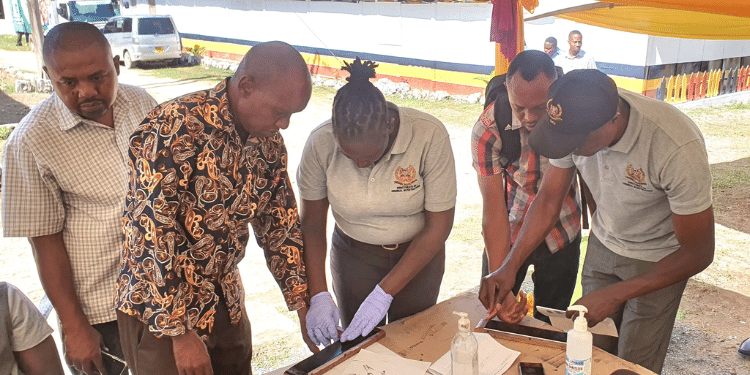

The Kenyan law allows a person whose case has been concluded by a court of law to seek removal of fingerprint records held by the Directorate of Criminal Investigations (DCI).
Individuals seeking to have the records removed must request a review, supported by proper court documentation and identification records.
Fingerprint records in Kenya are managed under the criminal records system maintained by the DCI through the Criminal Records Office and the Forensic Fingerprint Identification Bureau (FFIB).
These records are used to support identification in criminal investigations and to generate Police Clearance Certificates.
If an applicant had cases and was acquitted by a court of law, the criminal record is treated as cleared in the official criminal database for conviction status.
However, this does not always mean that all underlying fingerprint entries are automatically erased from the system. An individual must physically seek correction for the update.
Where a conviction occurs, the record is retained in the national database for a long period under criminal record management procedures.
Process of Requesting Fingerprint Removal After a Case
Individuals seeking fingerprint removal or correction are required to submit a formal written request to the Criminal Records Office under the DCI.
Also Read: How to Correct or Change Your Birth Certificate Details in Kenya
The request must clearly state the purpose of the application and the specific details of the case, including arrest details, case numbers, and court references, where available.
Applicants are expected to attach supporting documents such as a national identification card, certified copies of court rulings or judgments, and any previous police clearance certificates if applicable.
Applicants are also expected to show whether the case was dismissed, the defendant was acquitted, or the sentence was served as required by law.
Once submitted, the request undergoes internal review, during which the DCI may cross-check court records, verify fingerprints against the national database, and confirm the status of the case.
On verification, one has to apply for a new Certificate of Good Conduct through the e-Citizen.
How to Apply for a Good Conduct Certificate in 2026
The process of applying for a Good Conduct Certificate in Kenya is done online through the DCI e-Citizen Portal and Huduma Centers for biometrics.
Step 1: Register Online
- Go to https://portal.dci.gov.ke
- Click Register, input your ID number, phone, and email
- Verify via OTP sent via SMS or email
Also Read: How to Correct Name, Date of Birth and Other Errors on a Kenyan Passport
Step 2: Fill in the Application
Log in and select “Apply for Certificate of Good Conduct.”
Enter your full name as per ID, date of birth, gender, and reason for application.
Step 3: Upload Required Documents
Scanned copy of your ID front and back
Recent passport-size photo with white background
KRA PIN certificate for employed applicants
Step 4: Pay the Application Fee, which is usually Ksh 1,050.
Step 5: Book a Fingerprinting Appointment
Choose a location for digital fingerprinting:
Step 6: Track and Collect Your Certificate
Processing Time: 7–14 working days
Updates: You’ll receive SMS and email notifications
Applicants can check the status of their certificate by logging into the DCI portal, selecting “Track Application,” and entering their reference number.
Follow our WhatsApp Channel and X Account for real-time news updates.