Iran has launched a fresh barrage of missiles toward Israel, according to the Israeli military. This marks another dramatic escalation in a conflict that has, over the past days, left more than 1,000 people dead and destabilized much of the Middle East.
In a statement on Thursday, March 5, the Israeli Air Force said it had identified missiles fired from Iranian territory toward the State of Israel and then activated defense systems to intercept the threat.
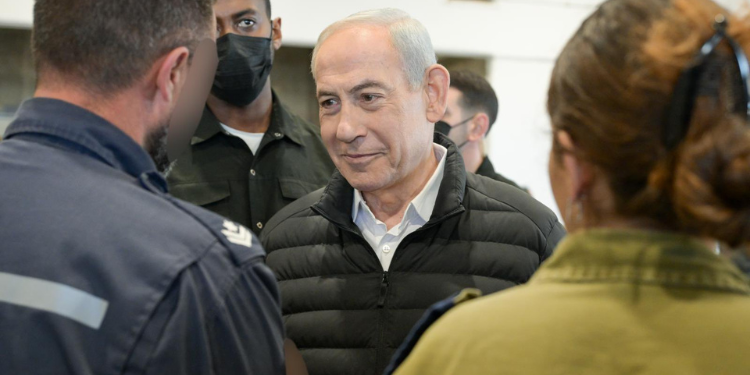
“The IDF identified that a short while ago, missiles were launched from Iran toward the territory of the State of Israel. Defense systems are operating to intercept the threat. In recent minutes, the Home Front Command issued a preliminary directive directly to mobile phones in the relevant areas.”
Israel’s Home Front Command issued emergency alerts directly to mobile phones in affected areas, instructing civilians to enter protected spaces immediately and remain there until further notice.
Authorities emphasized that residents should not leave shelters until receiving explicit clearance. The announcement came as sirens sounded across parts of Israel, with the country’s missile defense systems, including Iron Dome, reported to be actively intercepting projectiles.
The renewed strikes follow earlier claims from Iran’s Revolutionary Guard, which said it had already carried out multiple waves of retaliatory attacks in recent days.
Iranian state-linked outlets previously asserted that key Israeli infrastructure, including Ben Gurion International Airport and advanced radar systems, were targeted in those barrages. Independent verification of those specific claims remains limited.
Iran under fire
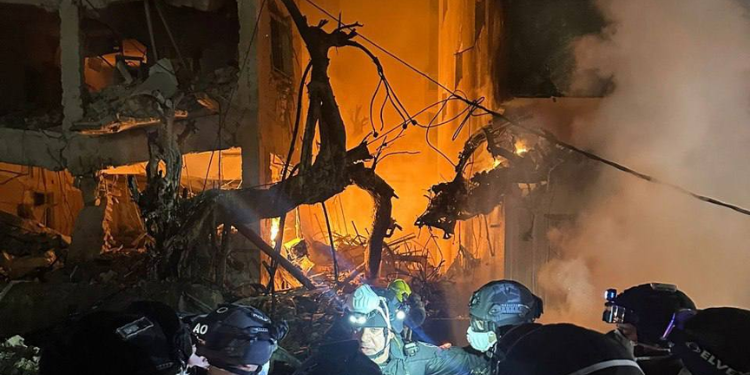
Earlier, reporting from Tehran described multiple massive explosions shaking the Iranian capital through the night and into Thursday morning.
Strikes were reported in other cities as well, allegedly targeting military headquarters and political centers. Iran’s Ministry of Health has put the civilian death toll from recent strikes at more than 1,000, with over 6,000 injured.
The United States and Israel have been conducting coordinated operations against Iranian military assets since the conflict intensified over the weekend.
The Iranian Revolutionary Guard said retaliatory operations remain ongoing, describing the latest actions as part of its 17th and 18th waves of strikes.
Footage verified by international media showed explosions in Sanandaj in western Iran. Local sources indicated a radio and television authority facility may have been targeted, with nearby homes reportedly sustaining damage from blast waves.
Also Read: Nothing Has Changed: Spain Declares After Trump’s Threat, dismantling Leavitt’s remarks
On its part, Qatar’s Ministry of Interior announced it was evacuating residents living near the U.S. Embassy in Doha as a temporary precautionary measure. Authorities said suitable accommodation had been provided while security measures were implemented.
“In the framework of maintaining public safety, the relevant authorities are evacuating residents living in the vicinity of the U.S. Embassy,” the ministry said in a statement.
Elsewhere, Saudi Arabia’s Defense Ministry reported intercepting three drones east of al-Kharj Governorate. U.S. diplomatic and military facilities in Saudi Arabia, Kuwait, and the United Arab Emirates have been targeted by drones this week, according to regional reports.
The maritime domain has also become a flashpoint. Cargo vessels have reportedly begun avoiding the Strait of Hormuz after Iran’s Islamic Revolutionary Guard Corps announced the strategic waterway’s closure.
The strait is a vital artery for global oil and gas shipments, and disruptions have already sent ripples through energy markets.
Kurdish ground offensive reports denied
Amid the missile exchanges, reports circulated that Kurdish opposition groups had launched a ground offensive into Iran from neighboring Iraq.
Those claims have since been firmly denied. Multiple sources told The New Region that no Kurdish forces had crossed into Iran. Officials from the Kurdistan Freedom Party (PAK), Komala, and PJAK each rejected reports of any coordinated military operation.
Aziz Ahmed, Deputy Chief of Staff to Kurdistan Region Prime Minister Masrour Barzani, called the claims “patently false,” stating that “not a single Iraqi Kurd has crossed the border.”
An initial social media post by journalist Barak Ravid suggesting a U.S. official confirmed such an offensive was later deleted. He subsequently clarified that it was “unclear” whether any ground action had begun.
A CNN report earlier in the week asserted that the CIA had provided backing to Kurdish dissidents, but Kurdish political representatives maintain that no offensive has been launched.
Also Read: Fresh Twist as Anti-Iran Fighters Reportedly Launch Ground Offensive Amid US Talks
Iran’s Foreign Minister Abbas Araghchi has warned of potential “terrorist movements” along the Iraqi border, calling for heightened security measures in western regions of the country.
Meanwhile, Iranian media reported operations targeting what it described as “anti-Iran separatist forces” in Iraq’s Kurdistan region.
Explosions were reported in Sulaimaniyah province, with local sources saying headquarters linked to the Kurdistan Toilers Association (Komala) were hit.
Tasnim news agency denied reports that armed Kurdish fighters had crossed into Iran.
Trump’s political backing
As the conflict widens, political support for the military campaign remains intact in Washington.
The U.S. Senate voted down a war powers resolution that would have required President Donald Trump to seek congressional authorization before continuing strikes on Iran.
The administration has defended its actions as necessary to counter missile and nuclear threats. The White House has stated that more than 2,000 Iranian targets have been struck since the campaign began, including missile launchers, drones, and naval assets.
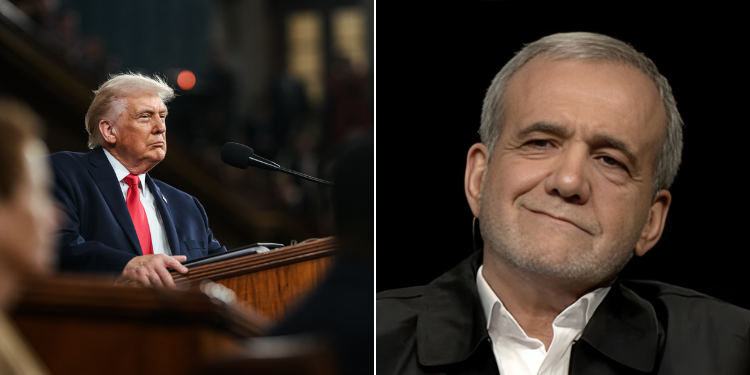
Trump said this week that Iran “would have had a nuclear weapon” had he not withdrawn from the 2015 nuclear deal during his first term. He described the ongoing military operations as placing the United States and Israel in “a very strong position.”
Follow our WhatsApp Channel and X Account for real-time news updates.