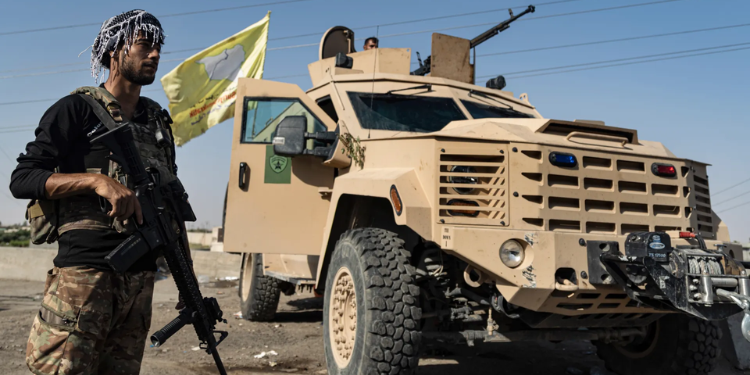
Thousands of Kurdish fighters based in Iraq have reportedly launched a ground offensive into western Iran, opening a new front in the rapidly escalating conflict following the killing of Iran’s Supreme Leader Ayatollah Ali Khamenei.
According to i24NEWS, an official from the Coalition of Political Forces of Iranian Kurdistan (CPFIK) confirmed that Kurdish armed groups began coordinated military movements shortly after midnight on Monday, March 2.
“The ground military movements by Kurdish forces against Iran have already started since midnight on March 2,” the CPFIK official told the outlet.
The official said fighters affiliated with the Kurdistan Free Life Party (PJAK) had already moved into combat positions inside Iranian territory.
Thousands of Kurdish fighters are reportedly deployed deep within the Zagros mountain range, particularly around the southern mountains of Mariwan in western Iran.
According to the CPFIK official, Iranian forces evacuated the border city of Mariwan on March 3 and began establishing defensive positions in and around the area.
Mariwan, located near the Iraq-Iran border, has historically been a flashpoint between Iranian security forces and Kurdish insurgent groups.
The official said PJAK fighters have now taken up positions around the mountainous terrain south of the city. PJAK operates two-armed wings — the YRK (Protection Units of Eastern Kurdistan) and the HPJ (Women’s Protection Forces). The official described these units as modeled after Kurdish formations operating in Syria.
The reported movements marks significant cross-border Kurdish military actions in recent years and come amid growing speculation about Washington’s potential support for Kurdish groups as part of broader efforts to pressure Tehran.
Mojtaba Khamenei reportedly chosen as Supreme Leader
The Kurdish incursion coincides with dramatic political developments inside Iran.
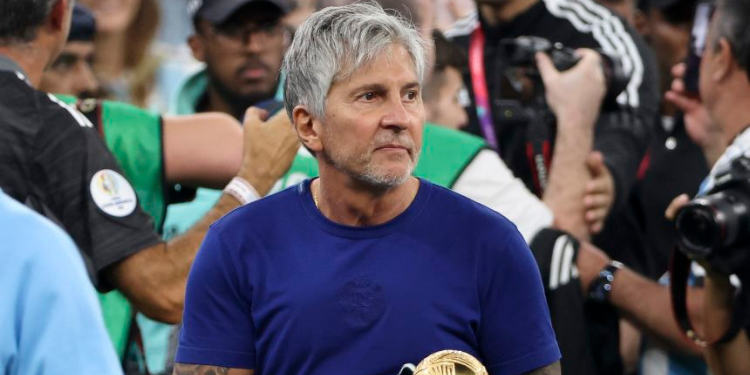
According to opposition-linked outlet Iran International, Mojtaba Khamenei, the 56-year-old son of the late Ayatollah Ali Khamenei, has reportedly been selected as Iran’s next Supreme Leader.
The report claimed that Iran’s powerful clerical body, the Assembly of Experts, chose Mojtaba under pressure from the Islamic Revolutionary Guard Corps (IRGC).
“The Assembly of Experts elected Ali Khamenei’s son Mojtaba as the next Supreme Leader,” the outlet reported, citing informed sources.
Iranian state authorities have not publicly confirmed the claim.
According to three Iranian officials familiar with the internal deliberations, the Assembly of Experts held two virtual meetings on Tuesday — one in the morning and another in the evening — to discuss succession following Khamenei’s death.
Mojtaba Khamenei reportedly emerged as the clear front-runner during those discussions.
However, some clerics allegedly expressed reservations about making an immediate public announcement. According to the officials, concerns were raised that formally naming Mojtaba could make him a target for the United States and Israel amid ongoing hostilities.
The officials spoke on condition of anonymity due to the sensitivity of the matter.
Israel previously struck a building in Qum where the Assembly of Experts had been scheduled to meet. However, Fars News Agency, which is affiliated with the IRGC, reported that the building was empty at the time of the strike.
Mojtaba Khamenei, the second-eldest son of Ayatollah Ali Khamenei, is described as a mid-ranking cleric. He served in Iran’s armed forces during the Iran-Iraq war and is widely believed to have maintained close ties to the IRGC.
Also Read: Fresh Twist with Iran’s Potential Successor Mojtaba Khamenei’s Status in Doubt
Iran International reported that the IRGC “heavily pressured” the Assembly of Experts to back Mojtaba as the regime’s new leader.
The Supreme Leader holds ultimate authority in Iran’s Shiite theocratic system. The role includes serving as commander-in-chief of the armed forces and head of the IRGC — a paramilitary organization designated a terrorist group by the United States in 2019.
During Ali Khamenei’s 36-year tenure, the Revolutionary Guard significantly expanded its influence across Iran’s political, military, and economic institutions.
Mojtaba is widely believed to have exercised considerable influence behind the scenes in recent years, reportedly managing the Office of the Supreme Leader in practice.
However, prior reporting by The New York Times indicated that Ali Khamenei had identified three senior clerics as potential successors — and that Mojtaba was not among those shortlisted names.
The Washington-based Middle East Institute has previously noted that even the deaths of senior leaders do not automatically produce regime change in Iran’s political structure.
Ayatollah Ali Khamenei, who was reportedly killed over the weekend in U.S.-Israeli strikes, will be buried in the holy city of Mashhad, according to Fars News Agency.
Khamenei, who died at age 86 after leading Iran for 36 years, was originally from Mashhad. His father is buried at the Imam Reza shrine in the city.
U.S. engagement with Kurdish groups
The unfolding Kurdish offensive comes as the Trump administration has reportedly been engaging with Iranian opposition groups and Kurdish leaders in Iraq.
According to CNN, citing multiple people familiar with the plan, the Central Intelligence Agency (CIA) is working to provide weapons to Kurdish forces in an effort to foment a popular uprising in Iran.
The administration has been in active discussions with Iranian opposition groups and Kurdish leaders in Iraq about providing military support, sources told CNN.
Iranian Kurdish armed groups operate primarily in Iraq’s Kurdistan region along the border. Several have issued public statements since the conflict began, urging Iranian military personnel to defect.
On Tuesday, Iran’s IRGC said it targeted Kurdish forces with dozens of drones.
CNN also reported that President Donald Trump spoke with Mustafa Hijri, president of the Democratic Party of Iranian Kurdistan (KDPI), according to a senior Iranian Kurdish official. The KDPI was among the groups targeted by the IRGC.
Iranian Kurdish opposition forces are expected to participate in a broader ground operation in western Iran in the coming days, a senior Kurdish official told CNN.
“We believe we have a big chance now,” the source said, adding that militias expect U.S. and Israeli support.
Trump also reportedly spoke with Iraqi Kurdish leaders on Sunday regarding U.S. military operations in Iran and coordination moving forward, according to two U.S. officials and another source familiar with the discussions.
Any effort to arm Iranian Kurdish groups would require support from Iraqi Kurdish authorities to allow weapons transit and to use Iraqi Kurdistan as a staging ground.
Follow our WhatsApp Channel and X Account for real-time news updates.