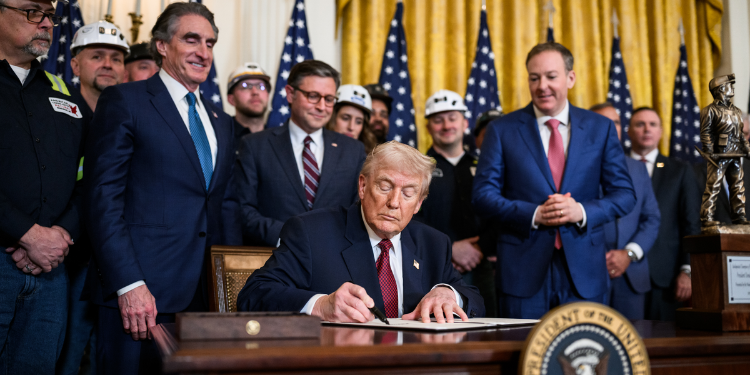
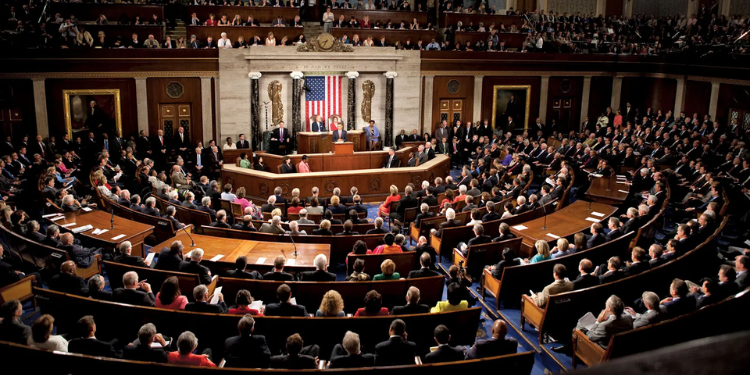
The United States House of Representatives has approved sweeping new federal voting rules in a narrow and politically charged vote, passing the President Donald Trump-backed SAVE America Act.
The legislation passed on Wednesday, February 11, would significantly reshape voter registration, tighten identification requirements, and restrict aspects of mail-in voting nationwide. Texas Democrat Henry Cuellar joined Republicans to secure its passage 218–213.
In a statement following House passage, bill sponsor Rep. Chip Roy of Texas called the legislation a critical reform.
“I’m grateful for the House’s passage of the SAVE America Act and want to thank my co-author in the Senate, Mike Lee, the Republican Leadership team, including Chairman Steil, and my good friend Cleta Mitchell for all their hard work getting this bill across the finish line,” Roy said.
“This legislation is a critical step toward restoring election integrity by ensuring only U.S. citizens are voting in federal elections and are showing ID.”
Roy added that voter ID enjoys broad public support and urged the Senate to take up the bill, calling on lawmakers to defend what he described as a “basic election safeguard.”
The SAVE America Act builds on the earlier Safeguard American Voter Eligibility (SAVE) Act passed by the House in 2024 but expands its scope significantly.
Also Read: House Rebukes Trump Tariffs on Canada in Rare GOP Revolt
While the earlier version focused largely on verifying citizenship during voter registration, the new legislation introduces a nationwide photo identification requirement and imposes stricter documentation standards than many existing state voter ID laws.
SAVE America Act
Notably, student identification cards would not qualify under the federal requirements. The law if enacted would require individuals to present documentary proof of U.S. citizenship when registering to vote in federal elections.
Acceptable proof would include a real ID-compliant document confirming citizenship, a valid U.S. passport, certain military identification combined with birth documentation, or government-issued photo ID paired with certified birth records, naturalization documents, or equivalent federal proof of citizenship.
States would also be required to verify citizenship during voter registration and remove non-citizens from existing voter rolls using federal databases, including the Department of Homeland Security’s SAVE verification system.
Federal agencies would be obligated to respond to state requests for citizenship verification within 24 hours under the bill’s framework.
In addition to registration requirements, the legislation mandates that voters present valid photo identification before casting a ballot in person.
Those unable to provide ID could cast provisional ballots but would have only a limited window to verify identity for their vote to be counted.
For mail-in or absentee voting, individuals would need to submit a copy of photo identification or meet strict affidavit conditions tied to Social Security verification.
Implementation would take effect immediately upon enactment, a provision election officials warn could create logistical challenges.
Also Read: Israeli Has Influence Over Epstein File Release, Republican Member Reveals
States would be required to rapidly update registration systems, verification procedures, and voter education processes to comply with the new federal standards.
Republicans push for more election verification measures
Republican lawmakers argue the measure is necessary to restore trust in elections and strengthen voter integrity. The legislation is closely aligned with President Trump’s long-standing push for stricter election laws.
Trump and many Republican allies have repeatedly argued that stronger voter verification measures are essential for national security and election integrity, though multiple studies and election reviews in recent years have found voter fraud to be rare.
Democrats, however, have sharply criticized the bill, warning it could restrict voter access and disproportionately affect certain groups, including younger voters, lower-income Americans, and individuals who lack immediate access to citizenship documentation.
Critics also argue the accelerated implementation timeline could create confusion ahead of upcoming federal elections.
The political divide surrounding voting laws has intensified in recent years, with Republican-led states tightening voter identification and registration rules while Democratic-led states have moved to expand mail voting and voter access.
The SAVE America Act represents one of the most ambitious federal attempts to standardize stricter voting requirements nationwide.
Despite clearing the House, the legislation faces a steep and uncertain path in the Senate, where Democrats are expected to block or stall the measure.
Follow our WhatsApp Channel and X Account for real-time news updates.