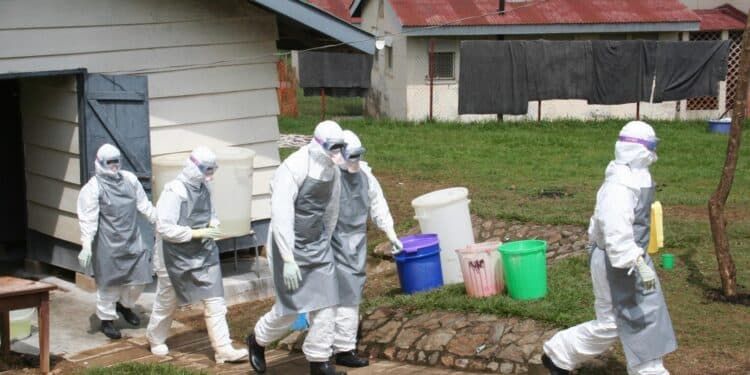

The World Health Organization (WHO) has declared an Ebola disease outbreak caused by the Bundibugyo virus in the Democratic Republic of the Congo and Uganda a Public Health Emergency of International Concern (PHEIC), citing rising cases, cross-border spread, and high regional risk.
In its statement issued on May 17, 2026, WHO said the decision followed confirmation of laboratory cases, suspected deaths, and evidence of transmission across multiple health zones in eastern DR Congo, as well as confirmed cases reported in Uganda linked to travel from affected areas.
“After having consulted the States Parties where the event is known to be currently occurring, is hereby determining that the Ebola disease caused by Bundibugyo virus in the Democratic Republic of the Congo and Uganda constitutes a public health emergency of international concern (PHEIC),” the WHO statement read in part.
WHO Issues Ebola Virus Global Emergency Alert
WHO noted that the outbreak meets the criteria for a global health emergency due to its unusual spread pattern, uncertainties in the true scale of infections, and confirmed international transmission within a short period.
The organization said eight confirmed cases, 246 suspected cases, and 80 suspected deaths had been reported in DR Congo, with additional confirmed infections in Kampala, Uganda, and Kinshasa, indicating a wider geographic spread than initially detected.
WHO stated that the situation requires urgent international coordination to strengthen surveillance, contact tracing, infection prevention, laboratory capacity, and emergency response systems across affected and neighbouring
The agency highlighted that the Bundibugyo virus strain currently has no approved vaccines or therapeutics, raising concerns about control and treatment capacity in affected regions.
WHO Director-General emphasized that the outbreak is “extraordinary” due to its scale, the risk of healthcare transmission, and its rapid spread in areas with high population movement, insecurity, and limited health infrastructure.
“Any State Parties newly detecting a suspected or confirmed Bundibugyo virus disease case or contact, or clusters of unexplained deaths should treat this as a health emergency, take immediate steps in the first 24 hours to investigate and stop a potential outbreak by instituting case isolation, case management, establishing a definitive diagnosis, and undertaking contact tracing and monitoring as required,” WHO noted.
The organization urged affected countries to activate emergency operations centers, enhance border screening, and strengthen community engagement and risk communication to support early detection and containment.
Also Read: At Least 65 Dead as New Ebola Breaks Out in DRC
It further advised against international travel by confirmed cases and contacts, while calling for strict monitoring, isolation measures, and coordination across health systems.
Kenya on High Alert After Ebola Outbreak
The Ministry of Health in Kenya has confirmed an outbreak of Ebola Virus Disease (EVD) in Ituri Province, Democratic Republic of Congo, prompting Kenya to activate enhanced preparedness and surveillance measures.
According to a press release by the Ministry of Health, laboratory testing confirmed Ebola virus in 13 out of 20 samples collected, with preliminary findings indicating a non-Zaire ebolavirus strain. Further genomic sequencing is ongoing to determine the exact strain.
The Ministry stated that Kenya has not recorded any Ebola cases as of May 16, 2026. It added that the overall risk to the public remains low, although the risk of importation is considered moderate due to regional travel, trade, and population movement.
“Kenya has not recorded any case of Ebola Virus Disease as of 16th May 2026,” the ministry statement read.
Also Read: Kenya Announces Strict Burial Protocols After Ebola Outbreak in Uganda
In response, the government has activated a National Ebola Preparedness Team and placed the National Public Health Emergency Operations Center on alert for real-time monitoring and coordination.
Additional measures include enhanced surveillance of viral hemorrhagic fevers, strengthened screening at airports and border crossings, improved laboratory readiness, continuous training for health workers, and intensified public awareness campaigns.
The Ministry is coordinating with the World Health Organization, Africa Centers for Disease Control and Prevention, and other regional and global partners to support preparedness and response efforts.
Members of the public have been advised to maintain hygiene, avoid contact with bodily fluids of sick persons, and refrain from handling sick or dead animals. They are also urged to seek immediate medical attention if symptoms appear, especially after travel to affected areas.