
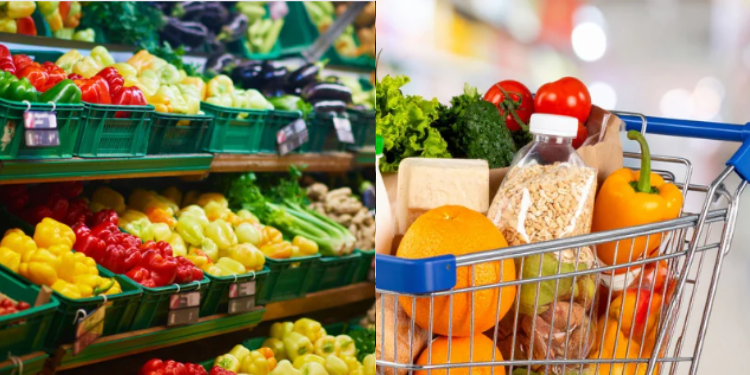
Kenya’s formal retail food prices have been ranked among the highest globally, with the ATNi (Access to Nutrition Initiative) Retail Pricing Analysis 2025 revealing that nutritious eating is nearly impossible for the average Kenyan citizen when shopping at modern retailers.
ATNi examined the nutrition-related policies and practices of one of Kenya’s largest retailers, which, according to the company’s own data, accounts for approximately 40% of the modern trade market share in the country, positioning it as a dominant supermarket chain.
The assessment was conducted by constructing structured “healthier” and “less healthy” food baskets aligned with the EAT-Lancet reference diet. While healthy foods cost more across all markets surveyed, the affordability gap in formal retail was nowhere more severe than in Kenya.
To assess affordability, ATNi applied two economic measures: daily Gross National Income (GNI) at the macro level and daily net disposable income at the household level. Under both measures, Kenya ranked as the least affordable market among all countries studied.
For millions of Kenyan families, a trip to the supermarket is no longer routine—it is a negotiation between survival and aspiration.
The report places the East African nation at the extreme end of a troubling global pattern in which lower- and middle-income countries (LMICs) pay disproportionately more—both in absolute terms and relative to income—to meet basic nutritional needs.
The study found that the outlet sells among the most expensive food baskets, both healthy and unhealthy, globally among the 9 retailers assessed.
Cost crisis with global roots and local consequences
According to the survey, the healthier food basket at the retailer costs Ksh1,224.33. In contrast, the less healthy basket costs Ksh925.31/20.84 purchasing power parity (PPP)-adjusted USD, the highest recorded across retailers surveyed in high-income and lower- to middle-income countries, including the United States, France, South Africa, Indonesia, and the Philippines.
The healthier basket represents 154.40% of Kenya’s daily per capita GNI and 64.58% of daily per capita net income, meaning the cost of meeting minimum dietary requirements exceeds the average Kenyan’s daily income.
On the other hand, the less healthy basket still required 116.69% daily per capita GNI and 48.81% daily per capita net income. In high-income countries, both baskets consumed less than 8% of daily per capita GNI.
Even at the lower end of nutritional quality, nearly half of daily take-home pay would be spent on food alone—before rent, school fees, transport, fuel, or medication.
The study found that the same healthier basket at E.Leclerc in France costs $10.76 PPP-adjusted USD, consuming only 8.99% of daily per capita net income.
Commenting on this disparity, ATNi Executive Director Greg Garrett said the findings highlight structural inequalities in global food systems.
“On average, in high-income settings, a healthy basket is under 10% of daily gross national income, while in Kenya, it is over 150%. It shows that people in lower- and middle-income countries are paying the highest prices and have limited for the worst access, both in absolute terms and relative to income, just to meet a basic healthy diet standard,” Garrett said.

Garrett further noted that while the baskets in Kenya account for a very high share of daily per capita GNI, they represent a slightly lower share of daily per capita net income, a pattern that “may indicate that certain population segments are experiencing relatively better purchasing power than national GNI figures suggest, or that income distribution patterns influence the relationship between macroeconomic indicators and household affordability.”
However, he cautioned that “this analysis does not allow for robust interpretation of these observations, and further research is warranted to validate these findings.”
Interpreting the 154.40% affordability barrier, the ATNi Executive Director said the results point to both market and policy failures. “Markets are not delivering affordable, nutritious foods, and policy frameworks have not yet corrected those market signals,” he said.
“On the market side, retailers and suppliers still earn more from selling cheaper, less healthy food. On the policy side, existing subsidies, and taxes are not yet strong or targeted enough to close the affordability gap for healthier diets.”
The 32.3% “Health Tax” on nutritious choices
A central finding of the ATNi analysis is the 32.3% price premium attached to healthier food options in Kenyan formal retail. The healthier retail food basket at the supermarket was 32.3% more expensive than the less healthy basket.
This difference falls within the global range observed across all surveyed countries, where healthier baskets were consistently more expensive, with price gaps ranging from 10.8% (Indomaret in Indonesia) to 60.6% (Robinsons Supermarket in Phillipines). However, in Kenya’s case, the affordability impact of this gap is exacerbated by low incomes.
Also Read: Why Your Ugali Might Not Be as Nutritious- Report
Garrett, while explaining what drives this premium, said several factors are at play, including current tax and subsidy structures that “still tax healthier foods and ingredients while leaving unhealthy options relatively cheaper or even subsidizing unhealthy inputs.”
He also pointed to retail pricing and promotion strategies, noting that “prices and promotions tend to favour high-margin, less healthy products,” even though ATNi’s analysis relied on non-promotional prices.
ATNi report assesses healthy vs. less healthy baskets
The composition of the two baskets underscores the fundamental trade-offs between nutritional quality and affordability.
The healthy basket includes whole grains such as brown rice and wholemeal bread, minimally processed proteins including packaged pre-cooked chicken and tuna in brine or olive oil, and frozen or shelf-stable vegetables and legumes.
Healthier fats and dairy choices include unsalted butter, olive oils, natural yogurt, and unsalted nuts and seeds. For example, whole-grain brown rice is priced at Ksh35.50/100 g, while tuna in brine costs Ksh178.38/100 g.
By contrast, the less healthy basket relies heavily on refined and highly processed alternatives: white rice and standard white bread, instant noodles, processed meats such as polony and viennas, and shelf-stable fruits and vegetables preserved with added sugar or salt.
Fats and dairy include salted butter, flavored milk drinks, and sweet snacks like chips and biscuits. For instance, Basmati rice costs Ksh23/100 g, and chicken brawn is Ksh65.50/100 g.
This composition explains why the healthier basket costs more despite its superior nutritional profile. Staples and highly processed convenience foods, typically considered less healthy, are often priced lower than minimally processed, whole-food options, severely constraining equitable access to healthier dietary patterns in Kenya.

When foods such as whole grains, legumes, lean proteins, and fresh fruits cost significantly more than refined grains, cooking fats, processed meats, and snacks, consumers are economically steered toward cheaper calories rather than better nutrition.
The report links this pricing imbalance to elevated risks of obesity, hypertension, diabetes, and other diet-related Non-Communicable Diseases (NCDs).
Despite existing policy efforts to improve affordability, the report finds that these initiatives “have not yet translated into substantial shifts in retail pricing” at the food basket level.
Retail products, promotions, and pricing strategies
The ATNi analysis did not conduct a separate comparative health assessment of retailer store-brand products versus manufacturer brands. Instead, all available products were classified into healthier and less healthy categories using product attributes, expert judgment, and relative healthiness criteria.
The report, however, recommends that retailers should improve the healthiness of their retail products and prioritize the healthier and most affordable manufacturer brand products.
Also Read: Why Most Packaged Foods in Kenya Need a Health Warning
The study also did not assess the nutritional quality of items featured in retail promotional flyers. To ensure consistent global comparison, researchers relied exclusively on strike-through prices, meaning baseline prices without promotions or discounts, when calculating basket costs.
While the report calls for marketing strategies to align with public health goals, its findings are based on non-promotional pricing.
Across all countries and retailers assessed, the report concluded that current retail pricing strategies do not support equitable access to healthier food.
In Kenya, the consistent price disadvantage of the healthier basket demonstrates that existing pricing structures actively impede access to nutritious diets.
Methodological caveats in the Kenya data
The ATNi report also outlines several limitations specific to Kenya. Kenya’s informal food markets, such as open-air vendors, kiosks, and mama mboga stalls, were not included, despite being a significant source of food for low-income households.
As a result, the reported costs may overestimate the financial burden faced by households that rely heavily on informal markets.
Only frozen fruits were unavailable in the pricing database, prompting researchers to substitute fresh fruits in the healthier basket with frozen items. Additionally, supplementary prices were manually collected in September 2025 and converted to 2024 values using Kenya’s average food inflation rate of 5.6%.
Addressing this limitation, ATNi Senior Partnerships Manager and Project Lead Sameea Sheikh said that including informal market pricing would “likely reduce the average cost of some healthy items.”
As a result, she noted that, “our figures probably overestimate the absolute cost of a healthy diet for households heavily reliant on informal markets.”
Sheikh added that global evidence shows healthy diets in lower- and middle-income countries remain significantly less affordable than in high-income countries even when informal sources are included.

She also addressed data substitutions in the Kenya analysis, noting that frozen fruits were unavailable and fresh alternatives were manually priced and inflation-adjusted.
“This may slightly over- or under-estimate the true cost of that fruit component, but fruits are only one part of a large basket; they do not explain the extreme 154% affordability figure on their own,” she said.
“Given that healthier baskets are more expensive in every country and retailer we studied, and Kenya is consistently the least affordable across multiple indicators, we are confident the overall ranking and inequality pattern are robust, even if the exact percentage might shift slightly with richer data. In any case, the overall results should be interpreted as indicative rather than definitive.”
National call to action
The ATNi report points to the systemic solutions Kenya urgently needs, focusing on policy interventions and multi-sector collaboration.
It calls for structural fiscal measures, including subsidies for healthier foods, to reduce the 32.3% health tax and ensure equitable access. It notes that price reductions have been shown to increase purchases of more nutritious items, such as fruits and vegetables. Garrett said urgent systemic steps are needed to ensure healthy eating does not remain a privilege.
“We need to rebalance fiscal policy, subsidise healthier foods, tax unhealthy products, and encourage pricing strategies from retailers that make healthier foods affordable,” he said, adding that embedding food price monitoring in policy is critical to track affordability over time.
The report also encourages retail chains to adopt pricing strategies that promote health rather than undermine it, prioritize the healthier and most affordable manufacturer brand products, and improve the healthiness of their own retail products.
It further recommends the establishment of a national food price monitoring system to ensure continuous cost and affordability analysis within policy frameworks.
ATNi calls for formal versus informal market research to accurately understand the whole food environment and affordability dynamics, particularly in countries like Kenya, where informal markets dominate. Without this research, Kenya’s true national affordability picture remains incomplete.
Follow our WhatsApp Channel and X Account for real-time news updates.