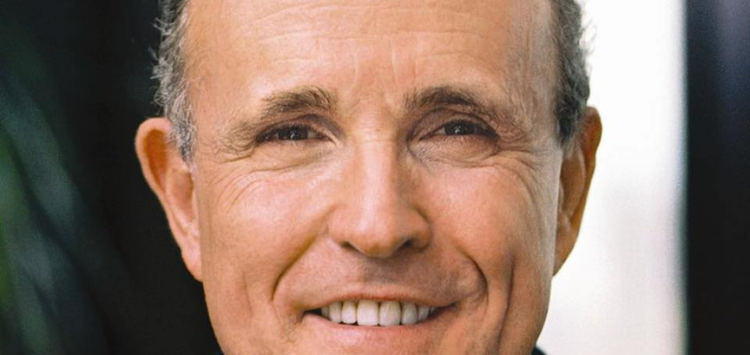
Former New York City mayor Rudy Giuliani is being treated for pneumonia and remains in critical but stable condition, according to a statement from his spokesperson.
The update was provided to ABC News, which reported that the 81-year-old was previously placed on a ventilator but is now breathing on his own under close medical supervision.
Hospitalization and current condition
Giuliani was admitted to hospital after developing pneumonia, a lung infection that can become severe in older adults. His spokesperson, Ted Goodman, said on Sunday that he was in critical condition but stable.
By Monday, Goodman added that Giuliani was “recovering from pneumonia” and being monitored as a precaution.
Medical staff temporarily placed him on a ventilator when his breathing worsened, but he has since been taken off the machine. His family and doctors remain at his bedside as he continues treatment.
Pneumonia affects the lungs by causing inflammation and fluid buildup, making it difficult to breathe. While many patients recover with treatment, the illness can become life-threatening in elderly individuals or those with underlying health conditions.
Also Read: Trump Reveals How Biden Allegedly Used FBI Agents Against Jan. 6 Demonstrators
Underlying lung condition and complications
Giuliani’s spokesperson said his recovery is complicated by a pre-existing respiratory condition known as restrictive airway disease. The condition reduces the lungs’ ability to fully expand, limiting airflow and making it harder for the body to get enough oxygen.
According to his medical history shared by his team, Giuliani developed the condition after years of respiratory exposure linked to his response during the September 11 attacks in New York City.
During that period, he spent extended time near Ground Zero in the aftermath of the terror attacks.
Doctors say people with restrictive lung disease are more vulnerable to infections like pneumonia because their lungs cannot clear mucus effectively. This increases the risk of complications, especially in older patients.
Giuliani served as mayor of New York City from 1994 to 2001, a period that included the September 11, 2001, attacks. His role during and after the crisis has often been cited in public discussions about his health and legacy.
Following news of his hospitalization, President Donald Trump publicly described Giuliani as a “True Warrior” and praised his leadership during his time as mayor. Trump also called him one of the most effective city leaders in New York’s history.
Also Read: Trump Issues Sweeping Pardons for 2016 Election-Related Convictions
Public response and medical risk factors
Giuliani’s condition has drawn attention from political figures and former colleagues, many of whom have pointed to his long public service career and the physical toll associated with it.
Officials linked to former New York City administrations also acknowledged his role in leading the city through one of its most difficult periods.
Doctors not involved in his care say pneumonia becomes significantly more dangerous when combined with chronic lung disease. In such cases, the body’s ability to fight infection is weakened, and recovery can take longer or require intensive support.
Giuliani’s hospitalization brings attention to the serious risks pneumonia poses to elderly patients with underlying lung disease. His condition shows how quickly a respiratory infection can escalate when the lungs are already compromised.