The Kenya Editors’ Guild has asked the Ethics and Anti‑Corruption Commission (EACC) to strengthen protections for journalists and whistleblowers, saying that reporters investigating corruption face increasing intimidation, harassment, and safety risks.
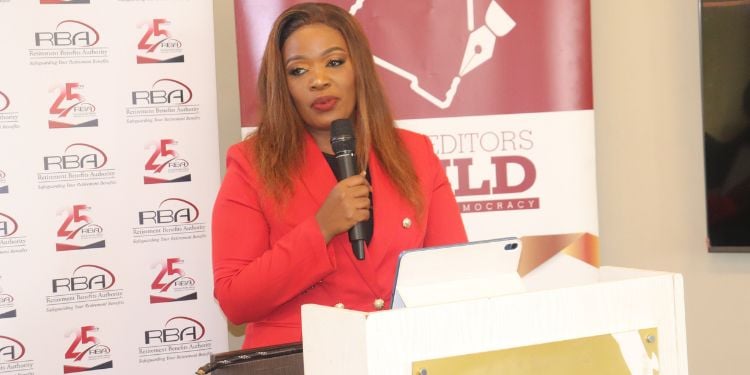
Speaking during the Anti‑Corruption Workshop for Media Practitioners, Kenya Editors’ Guild president Zubeidah Kananu warned that Strategic Lawsuits Against Public Participation (SLAPPs) are increasingly being used to silence investigative journalism.
Zubeidah noted that powerful individuals and institutions are filing costly, prolonged court cases to tie up newsrooms and prevent stories from being published before the public can access the facts.
“We are witnessing a rise in SLAPPs (Strategic Lawsuits Against Public Participation), where wealthy individuals and entities use the courts to tie up newsrooms in endless, expensive litigation, effectively gagging us before the first sentence of an investigation is even published,” said Kananu.
Kenya Editors Call for Legal and Institutional Protection
Kananu urged the EACC to actively push for a legal environment that protects journalists and whistleblowers working in the public interest. She said security agencies must act whenever journalists are threatened for reporting on corruption.
Also Read: Aaron Cheruiyot Asks EACC to Probe of Stalled KTDA Hydropower Projects After Farmers Raised Ksh 978M
According to Kananu, protection should include clear safety measures and strong institutional backing so that journalists are not left exposed after publishing sensitive investigations.
“When a journalist is threatened over a story in the public interest, the EACC and security agencies must provide a ‘safety perimeter.’ No journalist should ever have to choose between their safety and the truth,” stated Zubeidah.
Editors also proposed closer cooperation between the EACC and media houses, noting that findings from anti‑corruption investigations could help protect journalists reporting in good faith.
They further suggested that money recovered from corruption cases be redirected to support investigative journalism and fact‑checking desks.
Kananu said the safety of journalists is central to accountability and that reporters should never be forced to choose between personal safety and telling the truth.
Kenyan Editors on Collaboration, Integrity and Accountability
The workshop brought together members of the EACC, the Media Council of Kenya (MCK), editors, media leaders, and members of the Crime Journalists Association of Kenya (JCAK).
Also Read: KeNHA Flags Photo of Dangerous Bridge Making Rounds as Fake
It follows an earlier agreement between the Editors’ Guild and the EACC to strengthen cooperation in the fight against corruption and to protect investigative journalism.
Zubeidah also warned that journalists are increasingly targeted by online attacks, misinformation, and coordinated campaigns designed to discredit investigations before they are published.
The Kenya Editors raised concerns about the enforcement of integrity in elections, noting that despite corruption allegations against some candidates in past polls, many still ended up on the ballot due to system delays, which weakened public trust.