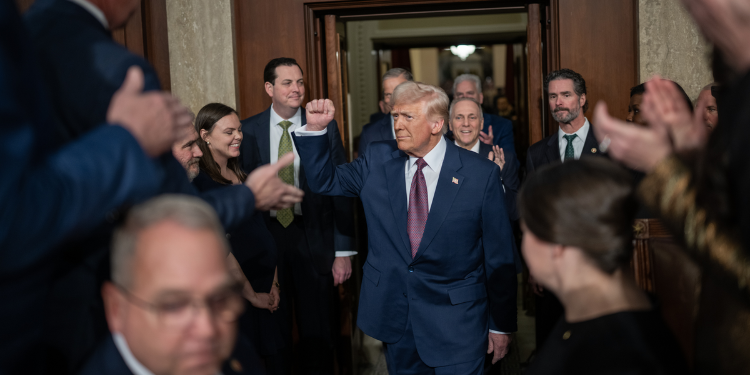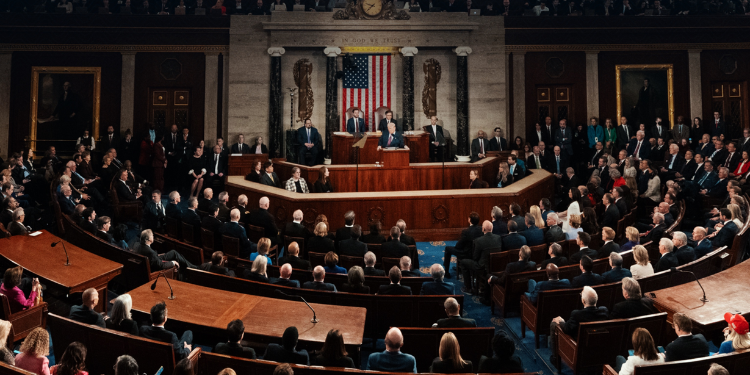
The Republican-led House of Representatives passed a war powers resolution on Wednesday directing the termination of unauthorized U.S. military hostilities against Iran, in a significant rebuke to President Donald Trump.
The vote was 215-208, with a handful of Republicans joining Democrats in support.
The measure, advanced under the War Powers Resolution of 1973, reflects growing congressional frustration with the three-month-old conflict that began on February 28, 2026, when U.S. and Israeli forces launched Operation Epic Fury.
Those initial strikes targeted Iranian military sites, nuclear facilities, and leadership, resulting in the death of Supreme Leader Ali Khamenei and other senior officials.
House Democratic Leader Hakeem Jeffries of New York urged passage, describing the conflict as a “reckless and costly war of choice” that has exceeded $100 billion in costs and weakened America’s position.
Discontent has grown as the war dragged on, disrupting global oil markets through Iranian interference in the Strait of Hormuz and contributing to higher gas prices domestically.
This marked the fourth attempt by the House to curb the campaign. Previous versions were blocked or failed narrowly, but opposition has steadily increased. A similar resolution advanced in the Senate last month with support from four Republican senators.
Four Republicans, Representatives Thomas Massie (Ky.), Brian Fitzpatrick (Pa.), Tom Barrett (Mich.), and Warren Davidson (Ohio), crossed party lines to support the measure alongside nearly all Democrats.
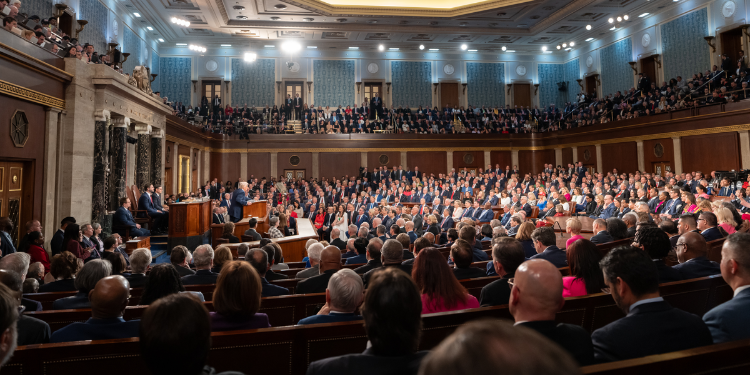
House Speaker Mike Johnson had previously attempted to prevent the vote, but procedural delays could no longer contain the momentum.
Johnson emphasized that Trump remains focused on negotiations to reopen the Strait of Hormuz and secure a durable end to hostilities.
Ceasefire
A fragile ceasefire took effect in early April following intense diplomatic efforts, including talks involving Pakistan and China. However, sporadic strikes have continued, and negotiations over Iran’s nuclear program, sanctions relief, and freedom of navigation remain unresolved.
U.S. officials, including Secretary of State Marco Rubio, have warned that congressional action could signal weakness and reduce Iran’s incentive to compromise.
The resolution directs the president to withdraw U.S. forces from any unauthorized hostilities unless Congress declares war or passes a specific authorization. It does not immediately halt ongoing operations but carries symbolic and potential legal weight if it advances further.
Also Read: Former US Congressman and Gay Rights Pioneer Barney Frank Dies
The measure now heads to the Senate, where its fate remains uncertain, and it is expected to face a veto from President Trump.
Constitutional Debate Renewed
The votes show a long-standing tension between Congress’s constitutional authority to declare war and the president’s role as commander in chief.
The 1973 War Powers Resolution requires presidents to notify Congress within 48 hours of introducing forces into hostilities and limits engagements to 60 days without approval (plus 30 days for withdrawal).
The conflict has reordered the dynamics of the Middle East and U.S. politics. It has caused significant casualties on all sides, damaged infrastructure, displaced populations, and spiked global energy prices. Trump campaigned on reducing foreign entanglements but authorized strikes in response to perceived threats from Iran’s nuclear ambitions and regional proxies.