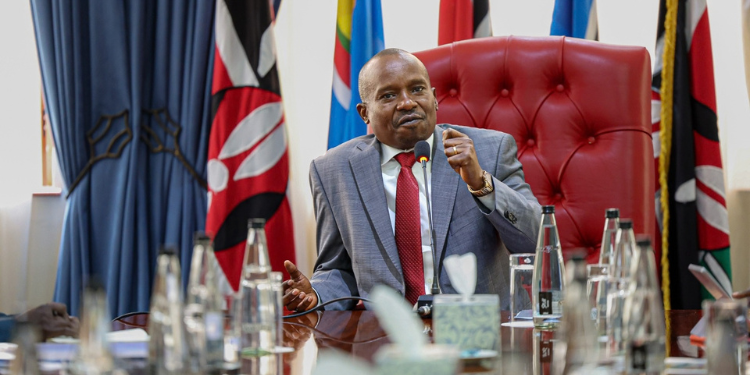

The government has announced significant progress in the nationwide NYOTA Project mentorship program, stating that most young entrepreneurs who received startup capital have already started managing their businesses.
According to an update issued on Tuesday, March 31, 2026, the mandatory mentorship program has been in operation since March 4 across all 1,450 wards in the country.
It is part of the NYOTA Project Business Support Component and focuses on youth who received startup funding through the program.
The mentorship follows the earlier release of the first tranche of business startup capital to 121,800 beneficiaries.
The project follows a three-step approach to enterprise growth, which includes business skills training, access to funding, and structured mentorship.
NYOTA Progress
According to Susan Mang’eni, the Principal Secretary in the State Department for Micro, Small, and Medium Enterprises Development, 94 percent of all beneficiaries who received the first tranche have completed the mentorship sessions.
Of those mentored, 98 percent have already started their businesses, while the remaining two percent are in the process of setting up.
The government said the figures show strong uptake of the programme and growing confidence among young people who are entering business for the first time or expanding small ventures.
Data collected from the mentorship sessions indicates that 65 percent of the mentees are first-time entrepreneurs.
Also Read: Govt Releases Official Charges for Food Imports, Exports (FULL LIST)
Another 19 percent have less than one year of business experience.
13% have been in business for 1 to 3 years, while only 3% have over 3 years of experience.
PS Susan Mangeni said that this confirms the project largely supports new and early-stage business owners.
The gender distribution among beneficiaries is nearly balanced.
Women constitute 51 percent of those who have received mentorship, while men make up 49 percent, indicating nearly equal involvement by both genders in the program.
NYOTA Deadline Extension and Second Installment Distribution
In terms of business sectors, agriculture, livestock, forestry, and fisheries account for 41 percent of the enterprises supported.
Wholesale and retail trade make up 26 percent.
Fashion and design make up 11 percent, while beauty and cosmetics account for 7 percent.
Other supported sectors include information and communication technology, manufacturing, tourism and hospitality, and transportation and storage.
Also Read: Supreme Court Sets Out Rules for Local Tribunals and Parliament
The mentorship programme was scheduled to end on March 31, but the government has extended the deadline to April 8.
This is to allow the remaining six per cent of beneficiaries who have not yet participated to complete the exercise.
PS Susan Mang’eni said mentorship is a mandatory requirement before beneficiaries can move on to the second phase of business skills classroom training.
Those who have not met their mentors have been advised to contact NYOTA Project coordinators in their constituencies.
Once the mentorship phase ends, the second round of classroom-based business skills training will begin on April 15 in all constituencies.
The training is compulsory and must be completed before further funding is released.
After completing the classroom training, beneficiaries will receive the second installment of startup capital of Ksh25,000.
Of this amount, Ksh 3,000 will be saved through the NSSF Haba Haba scheme.
This will bring the total support per beneficiary to Ksh50,000, in line with the project design.
The disbursement of the second tranche is expected before the end of April 2026.
The ministry stated that this will enable a second mentorship phase, connecting entrepreneurs to the broader micro, small, and medium enterprise ecosystem for additional support.
Beneficiaries from Daadab and Kakuma refugee camps, together with youths from host communities, will undertake classroom business training in April and May.
The NYOTA Project has also created opportunities for graduate-level youth, with more than 3,600 trainers and 5,500 mentors engaged countrywide to support young entrepreneurs.