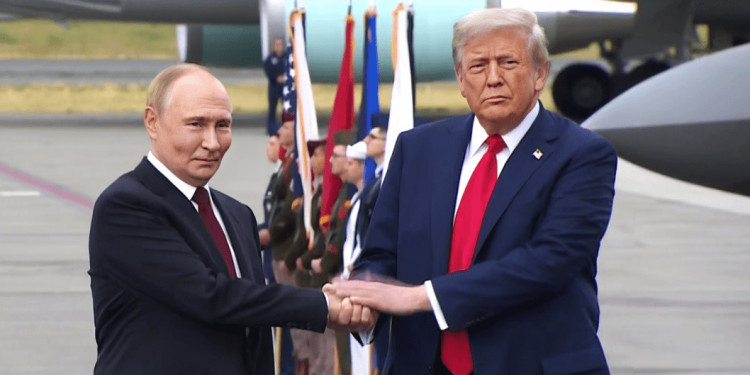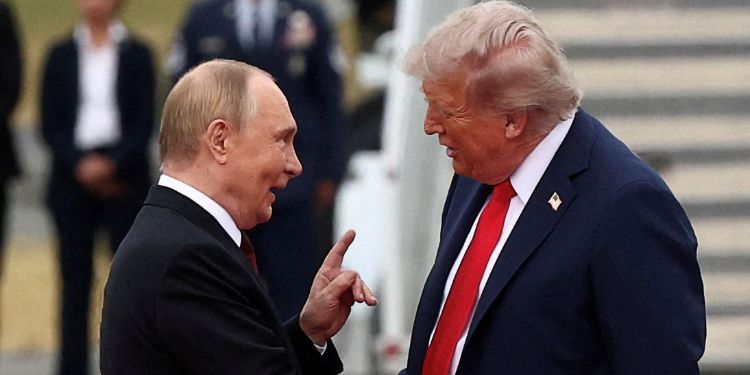
U.S. policy decisions in the Middle East, including military strikes on Iran, have disrupted oil exports and sent global energy prices soaring above $100 per barrel. The resulting supply shortages have allowed Russian President Vladimir Putin to increase sales to reliable partners in Asia and select European countries, earning billions in additional revenue
The resulting supply shortages have allowed Russia to increase sales to reliable partners in Asia and select European countries, earning billions in additional revenue amid mounting geopolitical tensions.
The spike in oil prices follows military strikes on Iran that began on February 28, severely affecting the country’s ability to export oil. Russian President Vladimir Putin highlighted that the disruption shifts the global balance of supply and demand, creating a “new stable price reality” favorable to Russian energy companies.
He stressed that this extra revenue helps reduce the debt burden of domestic firms while strengthening the country’s banks.
Russia’s Strategic Energy Partnerships
At a Kremlin meeting, Vladimir Putin emphasized that Russia continues to supply oil and gas to “reliable partners,” including major Asian economies and EU members Hungary and Slovakia.
He also expressed willingness to expand cooperation with other European buyers if long-term, politically neutral agreements are secured. Putin noted that competition for stable energy supplies is intensifying, positioning Russia to prioritize high-paying, dependable markets.
Also Read: Trump Unveils Plan to Admit More High-Profile Immigrants
Meanwhile, the European Union plans additional restrictions on Russian hydrocarbon imports starting April 25, culminating in a near-total ban by 2027. Russia may preemptively divert energy supplies to more profitable markets rather than wait for the EU to block them entirely.
Middle East Oil Disruptions Boost Moscow’s Advantage
Middle Eastern oil production, heavily reliant on the Strait of Hormuz, is facing logistical challenges. Storage facilities are full, and alternative export routes are expensive and slow to implement. According to Vladimir Putin, replacing Iranian oil flows without the Strait is “unrealistic” in the short term.
This disruption creates a gap in global energy supply that Russia can fill. In 2025, about a third of global offshore oil exports, roughly 14 million barrels per day, passed through the Strait, with 80% destined for Asia-Pacific markets. Reduced Middle Eastern output strengthens Russia’s bargaining power, allowing it to secure higher prices and long-term contracts.
The Role of U.S. Policy
U.S. actions in the Middle East, including strikes on Iran and limited engagement with global oil logistics, have unintentionally benefited Moscow. By constraining Iranian exports without providing immediate alternatives, these policies created a vacuum that Russia has been able to exploit.
Also Read: Is Netanyahu Controlling Trump and US Military Operations?
Putin noted that global gas prices are rising even faster than oil, reinforcing the financial advantage Moscow now enjoys. This has led to billions in added revenue for Russian energy companies, bolstering the country’s economy despite ongoing sanctions and geopolitical pressures.
Economic and Geopolitical Implications
Russia’s increased export earnings reduce dependence on debt markets and enhance domestic financial stability. European nations, meanwhile, face growing energy insecurity, forcing some to reconsider sanctions and supply policies. Hungarian Prime Minister Viktor Orbán has urged the EU to temporarily suspend restrictions on Russian energy, citing soaring prices and economic strain.
With short-term profits climbing, Russia is not only benefiting financially but also gaining long-term leverage in global energy markets, reshaping alliances, and strengthening its geopolitical influence.
Follow our WhatsApp Channel and X Account for real-time news updates.