
People’s Liberation Party leader Martha Karua has faced criticism online after comparing the current fuel price situation to the economic hardships experienced during the late former President Daniel arap Moi’s era.
In a post shared on her Facebook page, Karua referenced a June 1997 image that has been circulating online, saying that despite the passage of 29 years, Kenyans were still facing “the same struggle” marked by high fuel prices, rising living costs and governance failures.
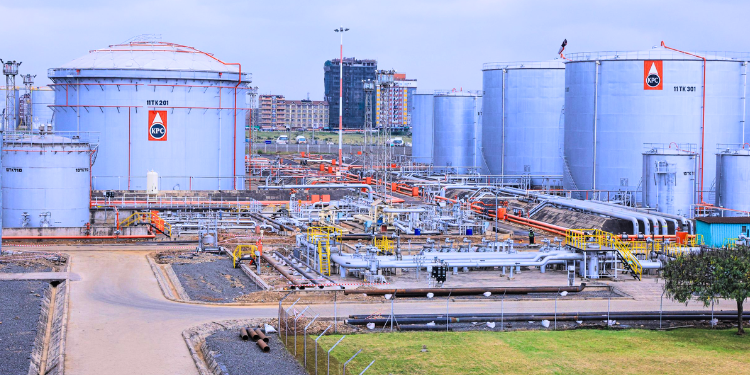
Her remarks come after the latest fuel price review announced by the Energy and Petroleum Regulatory Authority (EPRA), which increased Super Petrol prices by KSh16.65 per litre and Diesel by KSh46.29 per litre.
The review pushed the retail price of Super Petrol in Nairobi to KSh214.25 per litre, while Diesel climbed to KSh242.92.
Also Read: EPRA Announces Fuel Prices for May and June Cycle
Karua used the comparison to argue that Kenya remained trapped in “an endless cycle of corruption, poor priorities and injustice.”
However, her remarks immediately sparked backlash from sections of Kenyans online, many arguing that the latest spike is largely linked to global oil market disruptions rather than domestic politics alone.
Others questioned why Karua had chosen to compare only the Moi era and the current administration while leaving out the intervening governments of former Presidents Mwai Kibaki and Uhuru Kenyatta, periods during which fuel prices and global economic conditions also fluctuated significantly.
Several online users argued that the comparison oversimplified a much broader global economic reality and ignored changes in taxation, exchange rates, international oil prices and geopolitical pressures that have evolved over nearly three decades.
The Ministry of Energy and Petroleum has attributed the increase to ongoing geopolitical tensions in the Middle East, which have disrupted global supply chains, increased shipping costs and pushed up international crude oil prices.
Also Read: EPRA Reveals How KSh6.04 Billion Fuel Subsidy Will Be Shared Among Oil Marketers and Three Importers
According to the Ministry, the average landed cost of imported Super Petrol rose from USD 823.27 per cubic metre in March 2026 to USD 906.23 in April 2026, representing a 10 per cent increase.
Diesel increased by 20.32 per cent, climbing from USD 1,073.82 to USD 1,291.98 per cubic metre, while Kerosene rose by 1.59 per cent.
Officials also noted that freight and insurance premiums around the Strait of Hormuz have more than doubled due to instability in the region.
To cushion consumers, the government said it had deployed approximately KSh5 billion through the Petroleum Development Levy (PDL) stabilisation mechanism to moderate Diesel and Kerosene prices.
The Ministry further defended measures such as the reduction of VAT on petroleum products from 16 per cent to 8 per cent and the Government-to-Government fuel import framework, which officials say has helped Kenya avoid even steeper fuel costs.
While Karua’s comparison reignited debate on the rising cost of living, government officials and some online users argued that comparing current global market-driven fuel shocks to the 1997 local economic environment ignored major international dynamics currently affecting economies worldwide.
Notably, average fuel prices in 1997 stood at approximately KSh34.55 for Super Petrol, KSh27.30 for Diesel and KSh20.85 for Kerosene, reflecting the dramatic long-term rise in global petroleum costs over nearly three decades.