The Kenya Defence Forces (KDF) intervened to support the Kenya Red Cross and other emergency teams in responding to the flooding that affected Nairobi.
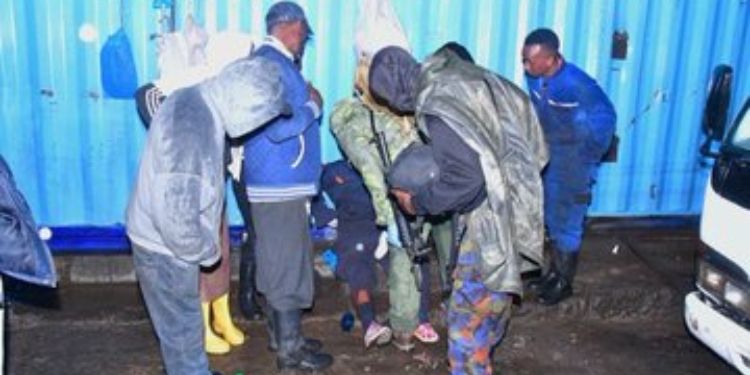
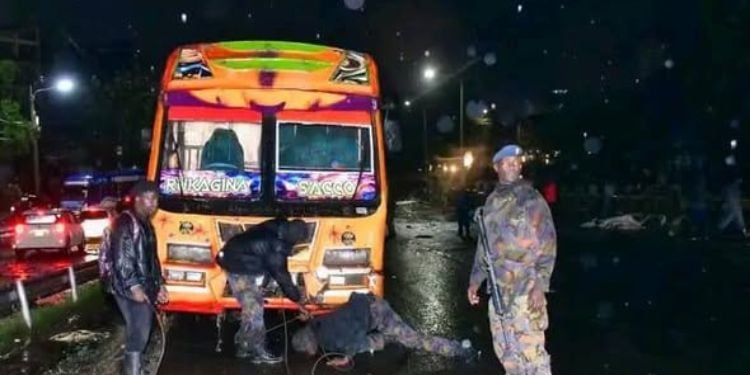
The military Rapid Response Unit (RRU), working with the Kenya Red Cross, was involved in a rescue operation in response to floods that affected Nairobi on the night of March 6, 2026.
RRU officers were involved in traffic control and facilitating the towing of several vehicles to clear the Kariokor–Ring Road roundabout, which was affected by the swollen Nairobi River, restoring traffic flow.
They also made sure that Mbagathi Roundabout, an area severely impacted by the floods, had the highest level of traffic control.
The operation came in response to the heavy rains that caused widespread flooding, road blockages, property damage, and displacements across Nairobi.
Rescue Teams Involved with the KDF during the Operation
The Kenya Red Cross Society (KRCS) led the frontline humanitarian and lifesaving interventions.
They were involved in search and rescue operations, evacuations of stranded individuals, and safety relocations.
“As part of the flood response in Nairobi, Kenya, Red Cross first responders rescued 20 people stranded along Kirinyaga Road and moved them to safety,” a statement by the Kenya Red Cross read.
The Kenya Defence Forces (KDF) Military Rapid Response Unit (RRU) collaborated closely with the KRCS.
A special unit of the KDF was deployed on the night of March 6 to assist in the emergency operation.
To restore mobility and facilitate rescues in flooded areas, the special KDF provided logistical support, including traffic management and vehicle recovery.
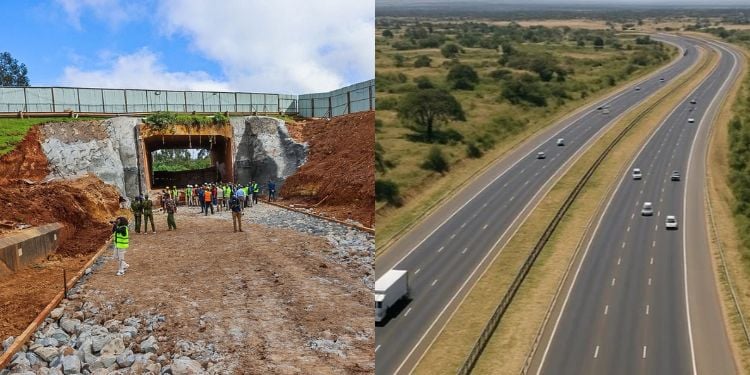
Also Read: KeNHA Closes Road After Floods Wash Away Major Section
The Nairobi City County Government Emergency Teams were also sent to assist, along with the KDF Military Rapid Response Unit and the Red Cross.
According to a statement shared by the office of Nairobi County Governor Johnson Sakaja on Saturday, March 7, 2026, the Nairobi City County Government had put in measures to safeguard lives and property amid ongoing rains.
“The Nairobi City County Government wishes to update members of the public on the current rainfall situation and the comprehensive measures currently in place to safeguard lives and property across the capital,” part of the statement read.
According to the governor, the county activated a Multi-Sectoral Disaster and Flood Mitigation Committee to provide 24-hour monitoring and rapid response services.
He also noted that a multi-agency team comprising teams from the National Police Service and the Kenya Red Cross Society would coordinate field responses.
Sakaja mentioned that Nairobi County was collaborating closely with the Kenya National Highways Authority (KeNHA) and the Kenya Urban Roads Authority to reduce traffic on the major roads during the floods.
Also Read: Moja Expressway Grants Free Access to Nairobi Expressway Amid Flooding Crisis
Areas in Nairobi Affected by Floods
Areas affected by the floods included Pipeline and Embakasi (Kware Road cut off), Mukuru (Kwa Njenga, Reuben, Viwandani), Kibra, Mathare, Huruma, Baba Dogo, Bosnia, South B & South C, Nairobi West, Lang’ata, Umoja 3, Chokaa, Njiru, Ruai, Utawala, Roysambu, Kahawa West, Githurai, Loresho, and parts of Westlands.
In addition to Nairobi, Wang’chieng Ward in Kisumu County also experienced flooding after the Sondu-Miriu River overflowed its banks, impacting Kobal.
About 381 households have been impacted, with farms and homesteads flooded and roughly 56 hectares of farmland destroyed, according to the Kenya Red Cross.
Follow our WhatsApp Channel and X Account for real-time news updates.