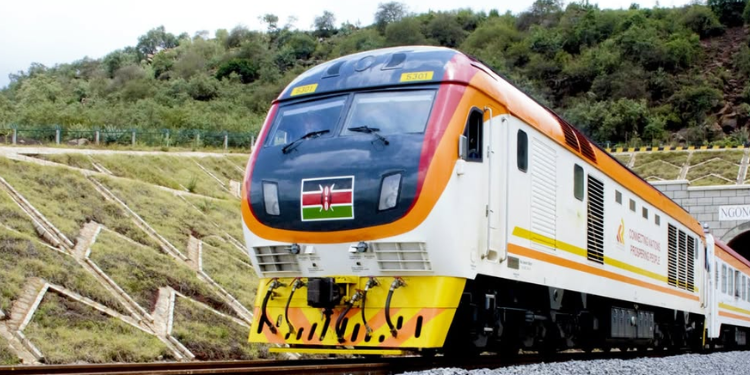
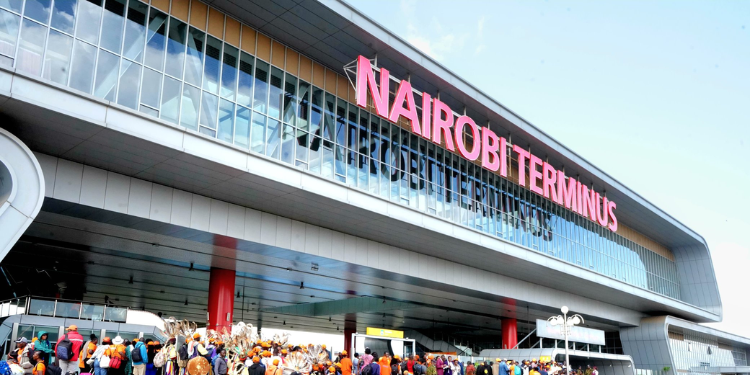
Kenya Railways has issued a travel advisory for passengers using the Madaraka Express due to ongoing heavy rains and flooding in many parts of the country.
In a public notice released on Thursday, the state agency advised travelers to arrive at their departure stations at least one hour before the time indicated on their tickets. The advisory applies to all Madaraka Express passenger services.
Kenya Railways said the move is intended to help ease congestion caused by nationwide floods, which have disrupted road transport and slowed traffic in major towns and along corridors leading to railway stations.
Floods Disrupt Access to Stations
According to the notice, the ongoing heavy rains have led to traffic snarl-ups in several areas, making it difficult for passengers to reach stations on time.
Kenya Railways said arriving earlier will allow travelers enough time to go through ticketing, security checks, and boarding without delays.
“This will ensure a smooth and seamless experience during ticketing, security checks, and boarding,” the agency said in the advisory.
Kenya has been experiencing intense rainfall that has caused flooding, damaged roads and bridges, and displaced thousands of people in both urban and rural areas.
Major highways in Nairobi, Mombasa, and other towns have been affected, with motorists facing long delays, especially during peak hours.
Also Read: Alliance Girls Principal’s Job on the Line After Hiking School Fees to Ksh120K
Kenya Railways acknowledged that while trains remain operational, access roads to stations could be affected by waterlogged sections, diversions, and slow-moving traffic.
The agency warned that late arrival at stations could lead to passengers missing their trains, as services will not be held back.
Madaraka Express Trains to Depart on Schedule
Kenya Railways stressed that all Madaraka Express trains will continue to depart strictly as scheduled despite the prevailing weather conditions.
The company urged passengers to plan their journeys early and factor in possible delays on the roads.
The Madaraka Express, which operates between Nairobi and Mombasa, is one of the country’s busiest passenger services, especially during weekends and public holidays.
Any disruption or missed connection often affects hundreds of travelers at a time.
Kenya Railways said that punctual departures are necessary to maintain operational efficiency and avoid knock-on delays along the route.
The railway line uses a tight timetable that includes passing points, crew rotations, and station clearances, making delays costly and difficult to manage.
Also Read: Nairobi Residents Under Pressure as Rents Reach New Highs
Kenya Railways said it remains committed to providing safe and reliable transportation even as the country deals with the effects of the rains and insisted that cooperation from passengers is essential to keeping services running smoothly.
Recent Nationwide Floods
Kenya has been experiencing sustained heavy rains since early March 2026 as part of the long rains season, triggering widespread flooding across the country.
More than 30 counties have been affected, including Nairobi, Mombasa, Kisumu, Machakos, Kajiado, Kwale, Lamu, Garissa, and Tana River.
The floods have killed over 100 people nationwide, with most deaths linked to drowning and electrocution in flooded homes and streets.
Thousands of households have been displaced, with between 2,600 and 3,000 families reported affected by late March, a number that continued to rise through April as rains persisted.
In Nairobi, over 650 households were impacted, particularly in low-lying and informal settlements such as Utawala, Ruai, Kariokor, and parts of Eastlands.
Floodwaters have submerged homes, schools, and businesses, forcing evacuations and disrupting daily life.
Transport infrastructure has been heavily affected, with sections of major roads, including Mombasa Road, Waiyaki Way, Ruai Bypass, and the Mai Mahiu–Narok Road, temporarily closed or rendered impassable.
Traffic delays have been reported in major towns and along key corridors.
The Kenya Red Cross, county disaster teams, and security agencies, including the Kenya Defense Forces (KDF), have been deployed for rescue and evacuation operations.
Rising water levels in major rivers such as the Tana and Nyando have prompted controlled spillovers at Masinga Dam.
Kenya Met has repeatedly warned that heavy rainfall, flash floods, and transport disruptions are expected to continue into early May.