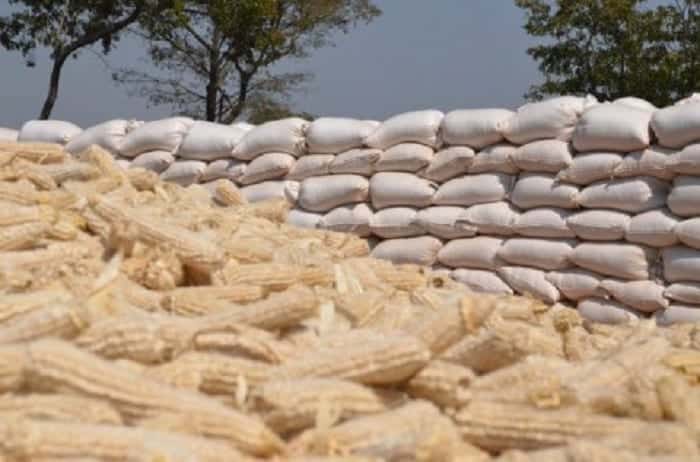
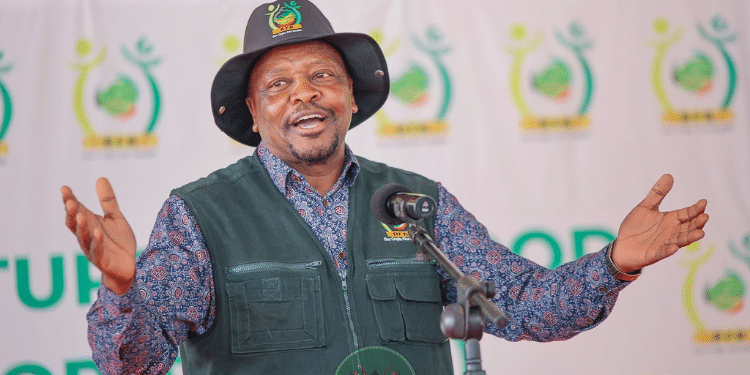
Agriculture and Livestock Development Cabinet Secretary Mutahi Kagwe has issued a 30-day ultimatum to maize hoarders to release their stocks into the market.
Speaking during a Ministry function on Monday, January 26, CS Kagwe warned that the government will authorise duty-free maize imports to bring down soaring maize flour prices if hoarders fail to comply.
Kagwe emphasised that the government’s primary strategy is to buy maize from local farmers to fill the National Strategic Food Reserves.
The immediate target is 1.7 million bags, with a long-term goal of 4 million bags. So far, only 186,000 bags have been delivered, a shortfall largely attributed to hoarding and speculative behaviour amid emerging drought conditions.
“We are paying Sh4,000 per bag, with Sh1.7 billion allocated for procurement. Our priority is to source maize locally; imports will only be considered as a last resort,” Kagwe stated.
Mutahi Kagwe on Efforts to Reduce Post-Harvest Losses
To improve maize quality and reduce post-harvest losses, the ministry is redeploying over 60 mobile and fixed maize dryers to cooperatives, large-scale farmers, and high-production areas. Dryers previously stationed in low-yield regions will be reassigned.
Kagwe warned that aflatoxin remains a serious public health concern and criticised the misallocation of dryers.
Farmers will have access to NCPB facilities for maize drying at minimal maintenance costs, while millers can lease dryers to curb the rejection of local maize and reduce reliance on imports.
Also Read: Relief for Kenyans as Sugar, Maize Flour, and Gas Prices Shift
Fertiliser Program and Agricultural Support
The CS highlighted the success of the fertiliser subsidy program, which distributed 9.1 million bags in 2025, doubling maize production in key regions, including the North and South Rift, Eastern, and Central Kenya.
County governments will register agro-dealers to improve last-mile distribution, supported by an instant payment system ensuring timely payment upon voucher redemption.
“This system will lower transport costs, address last-mile delivery challenges, and guarantee fertiliser availability at the village level,” Mutahi Kagwe said.
Also Read: Mutahi Kagwe Breaks Silence on Increasing Prices of Unga
Rice, Wheat, and Food Security
Kenya produces only 20% of its rice needs and 10% of its wheat requirements. Kagwe reiterated that local production will be prioritised before imports to encourage expansion in farming.
The ministry is also undertaking nationwide soil mapping to optimise fertiliser use and maximise yields.
He directed NCPB to resolve technical inefficiencies that delay grain intake, stressing that ensuring adequate food supply is a national obligation.
“Food security is not optional; it is a national duty. We must have enough food in our stores,” Mutahi Kagwe concluded.
Follow our WhatsApp Channel and X Account for real-time news updates.