Wednesday, June 24, 2026
  • News
    • Latest News
    • Breaking News
    • Fact Check
    • Investigations
    • Explainers
  • Politics
    • Global Politics
    • Elections
    • Government & Policy
    • Diplomacy
    • Conflicts & Security
    • Political Analysis
  • Business
    • Global Economy
    • Markets
    • Technology
    • Startups
    • Energy
    • Finance
  • World News
    • Americas
    • Asia
    • Asia Pacific
    • Africa
    • Europe
    • Middle East
  • Africa
    • Central Africa
    • East Africa
    • West Africa
    • Southern Africa
  • Health
    • Global Health
    • Public Health
    • Health Policy
    • Medical Research
    • Diseases & Conditions
    • Mental Health
    • Nutrition
    • Climate & Health
    • Health Explainers
  • Sports
    • World Cup 2026
    • Athletics
    • Basketball
    • Boxing
    • Cricket
    • Football
    • Formula 1
    • Golf
    • Rugby
  • Weather
    • Climate Business
    • Climate Change
    • Climate Solutions
    • Living Green
  • Culture
    • Arts
    • Film & TV
    • Food
    • Music
    • Lifestyle
    • Travel
  • Opinion
    • Editorials
    • Letters
  • Behind The Brand
REGISTER
LOGIN
No Result
View All Result
The Kenya Times
  • News
    • Latest News
    • Breaking News
    • Fact Check
    • Investigations
    • Explainers
  • Politics
    • Global Politics
    • Elections
    • Government & Policy
    • Diplomacy
    • Conflicts & Security
    • Political Analysis
  • Business
    • Global Economy
    • Markets
    • Technology
    • Startups
    • Energy
    • Finance
  • World News
    • Americas
    • Asia
    • Asia Pacific
    • Africa
    • Europe
    • Middle East
  • Africa
    • Central Africa
    • East Africa
    • West Africa
    • Southern Africa
  • Health
    • Global Health
    • Public Health
    • Health Policy
    • Medical Research
    • Diseases & Conditions
    • Mental Health
    • Nutrition
    • Climate & Health
    • Health Explainers
  • Sports
    • World Cup 2026
    • Athletics
    • Basketball
    • Boxing
    • Cricket
    • Football
    • Formula 1
    • Golf
    • Rugby
  • Weather
    • Climate Business
    • Climate Change
    • Climate Solutions
    • Living Green
  • Culture
    • Arts
    • Film & TV
    • Food
    • Music
    • Lifestyle
    • Travel
  • Opinion
    • Editorials
    • Letters
  • Behind The Brand
  • News
    • Latest News
    • Breaking News
    • Fact Check
    • Investigations
    • Explainers
  • Politics
    • Global Politics
    • Elections
    • Government & Policy
    • Diplomacy
    • Conflicts & Security
    • Political Analysis
  • Business
    • Global Economy
    • Markets
    • Technology
    • Startups
    • Energy
    • Finance
  • World News
    • Americas
    • Asia
    • Asia Pacific
    • Africa
    • Europe
    • Middle East
  • Africa
    • Central Africa
    • East Africa
    • West Africa
    • Southern Africa
  • Health
    • Global Health
    • Public Health
    • Health Policy
    • Medical Research
    • Diseases & Conditions
    • Mental Health
    • Nutrition
    • Climate & Health
    • Health Explainers
  • Sports
    • World Cup 2026
    • Athletics
    • Basketball
    • Boxing
    • Cricket
    • Football
    • Formula 1
    • Golf
    • Rugby
  • Weather
    • Climate Business
    • Climate Change
    • Climate Solutions
    • Living Green
  • Culture
    • Arts
    • Film & TV
    • Food
    • Music
    • Lifestyle
    • Travel
  • Opinion
    • Editorials
    • Letters
  • Behind The Brand
No Result
View All Result
The Kenya Times ~ Trending, Breaking News and Videos
No Result
View All Result
ADVERTISEMENT

Plan to Raise Cab Fares to KSh500 Risks Driving Passengers Back to Matatus

Mary WanjohibyMary Wanjohi
June 24, 2026
Reading Time: 7 mins read
 How Proposal To Raise Cab Fares To Ksh500 Risks Driving Passengers Back To Matatus

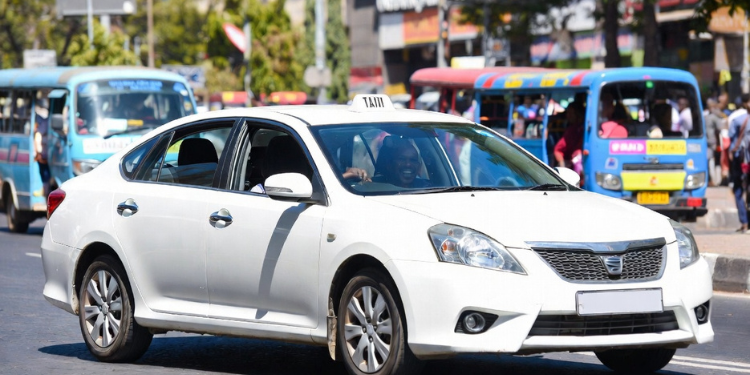
An image of a cab.PHOTO/Grok

FacebookTwitterLinkedInRedditWhatsApp
Advertisement

The government’s plan to set a minimum fare floor for ride-hailing services has ignited a major debate over the future of Kenya’s gig economy, with industry experts warning that a sharp increase in taxi fares could reduce demand, hurt drivers’ earnings, and weaken one of the country’s fastest-growing sources of employment.

The discussion follows a directive by President William Ruto on May 22, instructing the Ministry of Transport and the National Transport and Safety Authority (NTSA) to engage with ride-hailing companies and drivers to implement regulations, including a minimum taxi fare framework.

President Ruto, however, framed the intervention as long overdue. “We need urgent regulations that have already been developed,” he said. “I have instructed the ministry to work with stakeholders to make sure those regulations are implemented so that we can streamline the whole digital taxi platform.”

Industry consultations have discussed a minimum fare of between KSh400 and KSh500, higher than the current minimum fare of approximately KSh220 charged on some platforms.

The proposal comes at a time when ride-hailing drivers are struggling with rising fuel costs, insurance premiums, vehicle maintenance expenses, loan repayments, parking charges, and increasing traffic congestion, all of which have squeezed take-home earnings.

However, analysts argue that the solution may not be as simple as raising fares.

ADVERTISEMENT

How Much Drivers Are Currently Earning

According to an Ipsos report released in March 2026, Kenya’s gig economy supports approximately 1.5 million workers and generates more than KSh130 billion annually, making it one of the country’s most significant sources of digital employment. 


Also Read: 1,000 Kenyan CEOs List Top Reforms Needed to Revive Kenya’s Economy


Ride-hailing accounts for roughly one-fifth of the sector, second only to e-commerce. More than half of ride-hailing drivers depend on platform work as their primary source of income.

The report found that 53 per cent of ride-hailing drivers rely on the platforms as their main source of income, while many others use them to supplement household earnings. The sector has become a critical source of livelihoods amid persistent youth unemployment and a challenging job market.

Data from the report also shows that the average ride-hailing driver earns approximately KSh63,000 per month, while the top 20 per cent earn around KSh184,000. Motorcycle riders earn an average of KSh56,000 per month.

Breaking those figures down, the average driver earns about KSh2,100 per day before expenses, assuming a 30-day working month.

ADVERTISEMENT

However, drivers must still pay for fuel, vehicle financing, maintenance, insurance, data, and platform-related costs, meaning net earnings are often considerably lower.

Why Higher  Taxi Fares Could Backfire

Digital marketing entrepreneur Moses Kemibaro argues that while concerns about driver welfare are legitimate, policymakers risk aggravating the problem rather than solving it.

“A move from KSh220 to KSh500 would represent an increase of approximately 127 per cent. That is not a routine fare adjustment. It is a major intervention in one of Kenya’s most important digital marketplaces,” Kemibaro said in an analysis of the proposal.

According to him, the debate should not focus solely on how much drivers earn per trip but on how many trips they can complete each day.
Ride-hailing, he argues, operates as a marketplace involving three parties: drivers, passengers, and platforms.
Drivers need sustainable earnings, platforms need enough demand to keep the system functioning, and passengers need fares they can afford.

“The passenger is therefore not a secondary consideration in this debate. Ultimately, the passenger is the source of the revenue everyone else is trying to divide,” Kemibaro noted.

He warns that significantly higher fares could push consumers toward alternatives such as matatus, boda bodas, tuk-tuks, carpooling, walking, or informal off-platform arrangements.

If passenger demand falls sharply, drivers could find themselves earning more per trip but completing fewer trips overall.

“The question is not whether Kenya should regulate this market. It should. The question is whether a blunt minimum fare is the most effective instrument for addressing the problem,” he stated.


Also Read: Bolt Sets the Record Straight on Reports of Shutting Down in Kenya


Kenya’s Gig Economy Safety Valve

On his part, technology entrepreneur and digital economy expert Mbugua Njihia has raised similar concerns, describing Kenya’s ride-hailing industry as a critical economic safety valve for thousands of households.

According to Njihia, the sector has become far more than a transport service; it has evolved into a major driver of employment, financial inclusion, asset ownership, and digital commerce.

“At a time when youth unemployment remains a pressing national challenge, the gig economy has quietly functioned as a massive socioeconomic safety valve,” he said.

Njihia argues that fare floors are often assessed only from the driver’s perspective, without fully considering how passengers respond to higher prices.

“The issue is not whether drivers deserve better earnings. They do. The real question is whether administratively raising fare floors improves net driver income, or whether it suppresses demand, reduces trip volumes, increases idle time, and pushes both drivers and passengers into informal alternatives.”

He notes that transport inflation has been among the fastest-rising costs for Kenyan households in recent months, putting consumers under pressure from rising food, rent, education, and utility expenses.
In such an environment, doubling the minimum fare could force many passengers to reduce their use of ride-hailing services.

Lessons From Tanzania

Both Kemibaro and Njihia used Tanzania as an example of how well-intentioned regulation can produce unintended consequences.

Tanzania introduced fare controls and commission caps in 2022 to support drivers, but the changes posed challenges, prompting some companies to scale back and regulators to review the rules.
The analysts noted that Kenya should avoid repeating that experience by relying on detailed economic modeling rather than politically attractive fare figures.

Drivers Need Relief, But Not at the Expense of Demand

While acknowledging the economic hardship facing drivers, they argue that raising fares alone may not address the underlying problem.

Instead, they propose measures such as stricter enforcement of existing commission caps, greater transparency on driver earnings, affordable vehicle financing, insurance reforms, fuel-discount programmes, and targeted support for drivers who rent vehicles.

There are concerns that rapid fare increases could drive passengers away from digital platforms, reducing trips and weakening the formal transport system.

For a sector that supports more than 1.5 million Kenyans and generates over KSh130 billion annually, the stakes are high.

Policymakers face the challenge of balancing higher pay for drivers with the need to maintain passenger demand, a decision that is likely to shape the future of Kenya’s digital transport sector.

Follow our WhatsApp Channel and X Account for real-time news updates.

Analysts Warn Proposed Ksh500 Minimum Taxi Fare Could Backfire On Drivers And Passengers
An image of a taxi. PHOTO/Grok
Tags: Taxi Fares
Mary Wanjohi

Mary Wanjohi

Mary Wanjohi is a digital news correspondent at The Kenya Times driven by a deep commitment to truth, storytelling, and public service. With a background in Communication and Journalism, she has developed a strong foundation in news reporting, feature writing, and investigative research. Mary is passionate about uncovering stories that matter from community issues and social justice to politics and culture. She approaches every assignment with curiosity, integrity, and a dedication to accuracy. Her work reflects a belief that journalism is not just about reporting facts, but about giving voice to the voiceless and holding power to account. She can be reached at [email protected]

Related Posts

The Matatu Owners Association Has Assured The Public That Transport Services Will Continue Normal Operations During The Gen Z Memorial Protests.

Matatu Owners Give Way Forward Ahead of June 25 Protests

June 24, 2026
A Photo Of Flora Mutahi, Founder And Ceo Of Melvin Marsh International Ltd Photo/Flora Mutahi

Ecobank Kenya Appoints Flora Mutahi, a Woman of Firsts

June 24, 2026
Captain Francis Ruto Langat (Francis), A Pilot With Flex Aviation Who Died Following A Plane Crash In South Sudan, Will Be Laid To Rest On June 25.

Family Tree of Captain Ruto, a Career Kenyan Pilot Who Died in Juba Plane Crash

June 24, 2026
Kessha Proposes Higher School Fees As C1 Parents Set To Pay Ksh87,781 Annually

New School Fees Revealed: What Every Parent in Kenya Will Pay Under Proposed Structure

June 24, 2026

Leave a Reply Cancel reply

Your email address will not be published. Required fields are marked *

ADVERTISEMENT

The Kenya Times Facebook

LATEST NEWS

  • Plan to Raise Cab Fares to KSh500 Risks Driving Passengers Back to Matatus
  • Matatu Owners Give Way Forward Ahead of June 25 Protests
  • President Ruto Says He Is Being Blackmailed By Gideon Moi
  • Ecobank Kenya Appoints Flora Mutahi, a Woman of Firsts
  • Family Tree of Captain Ruto, a Career Kenyan Pilot Who Died in Juba Plane Crash
  • New School Fees Revealed: What Every Parent in Kenya Will Pay Under Proposed Structure
  • Why Some Safaricom Customers No Longer Access Popular Data Offers
  • Federal Judge Blocks Trump Policy Allowing Arrests at Immigration Courts Nationwide
  • Alan Wilson Wins South Carolina Governor Runoff After Trump’s Late Endorsement
  • Judge Hands Antifa Leader 100 Years for Terror Attack on ICE Facility
  • Trump’s Social Security Tax Cuts Face Scrutiny Over $168 Billion Revenue Loss
  • FDA Recalls Popular Blood Pressure Drug Nationwide: Tablets May Not Dissolve in Your Body
  • Republicans Go Against Trump in Rare Senate Rebuke Over Iran Military Action
  • Iran Rejects Trump’s Claim of Nuclear Inspection Deal as U.S. Talks Face Early Dispute
  • Trump on Experimental Obesity Drug? White House Forced to Respond After Viral Report
ADVERTISEMENT

Company

About Us

Our Authors

Our Experts

Social Media

Policies

Privacy Policy

House Rules

Standards and Policies

Terms and Conditions

Subscription

My Account

Contact Us

Contact Us

Join Our Team

Advertise With Us

© Copyright 2026 | The Kenya Times | All Rights Reserved

Welcome Back!

Sign In with Facebook
Sign In with Google
Sign In with Linked In
OR

Login to your account below

Forgotten Password? Sign Up

Create New Account!

Sign Up with Facebook
Sign Up with Google
Sign Up with Linked In
OR

Fill the forms below to register

All fields are required. Log In

Retrieve your password

Please enter your username or email address to reset your password.

Log In
Your Privacy and Cookies
We use cookies on our website to give you the most relevant experience by remembering your preferences and repeat visits. By clicking “Accept”, you consent to the use of ALL the cookies.
Do not sell my personal information.
Cookie settingsACCEPT
Privacy & Cookies Policy

Privacy Overview

This website uses cookies to improve your experience while you navigate through the website. Out of these cookies, the cookies that are categorized as necessary are stored on your browser as they are essential for the working of basic functionalities of the website. We also use third-party cookies that help us analyze and understand how you use this website. These cookies will be stored in your browser only with your consent. You also have the option to opt-out of these cookies. But opting out of some of these cookies may have an effect on your browsing experience.
Necessary
Always Enabled
Necessary cookies are absolutely essential for the website to function properly. This category only includes cookies that ensures basic functionalities and security features of the website. These cookies do not store any personal information.
Functional
Functional cookies help to perform certain functionalities like sharing the content of the website on social media platforms, collect feedbacks, and other third-party features.
Performance
Performance cookies are used to understand and analyze the key performance indexes of the website which helps in delivering a better user experience for the visitors.
Analytics
Analytical cookies are used to understand how visitors interact with the website. These cookies help provide information on metrics the number of visitors, bounce rate, traffic source, etc.
Advertisement
Advertisement cookies are used to provide visitors with relevant ads and marketing campaigns. These cookies track visitors across websites and collect information to provide customized ads.
Others
Other uncategorized cookies are those that are being analyzed and have not been classified into a category as yet.
SAVE & ACCEPT
LOGIN | REGISTER
  • Login
  • Sign Up
  • Cart
No Result
View All Result
  • News
    • Latest News
    • Breaking News
    • Investigations
    • Explainers
    • Fact Check
  • Politics
    • Global Politics
    • Conflicts & Security
    • Elections
    • Diplomacy
    • Government & Policy
    • Political Analysis
  • Business
    • Global Economy
    • Markets
    • Technology
    • Startups
    • Energy
    • Finance
  • World News
    • Americas
    • Asia
    • Asia Pacific
    • Africa
    • Europe
    • Middle East
  • Africa
    • East Africa
    • West Africa
    • Southern Africa
    • Central Africa
  • Health
    • Global Health
    • Public Health
    • Health Policy
    • Medical Research
    • Diseases & Conditions
    • Mental Health
    • Nutrition
    • Climate & Health
    • Health Explainers
  • Sports
    • World Cup 2026
    • Athletics
    • Basketball
    • Boxing
    • Cricket
    • Football
    • Formula 1
    • Golf
    • Rugby
  • Weather
    • Climate Business
    • Climate Change
    • Climate Solutions
    • Living Green
  • Culture
    • Arts
    • Film & TV
    • Food
    • Lifestyle
    • Music
    • Travel
  • Opinion
    • Editorials
    • Letters
  • Behind The Brand
  • Contact Us

Not enough quota to unlock this post
Unlock left : 0
Are you sure want to cancel subscription?