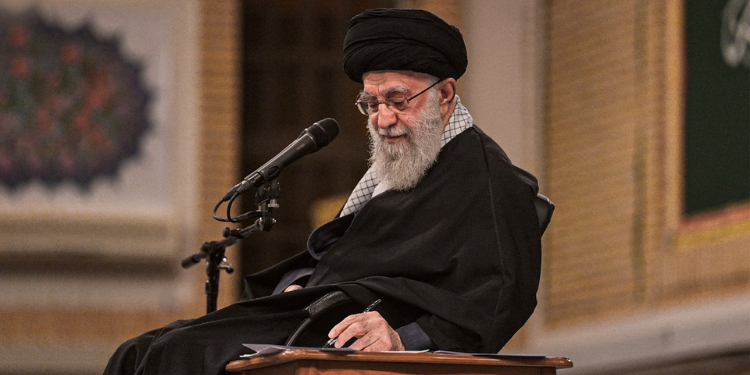
Iran has revealed new details about the killing of its Supreme Leader, Ayatollah Ali Khamenei, while warning of an imminent “devastating offensive” targeting Israel and United States military bases.
Iran’s Supreme National Security Council (SNSC), in a statement on March 1 broadcast on state television, said Khamenei was killed in an airstrike early Saturday “while he was carrying out tasks” in his office during strikes blamed on the U.S. and Israel.
The Islamic Revolutionary Guard Corps (IRGC)-affiliated Tasnim News Agency said the circumstances of Khamenei’s death disproved earlier reports suggesting he had gone into hiding, describing such claims as “enemy psychological warfare.”
Iranian state television formally confirmed the leader’s death and declared 40 days of national mourning and seven days of public holiday.
Programming on the IRINN news channel showed photographs of Khamenei accompanied by Quran recitations and mourning banners.
Officials described the killing as martyrdom and said it would mark the beginning of a broader resistance campaign.
According to the SNSC statement read on air, Khamenei’s “martyrdom” would spark “an uprising in the fight against the oppressors.”
Iran warns of imminent military response
Shortly after confirming Khamenei’s death, Iran’s Islamic Revolutionary Guard Corps issued a warning that a major retaliatory operation was imminent.
“The most devastating offensive operation in the history of the Islamic Republic of Iran’s armed forces will begin toward the occupied territories and American terrorist bases in just moments,” the statement said.
U.S. President Donald Trump earlier confirmed Khamenei’s death in a post on Truth Social, describing the killing as a major turning point.
“Khamenei, one of the most evil people in History, is dead,” he wrote.
Trump said U.S. intelligence and coordination with Israel ensured Khamenei could not escape.
“He was unable to avoid our Intelligence and Highly Sophisticated Tracking Systems and, working closely with Israel, there was not a thing he, or the other leaders that have been killed along with him, could do.”
Also Read: Iran Finally Confirms Killing of Ali Khamenei, Announces 40 days of Mourning
Trump described the killing as a historic opportunity for regime change in Iran and said some Iranian security forces may already be seeking immunity.
“We are hearing that many of their IRGC, Military, and other Security and Police Forces no longer want to fight, and are looking for Immunity from us.”
He warned that U.S. and Israeli bombing operations would continue.
“The heavy and pinpoint bombing… will continue, uninterrupted throughout the week or, as long as necessary.”
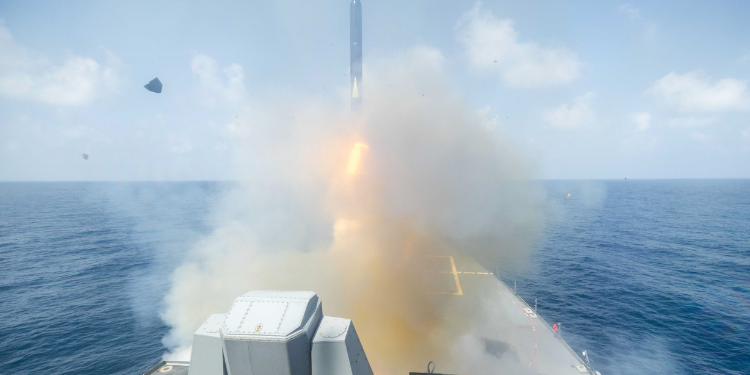
Earlier, Trump said the strikes had inflicted “tremendous damage” that could take Iran years to rebuild.
Relatives also reported killed
Iranian state media also reported that several members of Khamenei’s family were killed in the strikes.
Reports indicated that his daughter, son-in-law, and grandchild were among those killed. Iran’s Fars News Agency, which is affiliated with the IRGC, also reported that one of Khamenei’s daughters-in-law may have been killed.
Earlier reports had indicated that a son-in-law and daughter-in-law were among the casualties, though details about the identities of those killed remain limited.
Under Iran’s constitution, Khamenei’s successor must be selected by the Assembly of Experts, the same body that appointed him in 1989.
The Assembly consists of 88 clerics elected every eight years, although candidates must be approved by the Islamic Republic’s leadership before standing for election. Most current members are considered ideological allies of Khamenei.
Also Read: Iran’s Supreme Leader Ayatollah Ali Khamenei Confirmed Dead
The constitution requires the Assembly to select a new Supreme Leader as soon as possible, but assembling the body quickly may prove difficult as Iran remains under attack.
In the interim, the country’s president, the head of the judiciary, and a cleric member of the Guardian Council would typically assume the leader’s responsibilities.
Khamenei ruled Iran since 1989 and was among the Islamist activists who played a central role in the 1979 revolution that overthrew the U.S.-backed Shah Mohammad Reza Pahlavi.
He was a close ally of Iran’s first supreme leader, Ayatollah Ruhollah Khomeini, and served as president from 1981 to 1989, then succeeded Khomeini as supreme leader following Khomeini’s death.
Over decades in power, Khamenei consolidated control over Iran’s political and security system, presiding over repeated crackdowns on dissent and maintaining a hardline posture toward the United States and Israel.
Reza Pahlavi and Secretary Hegseth react
In a short post on X, son of Iran’s deposed Shah Reza Pahlavi, has thanked Trump for the military operation launched against Iran, saying “their hour of liberation is at hand”.
“The courageous Iranian people have paid a heavy price for freedom,” he added.
Pahlavi, who is seeking to lead Iran, said that he has laid out his plan “for an orderly, transparent transition to a democratic Iran”.
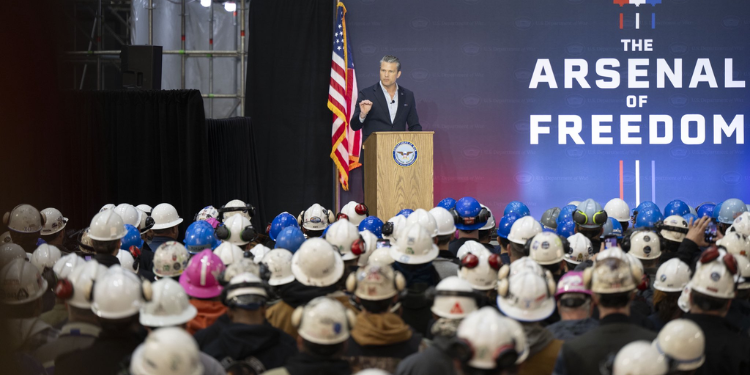
On his part, Secretary of War Pete Hegseth has declared that the “Iranian navy will be destroyed”, adding that US military forces “are fully unleashed to achieve” the objectives set by Trump.
In a post on X, Hegseth said that Washington “will not tolerate powerful missiles” targeting Americans after Iran launched a counterstrike following the joint U.S. and Israel attacks.
“Those missiles will be destroyed, along with Iran’s missile production. The Iranian navy will be destroyed,” he said.
Follow our WhatsApp Channel and X Account for real-time news updates.