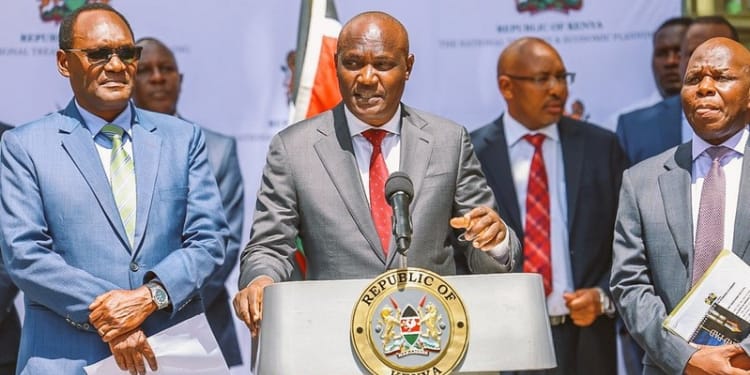
President William Ruto has revealed how his government persuaded public transport operators to call off a planned nationwide strike over high fuel prices, saying the decision came after hours of discussions and a detailed explanation of the country’s fuel situation.
Speaking at the National Prayer Breakfast on May 28, Ruto said he held lengthy talks with transport sector leaders in Mombasa, where he walked them through Kenya’s fuel challenges and why lowering prices further was not an immediate option.
Ruto said he spent close to three hours with transport stakeholders, explaining the current fuel pricing structure and drawing comparisons with the situation his administration inherited in 2022.
He recalled that at the time, the country was facing a severe fuel shortage, with motorists queuing at petrol stations and carrying fuel in jerry cans in search of supply.
“There were long queues, people moving from one station to another looking for fuel, and we had a serious crisis,” he said.
Ruto Explains Why Matatu Operators Called Off Strike Without Fuel Price Cuts
According to the President, the shortages were linked to heavy fuel subsidies that had strained government finances without stabilizing supply.
Also Read: Ruto Confirms Plan to Scrap PAYE for Kenyans Earning Below Ksh30,000
He told the operators that Kenya had previously spent between KSh150 billion and KSh160 billion on subsidies in a single year, warning that such measures were unsustainable.
Ruto said the country must learn from experience and avoid repeating past mistakes.
Ruto said the government has instead adopted what he described as a more controlled approach to cushioning consumers, pointing out that fuel remains available across the country.
He noted that despite complaints over high prices, Kenya has managed to maintain stable supply, unlike some countries facing shortages.
The President also disclosed that the government is still subsidizing fuel, particularly diesel, but in a targeted way.
“The actual price of diesel should be around KSh273, but it is currently at about KSh232,” he said, adding that the government is absorbing more than KSh40 per litre.
He revealed that about KSh28 billion has been spent in the past two months alone to stabilize prices.
These measures, he said, were aimed at balancing affordability with fiscal responsibility, ensuring the government does not fall back into a crisis caused by excessive subsidies.
Ruto said that after presenting the facts, transport sector leaders made their own decision to call off the strike.
“When we finished, they told me, ‘Mr President, we are going to call off the strike,’” he said.
He insisted that the government did not coerce the operators into ending the planned industrial action, dismissing claims of external influence.
Ruto said he did not ask public transport operators to call off the strike, adding that they made the decision after reviewing the facts.
Matatu Operators Call Off Strike After Meeting with President Ruto
Matatu Owners completely called off the suspended strike after a meeting with President Ruto on May 22.
Also Read: Ruto Shuts Down Uhuru with a Hard-Hitting Letter [FULL TEXT]
In a meeting that brought together representatives from various transport sector organizations at State House, Mombasa, on May 22, Albert Karakacha, the President of the Matatu Owners Association in Kenya, said the strike, which had been suspended for a week, was now officially called off.
“We’ve called off the strike; we had suspended it, but we’ve called it off. We will not have a strike next week; we are going to work,” said Karakacha.
The announcement was made during a meeting between President William Ruto and transport sector leaders, convened to address concerns about the recent fuel price hike, which had prompted threats of a matatu strike.
This came after Matatu operators paused their nationwide strike for one week on May 19, following discussions with the government over the rising cost of fuel that had triggered the industrial action.