A government that values its citizens should not wait for another country to speak first when one of its own alleges detention, torture, and sexual assault abroad. It may choose diplomatic language and avoid reckless confrontation, but it must still show that the safety and dignity of its citizens matter wherever they are.
That is why the recent action by the United States over the ordeal of Boniface Mwangi and Ugandan activist Agather Atuhaire should embarrass Kenya.
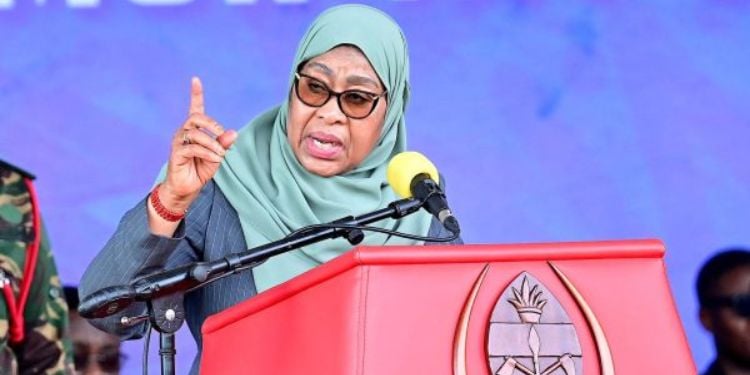
On May 21, 2026, the U.S. State Department designated Tanzanian Police Force Senior Assistant Commissioner Faustine Jackson Mafwele under Section 7031(c), citing his alleged involvement in gross violations of human rights against Atuhaire and Mwangi. The two had travelled to Dar es Salaam in 2025 to observe the trial of Tanzanian opposition leader Tundu Lissu. What followed, according to their accounts and human rights organizations, was detention, torture and sexual assault.
One need not agree with every method used by activists to understand the seriousness of that claim. A Kenyan citizen says he was violated in a neighboring country after crossing the border in the spirit of East African human-rights solidarity, to observe a politically significant trial and stand with Tanzanians demanding due process and accountable government. The first government expected to demand answers should have been his own. Instead, the most visible public action has come from a country more than 12,000 kilometers away.
Protecting citizens beyond borders
Modern states are judged partly by how they protect their citizens beyond their borders. Americans move around the world knowing that, at least in principle, their government will make noise if they are harmed. Israelis know the same. Many powerful states treat the dignity and safety of their nationals abroad as an extension of sovereignty itself.
Kenya must learn this lesson because sovereignty is not only the right to host flags, sing an anthem and issue passports. It is also the obligation to defend the citizen who carries that passport when his rights are violated beyond the border.
I write this with some memory of the civic trenches. As a young activist, I was part of spaces such as Bunge la Mwananchi, where we argued about justice, democracy, Pan-Africanism and the duty of citizens to resist abuse of power. We were not always polished or convenient, but we believed something important: injustice in one African country cannot be dismissed as “their internal affair” when habits of repression travel so easily across borders.
East Africa is not merely a market. It is supposed to be a community bound by shared values, free movement and regional solidarity. If that language means anything, then citizens must be able to attend trials, observe democratic processes and express solidarity without being treated as enemies of the state.
Boniface Mwangi’s presence in Tanzania should therefore not be reduced to meddling. He was there as part of a tradition of regional civic solidarity. One may debate his style, politics or temperament, and many people often do. What should not be debatable is that no Kenyan citizen should be left exposed when he alleges serious abuse by foreign security agents.

Are Kenyans on their own?
The Kenyan government’s posture has been too cautious for the gravity of the matter. Diplomacy sometimes works away from cameras, and not every action must be shouted through microphones. But silence also communicates. It tells citizens that they are on their own. It tells neighboring states that mistreatment of Kenyans may attract little public cost. It tells young people that citizenship is a document, not a shield.
The state has many duties, but protection comes first. Before development plans, investment speeches and regional handshakes, a government must defend the life, dignity and bodily integrity of its citizens. If it cannot do that, the social contract begins to weaken at its foundation.
Also Read: Trump Sanctions Top Police Boss Over Boniface Mwangi and Agather Torture in Tanzania
Kenya should have demanded a transparent investigation from Tanzania. It should have publicly supported access to medical, legal and diplomatic assistance. It should have raised the matter through the East African Community and African Union mechanisms. It should also have made clear that friendship between states cannot mean silence when citizens allege torture.
This is not a call for hostility toward Tanzania or for reckless diplomacy. It is a call for seriousness in a region where Kenya sees itself as a regional power, yet governments too often prefer quiet accommodation to uncomfortable accountability. Good neighbors do not help each other hide abuse; they help each other become more accountable. That is partly why Boniface Mwangi was in Tanzania in the first place. He understood that if Kenya ignores repression in Tanzania today, it should not be surprised when similar habits find comfort at home tomorrow.
Real Pan-Africanism
There is also a larger question about the kind of Pan-Africanism we claim to believe in. Too often, Pan-Africanism is invoked by governments when they want applause, solidarity or protection from criticism. But real Pan-Africanism cannot be reduced to defending rulers against scrutiny. It must defend African citizens against state abuse, whether that abuse happens in Nairobi, Kampala, Dar es Salaam or elsewhere.
The American designation should therefore be received not as an insult, but as an inconvenient mirror on government. It shows us a failure we should be embarrassed at and correct. A foreign government has publicly acted on an allegation involving a Kenyan citizen while Kenya’s own response remains far less forceful than the moment demands.
That should trouble Parliament, the Ministry of Foreign and Diaspora Affairs, and every Kenyan who expects their passport to mean something outside the border. Parliament should summon the relevant ministry to explain what action was taken, when it was taken, and what further steps Kenya intends to pursue. Civil society should not allow the matter to disappear into the archive of unresolved regional abuses. The media should keep asking why it took Washington to apply public pressure on a matter that Nairobi should have owned from the beginning.
Test of constitutional democracy
Boniface Mwangi is not the only issue here. The larger issue is whether Kenya is serious about protecting all of its citizens, including the it finds difficult, with the seriousness and promise under our Constitution. That is the true test of constitutional democracy, because rights are not meaningful only when exercised politely. Citizenship cannot be valuable only when the citizen is agreeable.
Also Read: Samia Suluhu’s Brutality Haunts Ruto’s Visit to Tanzania
A government either defends the dignity of its people as a principle, or it slowly reduces protection to favor. Kenya cannot afford that, especially at a time when young people across the region are already questioning whether governments see them as citizens or subjects.
If a Kenyan is violated abroad and the strongest public consequence comes from another country, then something has gone wrong in our understanding of state responsibility. America may have acted, and many will welcome that action. But Kenya should not need America to remind it that Boniface Mwangi has rights.
A serious republic defends its citizens first, even when they are inconvenient, and never leaves them wondering whether their own government has their back.
This article was written by George Nyongesa, a lecturer of philosophy and logic at the University of Nairobi and Chuka University.
Follow our WhatsApp Channel and X Account for real-time news updates.