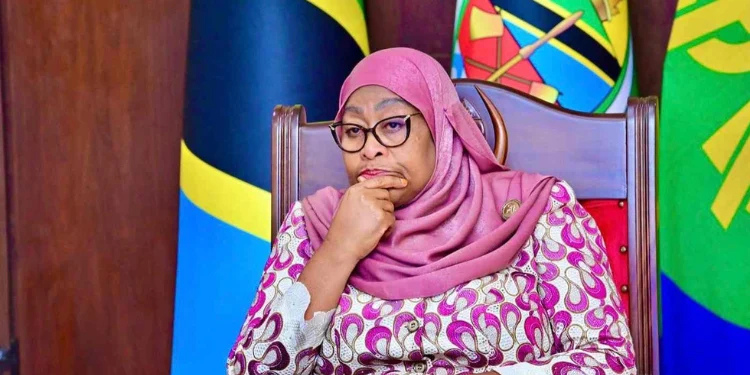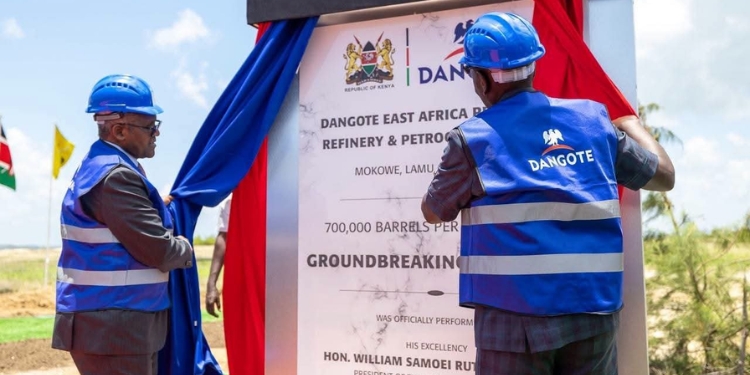

President William Samoei Ruto is scheduled to begin a two-day official visit to Tanzania on 4 May 2026, where he will meet President Samia Suluhu Hassan on 5 May 2026.
The planned visit by Ruto to Tanzania comes amid renewed scrutiny of the political climate under Samia Suluhu Hassan, following reports of election-related violence, opposition crackdowns, and restrictions on civil liberties.
In a statement issued on May 4 from the Tanzanian statehouse, Ruto is expected to hold a bilateral meeting with his host, Samia Suluhu, and the two leaders will later chair official talks between the Tanzanian and Kenyan delegations, followed by a joint press briefing.
“While in Tanzania, President Ruto will hold a bilateral meeting with his host, the President of the United Republic of Tanzania, Her Excellency Dr. Samia Suluhu Hassan. The two leaders will later chair official talks between the Tanzanian and Kenyan delegations, followed by a joint press briefing,” the statement read in part.
In addition, Ruto will address the Parliament of the United Republic of Tanzania in Dodoma as part of his visit on May 5 and will later depart after the official program.
Tanzania Draws Scrutiny Over Brutality in 2025 Elections
The conduct of Tanzania’s 2025 electoral process has come under scrutiny following claims from opposition figures, rights groups, and international observers alleging political repression and irregularities during the polls.
Claims cited by opposition figures and rights groups indicate that Tanzania’s 2025 electoral period was marked by arrests, alleged abductions, and the exclusion of key opposition actors, including CHADEMA, from participation.
Opposition leader Tundu Lissu was also reported to have faced treason charges, which his supporters have described as politically motivated.
Observer missions referenced in public statements, including those linked to the African Union and other international bodies, raised concerns over electoral credibility.
Also Read: Tripartite Deal for Kenya, Uganda, and Tanzania in Limbo as Suluhu’s Team Skips Crucial Talks
The reports cited allegations of ballot irregularities, internet disruptions during voting, and an uneven political environment said to have disadvantaged opposition candidates.
United Nations human rights experts have previously expressed concern over reports of excessive use of force, enforced disappearances, and mass detentions linked to post-election protests.
The UN has called for investigations into alleged violations and stronger protection of civic freedoms.
Regional observer groups, including SADC-linked missions, have also noted concerns about low voter turnout and restricted political competition, pointing to structural issues that affect electoral fairness.
Ruto’s Planned Address to Tanzanian Parliament Condemned in Kenya
Ruto’s visit to Tanzania has sparked uproar, referencing Suluhu’s brutality, including those that earlier involved Kenyan activists, who were subjected to horrific brutality in Tanzania.
Kenya’s Linda Mwananchi movement issued a statement opposing the planned visit, arguing that it comes after reported election-related violence, arrests, and restrictions on opposition activity in Tanzania.
Also Read: Kenyan Long-Distance Buses to Be Affected as Tanzania Implements New Axle Rules
Additionally, they cited claims involving the banning of the opposition party CHADEMA and the arrest of its leader, Tundu Lissu, criticizing the visit as an attempt to confer legitimacy on what it describes as a disputed electoral process and governance system.
“By addressing the Tanzanian parliament, Ruto is attempting to place Kenya’s stamp of legitimacy on a fraudulent regime and electoral process,” Linda Mwananchi said in a statement.
According to the statement, such a high-profile address risks being interpreted as an endorsement of contested political processes in Tanzania. It argues that this may raise concerns over Kenya’s diplomatic positioning in the region.
The statement further warns that the engagement could be seen as a departure from Kenya’s longstanding commitment to democratic principles and governance standards.