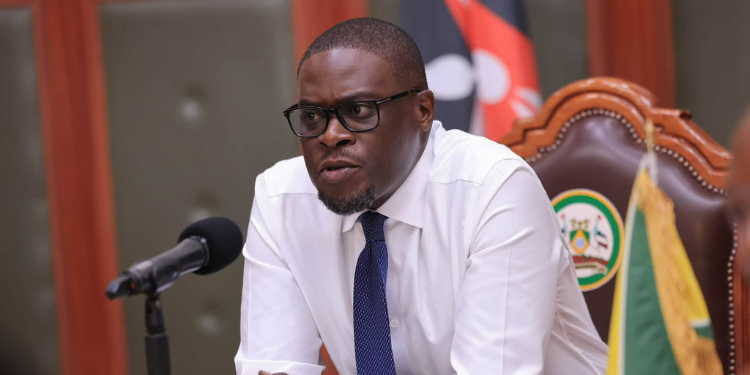
Nairobi Governor Johnson Sakaja has shared new details on how the county plans to finance the proposed underground railway as the city seeks a long-term solution to its persistent traffic congestion.
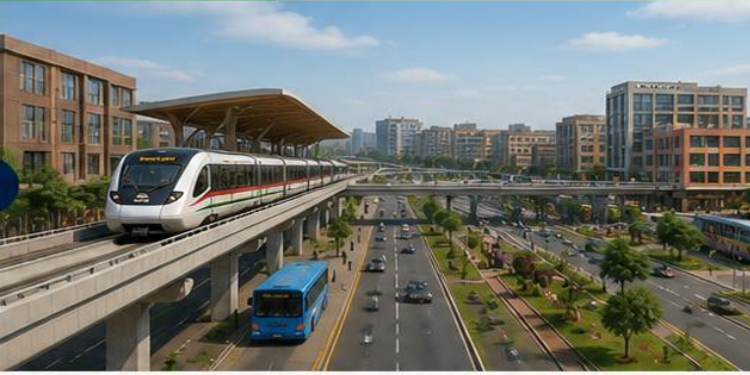
The first phase of the Nairobi Metropolitan Mass Rapid Transit System (NMRTS) is estimated to cost about Ksh1 trillion ($7.78 billion). It will combine an underground rail section through the Central Business District (CBD) with a high-capacity connection to Eastlands.
Sakaja said the project would not depend on a single funding source, with the proposed financing model bringing together the national government, pension funds, private investment, and revenue generated from developments around railway stations.
“The project will cost $7 billion; it’s like a trillion, but how you fund that is that then you do blended financing,” he said.
He said he had already written to the Cabinet Secretary for Lands as the county explores how land around the planned railway stations can contribute to the project.
Sakaja Lists 4 Ways Nairobi Plans to Fund Ksh1 Trillion Underground Railway
Sakaja said one of the main components would be transport-oriented development, where businesses take advantage of the large number of passengers expected around railway stations.
Under the proposal, areas around railway stations would be developed with shops, malls and commercial centres, creating economic activity around the transport network.
“There’s what we call transport-oriented development because where the stations come out there’ll be people and so the people who want to come set up shops, set up malls, set up commercial centers.”
He said the county would also use land value capture to help finance the project as improved transport raises property values around the stations.
“Then there’s something called betterment fees. Betterment fees are how you improve the value. It’s called land value capture of the areas and that finances a big portion of it,” he added.
Also Read: Nairobi Underground Railway Project to Require Five New Planning Regulations
Pension Funds Eyed for Railway
Sakaja also identified pension funds as another potential source of long-term financing.
He said billions of shillings held by pension schemes could be invested in infrastructure projects such as the railway, adding that he had spoken to some chief executives about the proposal.
“Another financing: there’s almost four or so trillion that is within pension funds sitting in banks, you know, LAB Fund, LAB Trust, NSSF, the public officer superannuation fund that is idle.”
Sakaja said some of the pension fund executives he had approached were interested in participating because they viewed the railway as a viable investment.
He did not disclose how much pension money could eventually be invested in the project or announce a formal commitment from any specific fund.
The governor said passenger fares would not be enough to recover the cost of building and operating the underground system.
He argued that large urban railway networks require government support to keep fares affordable, pointing to public transport systems in cities such as London.
“Because the fare alone can never pay for it, it’s highly subsidized; if you go to London, the Queen Elizabeth Line, whatnot; they’re heavily subsidized; the government pays a big portion of it.”
Railway Planned as Answer to Traffic
The underground railway is part of Sakaja’s wider plan to tackle Nairobi’s traffic congestion.
The governor has argued that adding more roads will not provide a lasting solution as the city’s population and number of vehicles continue to grow.
The proposed Nairobi Metropolitan Mass Rapid Transit System is intended to provide a high-capacity public transport alternative, with an underground section serving the city center and links to other parts of Nairobi.
Also Read: Sakaja Orders Evacuation of Nairobi Residents in Select Areas
Sakaja said Nairobi had already undertaken studies to determine whether the city could support underground transport infrastructure.
The county has worked with the Japan International Cooperation Agency (JICA) and other technical experts on the project.
Sakaja also pointed to existing underground works in Nairobi as evidence that the city can undertake tunneling.
“We have already demonstrated that underground infrastructure is possible, as was done at the Haile Selassie-Uhuru Highway junction.”
The county has established plans to create a Project Management Unit to oversee implementation as the project moves beyond planning.
Follow our WhatsApp Channel and X Account for real-time news updates.