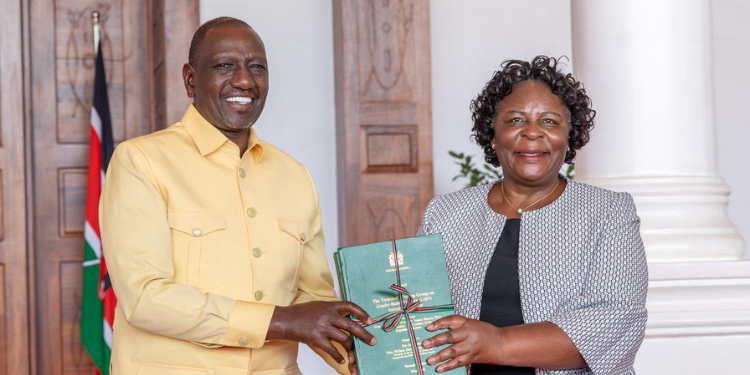
The Technical Working Group on Gender-Based Violence (GBV), including femicide, has recommended comprehensive legal, policy, and funding reforms to tackle Kenya’s worsening GBV crisis.
In its November 2025 report, the Technical Working Group (TWG), chaired by former Deputy Chief Justice Nancy Baraza, urged the government to amend the Penal Code to formally recognise femicide.
“Kenya is facing a quiet but deadly crisis. Gender-Based Violence (GBV), including the killing of women and girls – known as femicide – has been rising despite existing laws and institutions meant to protect citizens,” read part of the report.
The group called for GBV to be declared a national crisis.
According to the task force, treating killings of women as ordinary homicide obscures gender-based patterns and weakens accountability.
GBV Taskforce Recommends Govt Declare It a National Crisis
It also recommended an end to out-of-court settlements in serious GBV cases, urging that family, clan, or community interference be criminalized to prevent survivors from being pressured into withdrawing complaints.
To improve survivor protection, the report proposes the establishment of One-Stop GBV Recovery Centres in all counties, expanded mental health and trauma services, and economic empowerment programmes to reduce survivors’ dependence on abusers.
The TWG further recommended fixing persistent data gaps through the creation of a National GBV and Femicide Database and a real-time femicide dashboard, alongside standardized reporting across police, health facilities, and courts.
Also Read: The Role of Child Protection Units in Combating SGBV
Addressing the role of online platforms, the report urges the introduction of a GBV Digital Ethics Code for media and social media users, as well as stronger content moderation to curb victim-blaming and the spread of harmful material.
To sustain the response, the taskforce proposed the creation of a National GBV and Femicide Fund, backed by government, the private sector, and development partners, and called on counties to ring-fence dedicated budgets for GBV prevention and response.
The recommendations follow rising public concern over persistent violence against women and girls, with the taskforce warning that without urgent action.
Also Read: Kenya Ranked First in SGBV Cases Against Women- Report
Identified Challenges in Kenya
The report showed widespread gaps in Kenya’s response to gender-based violence and femicide.
It noted that femicide is not legally recognized, with killings of women recorded simply as homicide, which obscures gender-based patterns and undermines accountability.
Survivors face slow and often retraumatizing justice processes, while police, health workers, and courts remain under-resourced and poorly coordinated at the community level.
Families and communities frequently intervene to settle cases informally, pressuring survivors to withdraw complaints and allowing perpetrators to go unpunished.
The report also pointed to the role of social media in amplifying victim-blaming, misinformation, and the circulation of graphic content.
Data on GBV is fragmented and unreliable, making it difficult to detect trends or respond early.
Chronic underfunding further hampers efforts, as counties often lack dedicated budgets, shelters, trained personnel, and referral systems to support survivors.
Follow our WhatsApp Channel and X Account for real-time news updates.