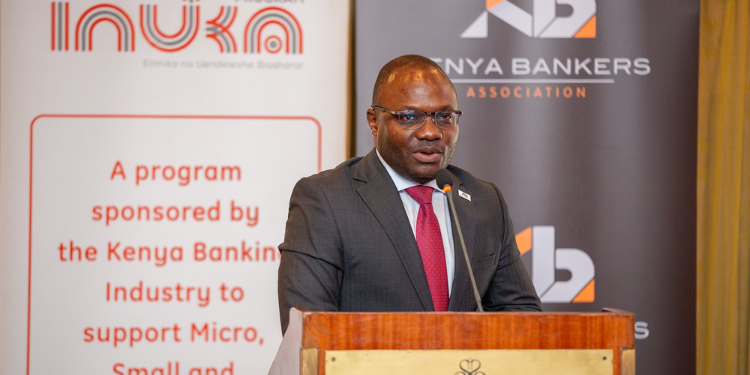
The Kenya Bankers Association (KBA) has proposed a 5% reduction in Pay As You Earn (PAYE) tax rates across all existing tax bands after the government signalled sweeping tax relief for low- and middle-income earners.
In a statement on Wednesday, February 4, KBA welcomed the government’s proposal to zero-rate PAYE for workers earning up to Ksh30,000 per month, saying it provides timely relief amid rising cost-of-living pressures facing Kenyan households and businesses.
The association said the proposed cut is aimed at restoring purchasing power, stimulating economic growth, and strengthening government revenue collection.
KBA, however, argued that broader PAYE relief is necessary to cushion workers and employers from the cumulative impact of statutory deductions, particularly the progressive increase in National Social Security Fund (NSSF) contributions.
“To restore purchasing power, stimulate economic growth, and strengthen government revenue, the banking industry proposes a 5% reduction in Pay As You Earn (PAYE) tax rates across all existing PAYE tax bands,” KBA said.
Bankers propose further 5% PAYE cut after Govt’s tax relief plan
According to the bankers, both employers and employees will be required to contribute up to 6% of pay by February 2027, a move that significantly raises the overall deduction burden, especially for workers and firms without pension schemes.
In addition to the PAYE reduction, the bankers recommended capping the highest PAYE rate at 30%, in line with the National Tax Policy approved in 2023, which states that personal income tax rates should not exceed the corporate tax rate.
Also Read: EXPLAINED: How New NSSF Deductions Will Affect Kenyan Pay Slips Starting February 2026
KBA said a uniform 5% reduction across all PAYE bands would increase disposable income, boost household consumption, and stimulate growth in productive sectors such as manufacturing and agriculture, while broadening the tax base and improving revenue collection through VAT, excise duty, and corporate income taxes rather than heavy reliance on labour taxation.
The proposals build on detailed recommendations submitted by the banking industry for the 2026/27 fiscal budget, in which KBA proposed restructuring PAYE tax bands to reduce the tax burden on salaried workers.
Under the proposal, income up to Ksh30,000 would be taxed at 10%, the next Ksh20,000 at 15%, the next Ksh50,000 at 20%, the next Ksh300,000 at 25%, and income above Ksh400,000 at 30%, with monthly personal relief increasing from Ksh2,400 to Ksh3,000.
The bankers also proposed amending the Income Tax Act to allow withholding tax and withholding VAT to be remitted by the 5th day of the month following the deduction, rather than within five working days, citing rising compliance costs and cash-flow constraints, particularly for Micro, Small, and Medium Enterprises (MSMEs).
KBA further argued that easing the tax burden on workers would support job creation in sectors where employment growth is closely linked to domestic demand and labour affordability, while higher take-home pay would improve borrowers’ repayment capacity and expand access to credit for households and MSMEs.
Income tax exemption for workers earning Ksh30,000 and below monthly
The fresh proposals come after President William Ruto’s announcement that the government plans to reduce PAYE taxes for Kenyans earning up to Ksh50,000.
Speaking at State House, Nairobi, on February 4, the President said workers earning below Ksh30,000 would no longer pay PAYE, while those earning up to Ksh50,000 would see their tax rate reduced from 30% to 25%. The proposals are set to be forwarded to Parliament.
Also Read: 1.5 Million Kenyans to Be Exempted from Paying Tax
Treasury Cabinet Secretary John Mbadi had earlier backed the reforms, saying they are designed to ease the burden on salaried Kenyans and stimulate economic activity, noting that about 3.5 million workers currently shoulder a disproportionate share of the tax burden.
Under the proposed changes, a worker earning Ksh50,000 would pay Ksh12,500 in PAYE instead of the current KSh15,000, translating to an additional Ksh2,500 in monthly take-home pay, or Ksh30,000 annually, before other deductions such as NSSF and SHIF.
For workers earning below Ksh30,000, the relief would be greater, as they would no longer pay PAYE at all. Treasury estimates indicate that about 1.5 million workers would benefit from the exemption, while broader PAYE reductions would affect more than three million salaried Kenyans.
Follow our WhatsApp Channel and X Account for real-time news updates