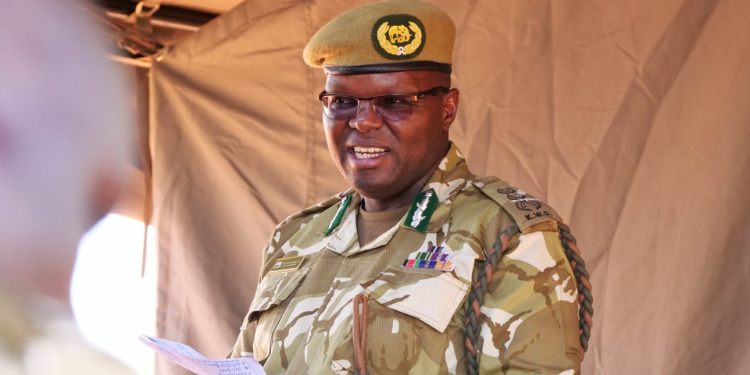

The Commission on Administrative Justice has ordered the Kenya Wildlife Service (KWS) to disclose information on snakebite deaths nationwide.
In a determination issued by the Office of the Ombudsman, the Commission directed the KWS Director General to provide a statistical summary of all snakebite-related deaths recorded from January 2022 to date.
The order follows a review application filed by a citizen identified as P.M., after KWS failed to supply the data despite earlier requests.
CAJ found that KWS had wrongly declined to release the information and failed to properly justify its refusal under the Access to Information Act, 2016.
It ruled that the data sought is public information and should be released on request and proactively published.
“Given the mandate of the Kenya Wildlife Service in wildlife management, including handling incidents and compensation related to wildlife, records on snakebite-related deaths fall within its functions. The Commission therefore finds that KWS holds the requested information and is obligated to provide it,” read part of the letter by the Ombudsman.
Request Background and Review
The dispute arose after P.M. wrote to KWS on August 9, 2025, requesting a statistical summary of snakebite-related deaths from January 2022.
In the letter, P.M. said the information was needed to support a petition to the Senate on public health and administrative accountability.
Also Read: Jubilee Leadership Crisis Looms as Member Rejects Proposed Changes
KWS did not provide the requested data. Instead, the agency later communicated on related matters but did not address the request for snakebite death statistics.
This prompted P.M. to file an application for review with the Commission on Administrative Justice on September 2, 2025, under Section 14(1)(a) of the Access to Information Act.
Upon receiving the application, the Commission formally wrote to KWS on September 5, 2025, requesting a full institutional report to enable it to make a proper determination.
KWS responded on September 23, 2025, stating that it had communicated with P.M. earlier that month.
However, the Commission noted that KWS’s response did not address the statistical information requested and failed to provide a lawful basis for refusal.
In a subsequent letter dated November 11, 2025, the Commission notified KWS that the information sought was a statistical summary of all recorded snakebite-related deaths since January 2022.
The Commission said KWS still failed to provide clear reasons under the law for withholding the information.
Key Findings and Orders to KWS
After reviewing the matter, the Commission framed three main issues for determination.
Also Read: Explainer: Legal Rules Maandamano Organizers Must Follow
These included whether it had the jurisdiction to review KWS’s decision, whether KWS held the requested information, and whether the information should be disclosed.
The Commission confirmed it had jurisdiction, noting that KWS is a public entity established under statute and therefore subject to the Access to Information Act.
It also found that KWS holds the requested information, given its mandate in wildlife management, records handling, and compensation matters relating to wildlife-related incidents, including snakebites.
On disclosure, the Commission stated that although the right to information can be limited, such limitations must be clearly justified under the law.
It found that KWS did not demonstrate that the snakebite death data fell under any exemption.
The Commission further noted that the request was for statistical information, which does not raise privacy concerns.
As a result, the Commission ordered KWS, through its Director General, to release the statistical summary of all snakebite-related deaths from January 2022 to the date of the order.
It also directed KWS to proactively publish statistical information on snakebite-related deaths, including compensation reports, through its institutional website or other appropriate means.
KWS has been given 21 days from the date of the order to comply.
The Commission warned that failure to do so could lead to criminal proceedings against the Director General under Section 28 of the Access to Information Act.