Lawyer Danstan Omari has explained the legal rules that organizers of maandamano must follow under Kenyan law, saying any protest that ignores these requirements is unlawful.
Speaking to the growing debate over fuel price demonstrations, Omari said that while the Constitution guarantees the right to assemble under Article 37, the law also sets out clear procedures that must be followed when organizing public protests.
“The right to demonstrate is protected by the Constitution, but it is regulated by law, and that law must be complied with,” Omari said.
Maandamano Notification Requirements Under the Law
He explained that the Public Order Act, Chapter 56, as revised in 2014, distinguishes between meetings that require police notification and those that do not.
Internal meetings of organizations, trade unions, cultural or social gatherings, charity events, and political party meetings are excluded from police control.
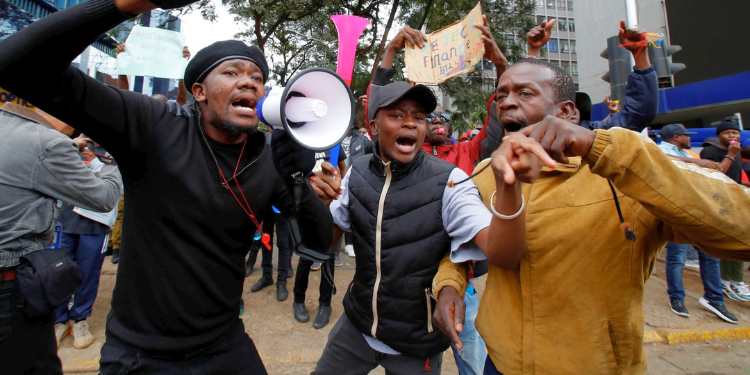
However, Omari said maandamano and protest marches fall under public meetings and processions, which must be formally notified to the police.
“Once you call people to the streets to protest, that becomes a public procession, and the law is very clear on what must be done before that happens,” he said.
Under the law, organisers of public demonstrations are required to notify the police at least three days before the planned protest and not more than 14 days in advance.
Also Read: Ruto Explains Why Fuel Prices Are Higher in Kenya Than in Regional Neighbors
The notification must be submitted to the regulating officer and must include the full names and physical address of the organiser, the proposed date of the meeting or procession, the time it will begin and end, and the venue or route to be used.
The law restricts public demonstrations to between 6 am and 6 pm, meaning protests held at night are not allowed.
Omari said the police are required to review the notice and assess whether the proposed venue or route is available and safe. If the police decline the proposal, they must communicate their reasons in writing.
He added that organisers often wrongly assume that notifying the police amounts to seeking permission, yet the law makes notification mandatory for public processions.
Another key requirement under the Act is the presence of the organiser throughout the protest. The convener must remain at the meeting or procession from start to finish and work with the police to maintain peace and order.
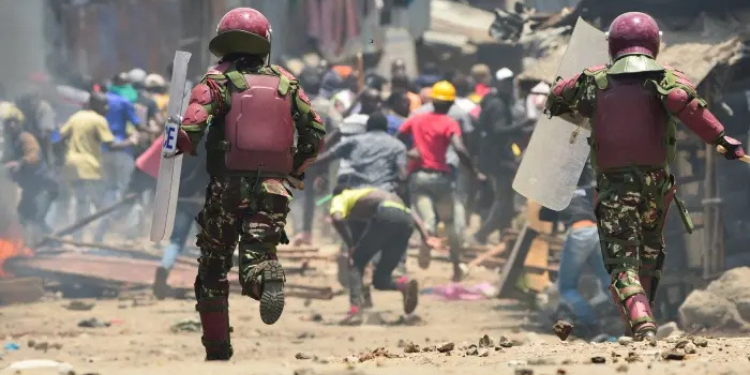
If there is an imminent threat to public safety, the law allows police officers of at least the rank of inspector to stop or disperse a protest.
Also Read: KRA Explains How Installment Tax Works for Companies
Any public meeting or procession held without complying with the notification requirements is considered an unlawful assembly under the law.
Weapons, Enforcement and Legal Consequences
The Act also prohibits the possession of offensive weapons at public meetings and processions. Omari said weapons such as pangas, rungus, and simis are illegal at demonstrations and can justify police intervention.
He said the presence of such weapons alters the nature of a protest and strips it of constitutional protection, regardless of the organisers’ intentions.
He also noted that even organizers of meetings excluded from police control may request police presence if they believe security support is necessary.
According to Omari, misunderstanding this requirement has repeatedly put protest organizers on a collision course with police, even when demonstrations are publicized as peaceful.
Omari said the Public Order Act is not intended to suppress the right to demonstrate, but to regulate it in a way that protects both protesters and the wider public.
He warned that failure to follow these legal requirements exposes organisers and participants to arrests, dispersal and possible prosecution.
According to Omari, understanding and complying with the law is essential to ensure that maandamano is conducted peacefully and within the Constitution.