
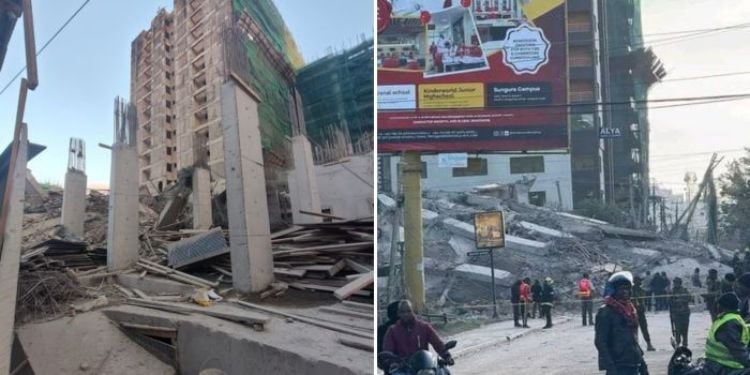
The Architectural Association of Kenya (AAK) has strongly opposed the decision by the Office of the Director of Public Prosecutions (ODPP) to press criminal charges against all members of the Nairobi City County Urban Planning Technical Committee (UPTC) in relation to the Manzil Towers collapse case.
In a statement dated June 6 by AAK President George A. Ndege, the association said it supports strict structural safety standards and accountability in the construction sector but argued that criminal proceedings should be based on evidence and directed at individuals with actual responsibility for the decisions made.
“While we demand strict structural safety and absolute accountability, criminal proceedings must be fair, evidence-based, and targeted at the culpable actor,” the statement read.
AAK Demand Immediate Review
According to AAK, the UPTC serves solely as a technical review body mandated to provide professional recommendations on planning matters.
Further, the association stated that the committee lacks executive powers and has no authority to issue final approvals for developments.
The architects emphasized that statutory approval authority rests with the County Executive Committee Member (CEC).
“The UPTC is strictly a technical review body tasked with providing professional recommendations. It has zero executive or final approval authority,” the statement noted.
Also Read: Court Filing Reveals DOJ Move to End Trump’s $1.7 Billion Anti-Weaponization Fund Case
Additionally, the association noted that the CEC has the legal authority to accept, reject, override, or bypass recommendations from the technical committee.
The association argued that charging the entire membership of the UPTC fails to distinguish between advisory and executive roles within the planning and approval process.
It maintained that professional recommendations should not be equated with final decision-making authority.
Architects Warn Charges Could Discourage Professional Oversight in Public Institutions
AAK further expressed concern that the prosecution of independent private-sector and civil society representatives serving on the committee could have broader implications for professional participation in public insti
Also Read: Win for Cheruiyot and Tea Farmers as ODPP Hints Taking Action on Stalled KTDA KSh 978M Projects
The organization stated that professionals serving as external stakeholders often provide oversight and accountability within public processes and should not be held responsible for executive decisions that fall outside their mandate.
Additionally, AAK maintained that accountability should correspond with legal authority and decision-making responsibility. It argued that individuals who provide only technical or advisory input should not be treated as though they exercised executive power.
“We firmly demand the immediate review and withdrawal of these structurally misguided charges,” Ndege noted.
Follow our WhatsApp Channel and X Account for real-time news updates.