Iran’s Islamic Revolutionary Guard Corps (IRGC) has threatened to target American and Israeli universities across the Middle East.
The warning follows U.S.-Israeli strikes on Iranian universities, which Tehran says were aimed at crippling the country’s scientific foundation.
In a statement on Sunday, March 29, carried by Tasnim News Agency, the IRGC declared that “all universities of the occupying regime and American universities in the West Asia region are legitimate targets for us until two universities are struck in retaliation for the Iranian universities that have been destroyed.”
The group demanded that Washington condemn the strikes on Iranian universities and halt attacks on academic sites. A deadline was set for 12:00 PM Tehran time on Monday, March 30. If the threat went unmet, the IRGC warned, it would be carried out.
IRGC warns of strikes on American, Israeli campuses
The statement advised staff, faculty, and students at American universities in the region to maintain a distance of at least one kilometer from campuses to ensure their safety.
“We advise all staff, faculty, and students of American universities in the region, as well as residents in their vicinity, to maintain a distance of 1km from these universities to ensure their safety”.
The threat comes after U.S. and Israeli forces reportedly struck the University of Science and Technology in Tehran and Isfahan University of Technology.
Also Read: Foreign Nation Thanks Iran for Allowing Daily Passage of 2 Ships Through Hormuz
Iranian Foreign Ministry spokesman on Saturday, Esmail Baghaei, condemned the attacks, accusing Washington and Tel Aviv of attempting to “cripple the country’s scientific foundation and cultural heritage by systematically targeting universities, research centers, historical monuments, and prominent scientists.”
Israel’s military confirmed it had targeted Malek Ashtar University and Imam Hossein University, alleging they were being used by the IRGC for military purposes, including space research and weapons development. The IDF said the strikes were part of a broader campaign to degrade Iran’s military capabilities.
U.S. strike on school
Earlier this month, Amnesty International maintained that “those responsible for planning and executing an unlawful U.S. strike on a school in Minab, Hormozgan province in Iran that killed 168 people, including over 100 children, must be held accountable.”
Evidence gathered by the organization indicates that the school building was directly struck, alongside 12 other structures in an adjacent IRGC compound, with guided weapons.
Amnesty International said that this points to a failure by U.S. forces to take feasible precautions to avoid civilian harm in carrying out the attack, which the organization maintained is a serious breach of international humanitarian law.
“The fact that the school building was directly targeted and was previously part of the IRGC compound raises concerns that US forces may have relied on outdated intelligence and failed in their obligation to do everything feasible to verify that the intended target was a military objective,” said Amnesty International.
The organization further said that U.S. authorities must ensure that the investigation they have announced is impartial, independent, and transparent.
Escalating regional conflict
Meanwhile, the Israeli military on Saturday reported hitting more than 250 Iranian and Hezbollah sites over the weekend, including missile production facilities and storage depots.
Also Read: Megyn Kelly Takes Aim at Trump Allies Over Iran War Push
U.S. Central Command (CENTCOM) on its part said its forces have struck over 11,000 targets, including Iranian vessels, missile sites, and command centers.
Iranian media reported that a large water facility in Khuzestan province was also hit by U.S.-Israeli strikes, though officials said it remained operational.
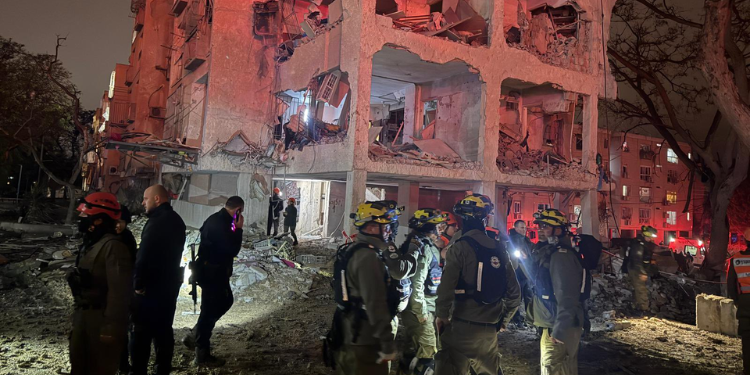
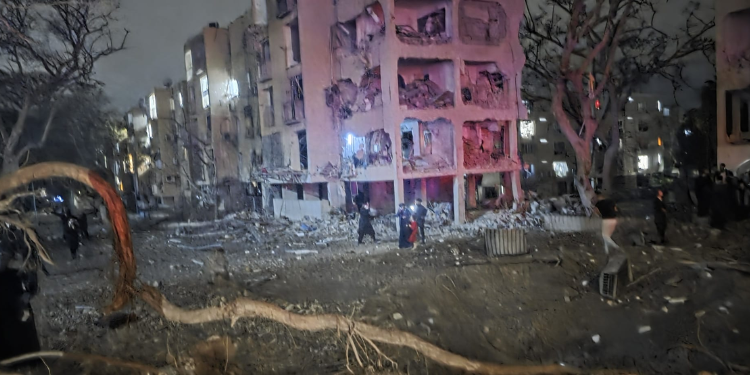
Mobile phone footage also showed damage at the Iran University of Science and Technology in Tehran, with fires and rubble visible across the campus.
At the same time, Pro-Iranian militias in Iraq announced plans to target U.S. and Israeli-linked sites in Jordan, warning civilians to stay away.
Jordan’s armed forces said they intercepted 20 of 22 missiles launched by Iran toward its territory, while its air force has destroyed hundreds of missiles and drones since the war began.
Yemen’s Houthi rebels, aligned with Tehran, separately confirmed a second missile attack on Israel, claiming to have launched a barrage of cruise missiles and drones at “vital military sites.”
Hezbollah has also intensified operations in southern Lebanon, where Israel says four divisions are engaged in ground activity.