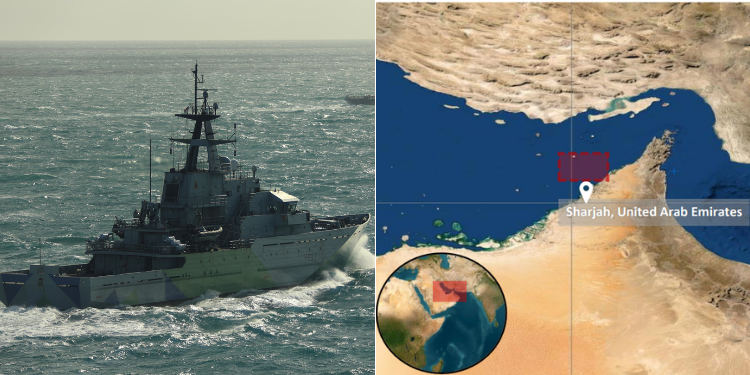
Pakistan’s Foreign Minister Ishaq Dar has announced that Iran has agreed to allow 20 Pakistani-flagged ships to pass through the Strait of Hormuz.
In a statement on Saturday, March 28, Dar noted that Iran has agreed to the daily passage of two Pakistani-flagged vessels.
The move, Dar said, is a “harbinger of peace” and a constructive gesture at a time when the waterway has become one of the most dangerous flashpoints in the ongoing U.S.-Iran war.
“I am pleased to share a great news that the Government of Iran has agreed to allow 20 more ships under the Pakistani flag to pass through the Strait of Hormuz; two ships will cross the Strait daily,” Dar posted on X.
“This is a welcome and constructive gesture by Iran and deserves appreciation. It is a harbinger of peace and will help usher stability in the region.”
Rare opening
The Strait of Hormuz, a narrow passage between Iran and the Arabian Peninsula, normally carries about one-fifth of the world’s oil supply.
Since the United States and Israel launched attacks against Iran nearly a month ago, Tehran has threatened to strike ships traveling without its permission.
More than a dozen Iranian drone and missile attacks have been reported on vessels, forcing shipping companies to reduce transits drastically.
According to shipping intelligence firm Kpler, daily crossings have fallen by 90–95%, leaving hundreds of tankers stranded in the Persian Gulf.
Marine insurance costs have skyrocketed, and global oil prices have surged. Brent crude was trading near $113 per barrel on Friday, up more than 50% from prewar levels.
Gasoline prices in the United States have also spiked, while Asian economies heavily reliant on Middle Eastern oil are bracing for shortages.
Also Read: Putin Pulls Plug on Gasoline Exports as Prices Surge Worldwide
The announcement by Pakistan came just a day after United States President Donald Trump jokingly referred to the Strait of Hormuz as the “Strait of Trump” during a speech in Miami.
“Iran has to open up the Strait of Trump — I mean, Hormuz,” Trump said, drawing laughter from the crowd. He later suggested that the strait could be jointly controlled by “me and the ayatollah” as part of a resolution to the conflict.
Trump has repeatedly emphasized that the United States does not rely heavily on Middle Eastern oil and has floated the idea that other nations should take responsibility for guarding the strait.
In a social media post earlier this month, he outlined U.S. objectives in the war, which included degrading Iran’s missile capability, destroying its defense industry, eliminating its navy and air force, and ensuring Tehran never approaches nuclear capability.
The president added that policing Hormuz should ultimately fall to countries that depend on it.
Saudi Arabia’s pipeline to bypass the Strait of Hormuz
However, a Bloomberg report has revealed that Saudi Arabia’s 1,200 km (746-mile) East-West Pipeline, which bypasses the Strait of Hormuz, has reached its full capacity of 7 million barrels per day (bpd) to sustain exports amid the ongoing blockage.
The pipeline transports crude from Saudi Arabia’s eastern oil fields in Abqaiq to the Red Sea port of Yanbu, where exports have surged to 5 million bpd of crude plus 700,000–900,000 bpd of refined products.
Previously running at about 2.8 million bpd before the Iran war escalated in late February, Saudi Aramco ramped up production within days of the disruptions, fulfilling a decades-old contingency plan.
Also Read: Iran-Backed Rebels Threaten to Disrupt Another Key Global Shipping Lane
This shift has revived over half of Saudi Arabia’s normal oil exports despite the closure of the Strait of Hormuz, with tankers amassing at Yanbu for Red Sea loadings—mostly heading north via Suez rather than directly to Asia. Aramco CEO Amin Nasser confirmed the activation of full capacity earlier in March.
Regional escalation as Iran launches attacks
Earlier on Saturday, Israel reported that it intercepted a missile launched from Yemen, marking the first time it had faced fire from that country since the U.S.-Israel war against Iran began.
The Iranian-backed Houthi rebels claimed responsibility, raising fears that commercial shipping in the Red Sea corridor could also be targeted.
The Houthis, who control Yemen’s capital Sanaa, had largely stayed out of the war until now, maintaining an uneasy ceasefire with Saudi Arabia.
Their entry into the conflict could further disrupt global trade, as the Red Sea normally carries about $1 trillion worth of goods annually.
Meanwhile, Israel struck Iranian nuclear facilities on Friday after threatening to “escalate and expand” its campaign.
Iran retaliated by hitting a base in Saudi Arabia, wounding U.S. service members and damaging aircraft. Sirens sounded repeatedly in southern Israel as Hezbollah and Iran continued rocket fire overnight.