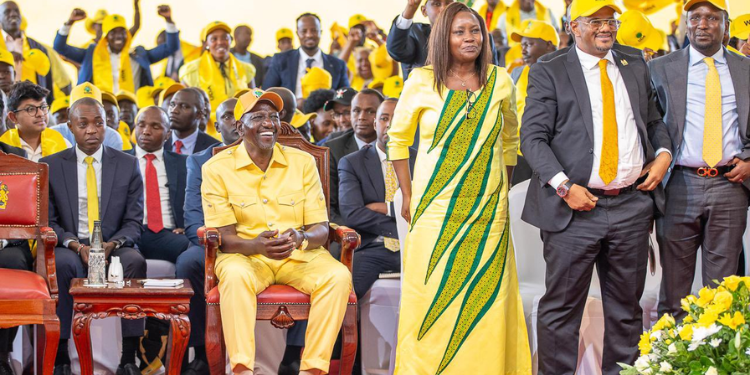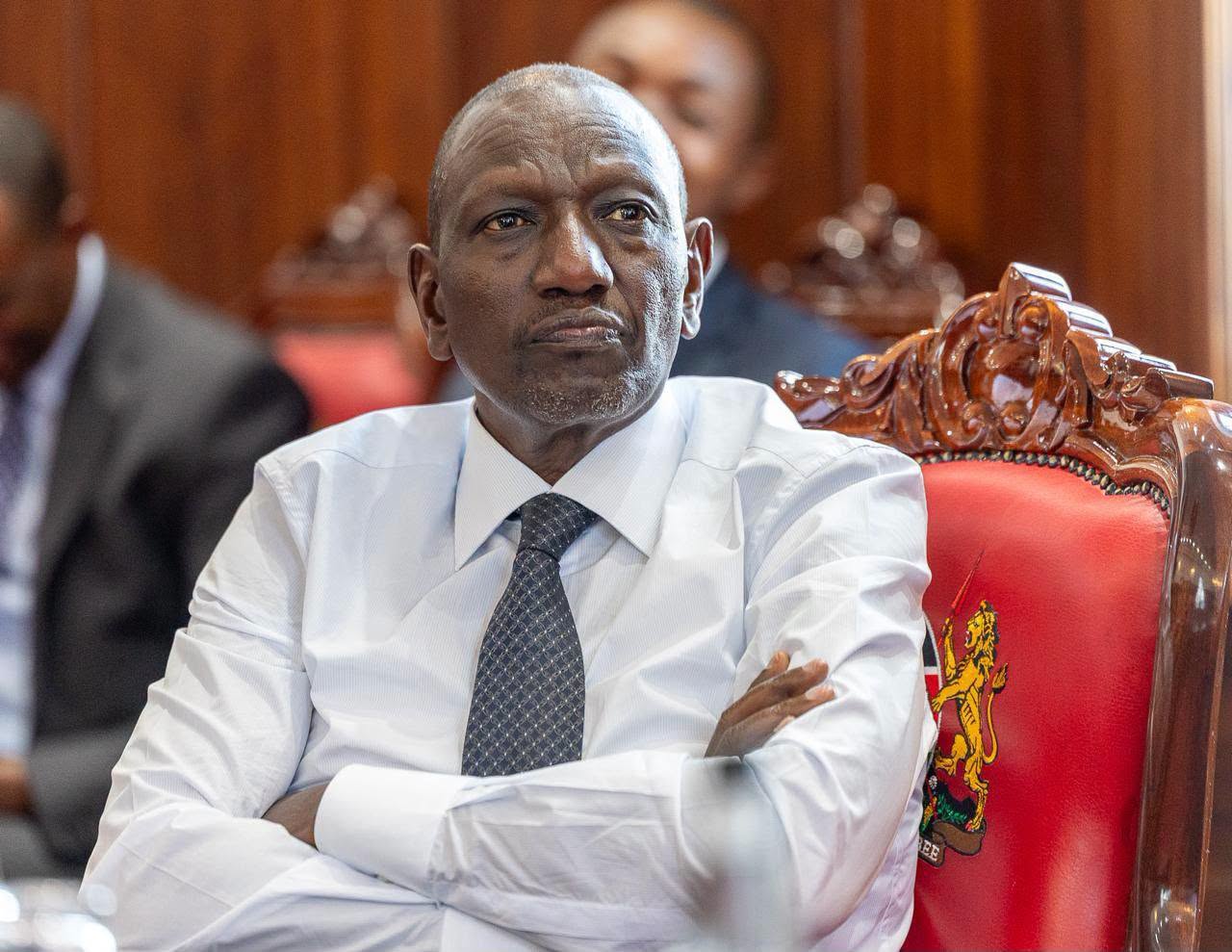
The outcome of the hotly contested Ol Kalou by-elections held on July 16, 2026, left President William Ruto and his ruling UDA party severely wounded. With barely 12 months to next year’s general election, the verdict birthed an unsettling yet real debate on the President Ruto’s support in the vote-rich Mt. Kenya bloc.
While this was not the first mini-poll since Ruto took the oath of office at the Kasarani Stadium on September 13, 2022, it hit differently. Indeed, UDA has won six key parliamentary seats in the last four years.
They include Malava, Banissa, Mbeere North, Isiolo South, Emurua Dikirr and the Baringo senatorial seat.
So, why the fuss about Ol Kalou?
UDA did not lose the election to ODM, Wiper, or Jubilee, but to the Democracy for Citizens Party (DCP), whose party leader is Rigathi Gachagua, who, until October 17, 2024, was Ruto’s deputy.
The former Deputy President launched DCP on May 15, 2025 – a party that had no single elected leader in the two Houses of Parliament, until Ol Kalou happened.
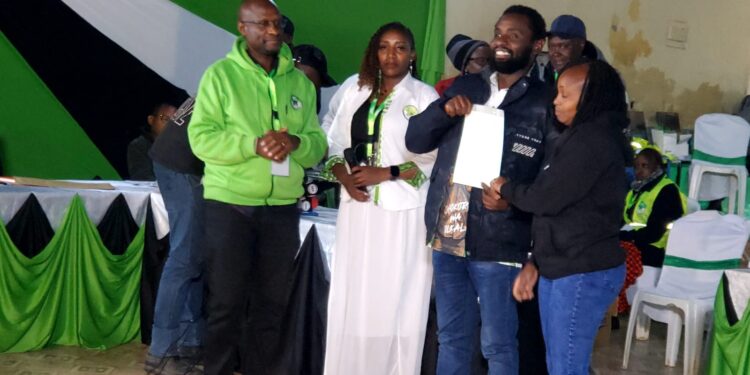
Ngotho garnered 35,440 votes, followed by UDA’s Samuel Muchina Nyagah, who finished second with 5,450.
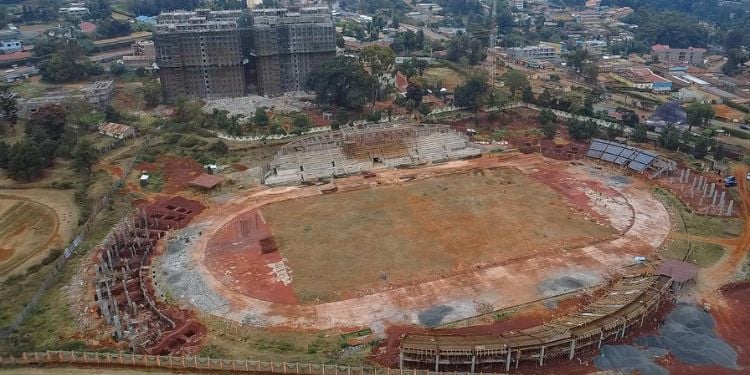
Prior to the election, the state unleashed all its machinery, including development projects, boats, free cooking gas, branded mattresses, and other goodies.
Also Read: Moses Kuria Reveals Fate of 20,000 Gas Cylinders Distributed to Ol Kalou Residents
The polls were also marred by violence, as goons traversed the constituency as police watched, raising questions as to whether they had been sanctioned by the state.
Before the dust could settle on the Ol Kalou by-election, several questions emerged:
- Can President William Ruto win the 2027 election without strong support from Mt. Kenya?
- What are the key lessons from the Ol Kalou by-election for President Ruto and UDA?
- What are President Ruto’s options ahead of 2027?
- What should Ruto learn from former President Moi on how he handled resistance in Mt. Kenya?
The Kenya Times sought answers from political analysts and experts. While opinions are divided on whether the by-election results should be used to foretell the 2027 outcome, they all agreed that President William Ruto cannot afford to ignore Mt Kenya.
Mt. Kenya’s role ahead of 2027
Dismas Mokua, a political risk analyst, agrees that President Ruto cannot afford to ignore Mt Kenya but believes that Ol Kalou’s verdict is not the only factor influencing next year’s polls.
“The probability does exist that President Ruto will win the 2027 presidential elections. President Ruto has demonstrated capacity and competence in swimming in turbulent waters. It is politically naive to use the Ol Kalau by-election as the only variable that will influence the presidential election,” said Mokua.
For Maimuna Mwidau, a political analyst, President Ruto has been on a charm offensive to win back Central Kenya.
She says, “Given that his partnership with Gachagua earned him 36% of the total Presidential votes cast, it means he knows what is at stake for the second term; therefore, he cannot afford to ignore that decisive vote.”
On his part, Martin Andati, another political analyst, argues that President Ruto will struggle to win the 2027 election without Mt Kenya.
“The lessons to be learned from the Ol Kalou vote are that the voter is the king and that you can’t replace goodwill and trust with money,” Andati told The Kenya Times.
Gitile Naituli, a Professor of Governance and Leadership at the Multimedia University of Kenya, opines that Ruto’s win in 2022 was anchored by his alignment with Mt. Kenya.
“In 2022, President Ruto’s victory was built on a broad coalition in which Mt Kenya was the single most important pillar. The region delivered him millions of votes, making it the foundation of the Kenya Kwanza victory,” explained Prof. Naituli, who is a Former Commissioner, National Cohesion and Integration Commission (NCIC).
Ruto’s Lessons from Ol Kalou and options
A day after the Independent Electoral and Boundary Commission (IEBC) declared Sammy Kamau Ngotho as the winner of the Ol Kalou by-election, President Ruto downplayed the defeat by simply saying leaders will be judged by their development record in 2027.
“What is important is to ensure that the lives of those who elected us improve. We should not be consumed by politics, hatred, theatrics, tribalism, or division,” said Ruto during a function at State House on July 17.
However, for Martin Andati, Ruto has limited options as his support base in Central Kenya shrinks.
“Mt Kenya is gone. The options are very limited. The alternative would have been the former ODM strongholds, but the break in ODM and the Sifuna/ Linda Mwananchi factor has completely messed up his game plan and left him in a very awkward position.”
At the same time, Mwidau says the ground has shifted since UDA mishandled the exit of the then DP Rigathi Gachagua. she argues that no amount of goodies will sway the vote in the mountain.
In addition, according to Mwidau, they [Mt Kenya voters] have taken it personally that Ruto hurt one of them. Consequently, UDA members need to rethink their own fate as the ground is already hostile.
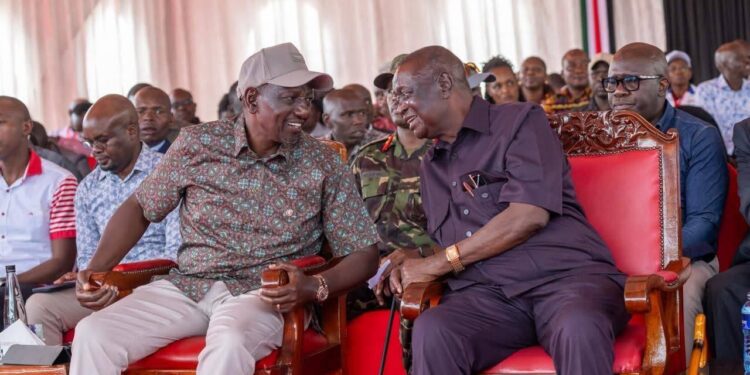
Based on the resources the state unleashed in Ol Kalou, and the loss, Prof. Naituli is of the opinion that government resources alone cannot substitute for political goodwill. He averes that development projects remain important, but voters increasingly distinguish between routine government programs and campaign politics.
He adds that grassroots mobilisation still matters. “Political organisation on the ground remains stronger than media narratives or social media campaigns.”
On his part, Mokua believes that President Ruto will find it useful to create room in Kenya Kwanza for more politicians and political parties while he grows and develops his political capital in Mr. Raila Odinga’s strongholds.
“The Ol Kalou by-election results give President Ruto information for control and decision-making. He can now establish how the impeached deputy president has informed and will influence voting patterns,” explained Mokua.
He added, “It is not lost on observers that Mt Kenya may not enjoy the full benefits of multi-party politics because Mr. Rigathi Gachagua is suffocating multi-party politics in Mt Kenya by declaring DCP as the party of Mt Kenya and branding politicians who don’t kiss his ring as traitors.”
Banking on Nyanza and Western
With the mountain seemingly not in Ruto’s hands, he may have to cast his net wider and explore other allies.
According to Mwidau, Ruto should raid the opposition and get a substitute for Gachagua, assuming he left with 46% of the vote. She, however, warns that even with the Broad-Based government, it will not be a walk in the park.
“Even with the ODM support, it is still not sufficient to fill the gap. However, if he can marshal the rest of the country, that is achievable if there is a serious threat against other communities who believe Mt Kenya has benefited more than any other in the Country,” Mwidau said in an interview with The Kenya Times.
But as earlier explained by Martin Andati, the current dynamics of the opposition make it a hard nut for Ruto to crack – Raila’s base is fragmented with Edwin Sifuna and Oburu Oginga pulling in different directions.
Agreeing with Andati and Mwidau, Prof. Naituli states that Ruto would also need to attract a meaningful share of the vote from Western Kenya, the Coast, Northeastern Kenya, Nairobi, and parts of Eastern Kenya.
He says the strongest strategy is not to find a substitute for Mt Kenya but to rebuild confidence wherever support has declined.
How Moi survived Mt Kenya isolation
As a veteran politician who was first elected in the 90s during President Daniel Moi’s reign, Ruto may have to learn a few lessons from the professor of politics who ruled Kenya with an iron fist for 24 years. But can Moi’s tricks work today? How did he (Moi) confront and counter the Mt Kenya rebellion and isolation?
Dismas Mokua holds that, among other factors, Kenya’s old Constitution worked in Moi’s favor.
He notes that President Moi was able to run and win elections because the prior Constitution required a simple majority.
“The 2010 Constitution raised the bar and requires 50%+1, inter alia. That is why rational presidential candidates must grow and develop political capital across Kenya.”
Mokua adds that “President Ruto’s 2027 campaign message must be both rational and emotional to move voters across Kenya. He must appeal to both rational and emotional voters.”
For Mwidau, Moi operated in a highly controlled environment, and the state machinery was used to the fullest extent.
“Moi also was able to divide and rule among the Mt Kenya factor; remember the likes of Kariuki Chotara, Kihika, and many other KANU supremos of Mt Kenya held fort for Moi even when the ground was extremely hostile to them.”
She also emphasized that KANU had very strong grassroots structures that operated alongside the administration structures and all other govt machinery.
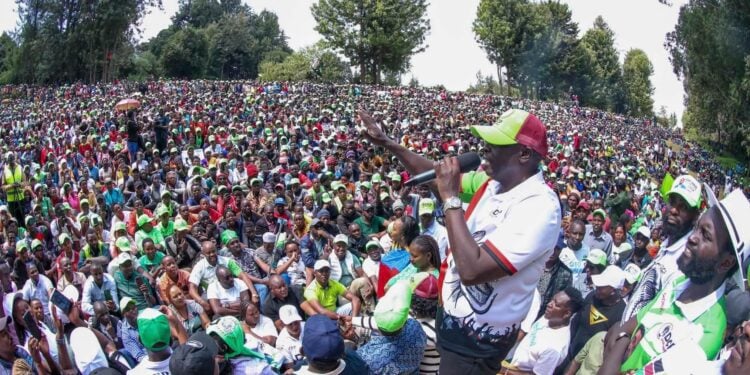
According to Martin Andati, Moi had solid support outside Central Kenya, which provided political insulation amid isolationist politics.
Also Read: Ruto Breaks Silence After Ol Kalou Defeat
“Moi made sure he had substantial support in Mulembe nation and Ukambani plus the Kalenjin and the minority tribes which wholly supported him, and then he would leverage on the instruments of power and money,” Andati concluded his remarks.
Recalling how Moi maneuvered the period following the deterioration of his relationship with sections of the Kikuyu political establishment after the early 1990s, Prof. Naituli says, Kenya’s second President recognised that relying on one region was risky.
“KANU strengthened alliances across Rift Valley, Western, Coast, North Eastern and parts of Eastern Kenya while also working with leaders from Mt Kenya who remained within the party.”
He adds, “Moi benefited from an opposition that was deeply fragmented in both 1992 and 1997. The divided opposition allowed him to win pluralities rather than outright national majorities under the electoral rules that existed then.”
Bottom line: Ruto, Mt. Kenya slipping away and dealing with Gachagua
As August 10, 2027, beckons, Kenya is about to experience high-voltage politics that could reshape the country’s leadership for generations to come. But how President Ruto navigates this period could make or break his chances of survival.
Mokua argues that Gachagua has turned his impeachment into political capital and somehow has managed to rock Kenya Kwanza’s boat in Mt. Kenya.
“President Ruto must be alive to the fact that Mr Rigathi Gachagua is a wounded lion who has missionary zeal in making him the first one-term president of Kenya,” Mokua explained.
In conclusion, Prof. Naituli reiterated that no presidential candidate should take Mt Kenya for granted, nor assume that another region can easily replace it.
“The 2027 election will ultimately be decided not only by regional arithmetic but also by economic performance, the cost of living, youth participation, coalition management, public confidence in electoral institutions and the credibility of competing candidates.”
For Maimuna Mwidau, Ruto needs Mt Kenya, the way Mt Kenya needs other regions.
“In sum, if President Ruto cannot win the 2027 Presidency without Mt Kenya, then similarly Mt Kenya cannot form a government on their own until they seek others to join them. The question now will be…will others feel comfortable to join them or fund an alternative route to rise above this seemingly very tribal approach in the politics of the Country.”
Follow our WhatsApp Channel and X Account for real-time news updates.