Former Deputy President Rigathi Gachagua has accused the Independent Electoral and Boundaries Commission (IEBC) of designing a tender that favours Miru Systems Co. Ltd and claimed it could manipulate the election.
The allegations come as the IEBC procures an Integrated Elections Management System (IEMS) and equipment ahead of the August 2027 polls.
The procurement process has been challenged before the Public Procurement Administrative Review Board.
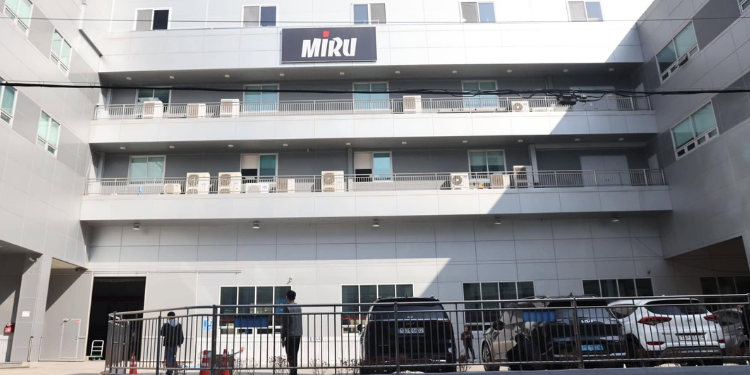
Miru Systems Co. Ltd. is a South Korean technology company specializing in election systems and equipment. The privately held firm has built its business around providing governments and election-management bodies with technology covering different stages of the electoral process.
Founded in 1999, Miru Systems is headquartered in Seongnam, Gyeonggi Province, South Korea, with its research and manufacturing operations based in Anyang.
Who owns Miru Systems?
Miru Systems is a privately held South Korean company. A 2024 Reuters investigation identified Jeong Jin-bok, also rendered as Jinbok Chung, as the company’s biggest shareholder and described him as its low-profile chief executive.
Also Read: IEBC Responds to Proposed Law to End Live Streaming of Election Results Next Year
The company’s registered headquarters is at Pangyo Seven Venture Valley II in Seongnam.
Miru’s financial history changed after it began winning major international election contracts. Reuters reported that the company recorded operating losses until 2013 and generated 14.6 billion South Korean won in revenue in 2016. Its contracts in Iraq and the Democratic Republic of Congo subsequently drove a major increase in business, with company filings showing about US$273 million in revenue in 2017 and 2018 combined.
Election Technology Does Miru Provide
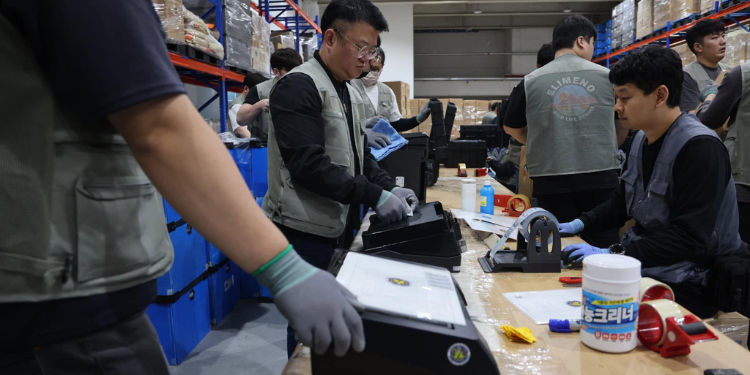
Miru Systems develops technology for almost the entire election cycle. Its products include biometric voter-registration devices, election configuration systems, ballot-marking systems and automated counting and tabulation machines.
Its biometric voter-registration equipment can capture fingerprints, facial images and iris information, while also supporting identity-document scanning and on-site voter-card printing.
For election day, its Automated Counting and Tabulation System uses optical scanning technology to process ballots.
The company says the equipment can scan ballots at high speed and incorporates encryption and other security features, including AES-256, SHA-256 and RSA-2048 cryptographic systems.
Miru also offers election configuration software that manages election parameters, polling areas, political parties, candidates and device configurations.
The system uses digitally signed security configuration files intended to protect election data and prevent unauthorized changes.
Miru’s International Election History
The company says its work began with South Korea’s election system before expanding internationally. Its official history records projects involving Iraq, the Democratic Republic of Congo, Kyrgyzstan and the Philippines.
According to Reuters, Miru received contracts worth US$250 million for the Congolese election. Equipment Miru supplied for the DR Congo’s 2023 election was linked to complaints that voter cards became faded.
In August 2025, the company signed a contract with Zambia’s Electoral Commission to supply 2,500 biometric mobile voter-registration devices, whose results were disputed.
In Iraq, concerns about the company’s equipment following the 2018 election contributed to a partial manual recount.
In Kenya, the company has historical links to a 2012 contract for automatic ballot-reading and sorting systems and ballot printers for KNEC.
Also Read: IEBC Releases Strict Guidelines for Ballot Box Mix-ups Ahead of Next Polls
Gachagua’s Outburst and IEBC Equipment Tender
The Independent Electoral and Boundaries Commission (IEBC) advertised an international tender on August 11, 2026, seeking a supplier for the Integrated Elections Management System, hardware and accessories, including installation, testing, commissioning, support and maintenance. The bid deadline is September 1, 2026.
Gachagua has alleged that the tender specifications were written to favor Miru and that the outcome had effectively been predetermined.
He has also alleged that senior government and IEBC officials have links to the procurement process. He has not publicly provided evidence establishing those allegations.
IEBC tender procurement is facing a challenge before the Public Procurement Administrative Review Board. Galadirel Investment Limited challenged the tender, raising concerns including the specifications and undisclosed contract value.
Follow our WhatsApp Channel and X Account for real-time news updates.