
The government has announced the rollout of the second phase of mobile ID registration targeting underserved communities across the country.
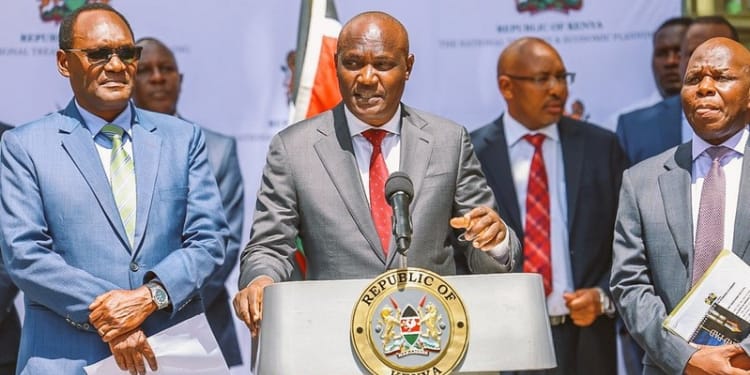
According to Interior Cabinet Secretary Kipchumba Murkomen, the program aims to address the historical marginalization of pastoralists and border communities by bringing registration services closer to residents.
“The government is committed to ensuring that every Kenyan, regardless of where they live, has access to Government services. That’s why we are correcting the historical marginalization of pastoralist and border communities by bringing registration services closer to them and removing barriers,” he said in a statement.
Murkomen Reforms Target Removal of Barriers as Government Expands Mobile ID Registration
He said the reforms are intended to remove long-standing administrative barriers that have limited access to identification documents.
The initiative follows policy changes that include the removal of extra vetting requirements for ID registration in border counties and the scraping of associated charges.
“We have abolished extra vetting requirements for ID registration in border counties, scrapped all charges, and are now rolling out the second phase of the mobile ID registration targeting underserved communities,” Murkomen said.
Mobile ID Registration
Mobile ID registration in Kenya refers to the government’s mobile-based National ID and Digital ID program, where registration teams use biometric kits connected to the National Registration Bureau (NRB) system to capture data directly in communities, schools, and remote areas
The initiative reduces reliance on fixed Huduma Centers and sub-county offices by bringing services closer to residents.
Also Read: Murkomen Blames Politicians for Faking Abductions for Political Gain
It is implemented through mobile enrolment units deployed by the Interior Ministry and NRB during registration camps.
These units capture personal details, photographs, and fingerprints on-site and transmit the data electronically to the national database. It targets under-registered groups, including youth, residents of marginalized areas, and secondary school students, with the aim of reducing backlog and supporting full digitization of identity records.
Eligibility and Requirements
Eligibility generally includes Kenyan citizens aged 18 years and above for first-time National ID registration.
Minors may also be included through school-based mobile registration exercises linked to birth certificate records.
Also Read: Interior Ministry Addresses Allegations Linking Murkomen to KSh20 Billion Land Dispute
Applicants are required to present supporting documents such as a birth certificate for first-time registration, while existing identity documents are needed for replacement or updates.
During the registration process, biometric data, including fingerprints and facial images, are captured using mobile kits.
The information is then submitted to the NRB system for processing, and in some areas, the government has indicated that ID processing and issuance can take about 10 days under mobile registration drives.
This system is also linked to Kenya’s Digital ID framework under the eCitizen platform, where identity verification is enabled through biometric authentication.
The mobile registration exercise feeds into a centralized digital identity database that aligns physical ID records with digital identity systems.