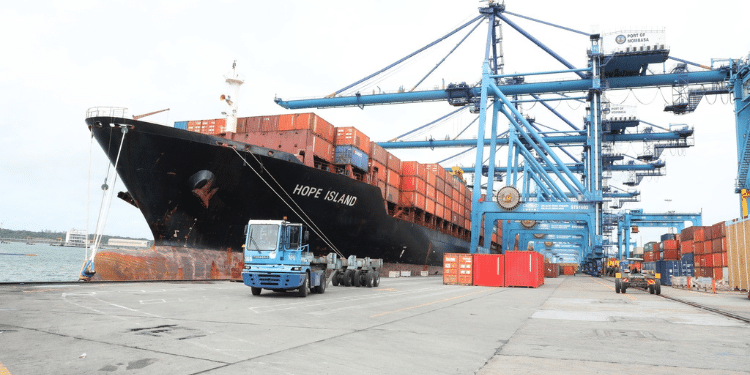
One Petroleum Limited has announced that the petroleum shipment imported at the end of March will not be released into the Kenyan market.
The company said the decision follows consultations with the government, which responded to an emergency fuel supply request from the Ministry of Energy and Petroleum.
In an official statement released on April 7, the firm stated that it was among the four bidders that responded to the emergency shipping in the country issued by the Ministry of Energy and Petroleum.
“Following consultations with the Government, One Petroleum Limited confirms that it has forthwith taken steps to ensure that the petroleum cargo that was brought in on 27th March, 2026 via MT Paloma does not enter the Kenyan market,” the statement read.
One Petroleum Saga with the Ministry of Energy
The statement follows directives from the Ministry of Energy, which require the firm to remove the 60,000 MT consignment of Super Petrol from Kenya as soon as possible.
Also Read: How Ksh4.8 Billion Petrol Consignment Could Have Raised Petrol Prices to KSh192
MT Paloma vessel arrived at the Port of Mombasa between March 27 and March 29 in response to the emergency request, and the government says that it did not enter through a Government-to-Government arrangement.
The shipments were procured by One Petroleum and Oryx, each delivering about 60 tonnes of petrol.
One of the shipments was sold at USD 290 (approximately KSh37,690) per tonne, more than three times the USD 84 (approximately KSh10,917.48) per tonne under the G-to-G deal.
The consignments were reportedly allowed into the market after a separate consignment of 114.7 million liters of super petrol sourced from Emirates National Oil Company (Enoc) failed to leave the Port of Jebel Ali in Dubai due to the closure of the Strait of Hormuz, disrupting planned supply.
A KPC quality assurance manager reportedly flagged the issue after testing the fuel, stopped its distribution, and alerted senior authorities.
The matter sparked internal debates over whether the petrol should be released to the market before investigators were involved.
Also Read: Petroleum Company Ordered to Immediately Withdraw All Invoices and Issue Refunds
Investigators suspect that the way certain fuel consignments were handled and released may have worsened supply disruptions.
In its statement, the firm did not provide further details on the volume of the cargo or the specific reasons for the decision beyond noting the government consultations.
How Petrol Shipment Almost Increased Pump Prices
According to Energy and Petroleum Cabinet Secretary Opiyo Wandayi, the contentious consignment was invoiced at about Ksh 198,000 per metric tonne, compared with the Ksh 140,000 per metric tonne price under Kenya’s official G‑to‑G import arrangements with international suppliers.
That difference of roughly Ksh 58,000 per metric tonne would translate into a Ksh 14 increase per liter if the entire consignment had entered the market at its higher landed cost.
“This consignment is priced at Ksh 198,000 per metric tonne, compared to Ksh 140,000 per metric tonne under the G-to-G arrangement, an increase of Ksh 58,000 per metric tonne, which would result in an approximate rise of Ksh 14 per liter in pump prices on this consignment alone,” Wandayi explained.
Under the government’s G‑to‑G framework, Kenya signed agreements in 2023 with global energy firms, including Aramco Trading Fujairah, ADNOC Global Trading, and Emirates National Oil Company (Singapore).