Uproar has erupted after Cooperatives and Micro Small and Medium Enterprises (MSMEs) Cabinet Secretary Wycliffe Oparanya revealed that the National Youth Opportunities Towards Advancement Program (NYOTA) programme is being undertaken by the national government through a loan from the World Bank.
According to CS Oparanya, the more than 30 billion shillings NYOTA program, executed in two phases and targeting over 800,000 youths across the country, is being funded by the World Bank through a financial agreement that will ultimately be repaid by Kenyans.
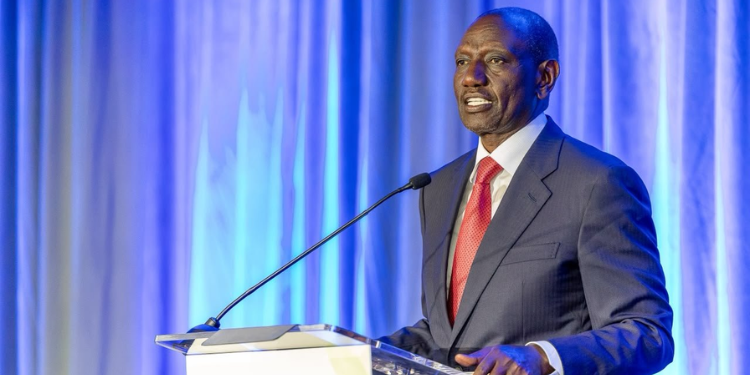
“This NYOTA project, introduced by President William Ruto, belongs to the Government. It is funded by a loan from the World Bank, and Kenyans will pay that debt. That is your wealth,” he said.
Also Read: How to Apply for NYOTA Program Offering Ksh6,000 Stipends to 90,000 Youth
CS Oparanya Reveals Kenyans to Repay World Bank Loan for NYOTA Project
CS Wycliffe Oparanya made the remarks on Monday, March 16, in Busia County during President William Ruto’s Western Kenya development tour, while responding to Vihiga Senator Godfrey Osotisi’s claims that the NYOTA project is a World Bank programme.
The disclosure has sparked reactions across the country, with questions emerging over the programme’s funding model and its long-term impact on public debt.
Many Kenyans have taken to social media to express their concerns, with some questioning why the government would take a loan in the name of helping citizens, only for the burden of repayment to fall back on taxpayers.
Others have argued that beneficiaries of the funds should be the ones to repay, raising doubts about the amount disbursed versus the loan received.
On X (formerly Twitter), users voiced strong opinions:
@PurityMwangi wrote, “Loans in the name of helping Kenyans, but the burden still comes back to the same taxpayers already struggling. At what point do these projects start paying for themselves instead of piling pressure on citizens?”
@MartinKivuva added, “The truth cannot be hidden for long. When everyone outside government kept saying this, those in government said the opposite and claimed we were politicising youth unemployment.”
Another user, @ericsirez noted, “When some Kenyans said it was a loan from the World Bank, the President called them washenzi, claiming ill motive towards youths. Truth will always be truth.”
Meanwhile, @korir_raphael questioned, “Why are Kenyans always left footing the bill while those in charge take all the credit? This project was sold as their brainchild, yet it’s been used as political handouts for youth ahead of elections. Maybe it’s time they pay from their own pockets!”
On his part @litundunya said, “Ever since Kenyans realized NYOTA was a loan from the World Bank and not a grant, the Kasongo team stopped going round disbursing funds. Where on earth is free cash available?”
At the same time, @mulundalabs added, “The youths who benefited from the loan should pay. Why burden everyone, yet few benefited?”
@fideleliud commented, “Any institution giving loans to the Kenyan government without creating public awareness will suffer bad debts. I’m not going to pay for something I didn’t partake in.”
Also Read: World Bank Clarifies Viral Statement Addressing Gachagua’s Remarks on NYOTA Program
About the Project
The NYOTA project was designed to empower vulnerable youth by creating employment opportunities, enhancing income, and promoting a savings culture.
The programme aims to benefit 800,000 youths aged 18 to 29 across all 47 counties by establishing 110,000 youth-led enterprises and certifying 20,000 artisans through the Recognition of Prior Learning (RPL) initiative.
It also seeks to skill and connect 90,000 youths to employment opportunities, while training 600,000 on financial literacy and access to government procurement opportunities.
Through Component 2, implemented by the State Department for MSME Development via the Micro and Small Enterprises Authority (MSEA), the project provides entrepreneurship training, business development services, and phased start-up capital to 70 youths in every ward.
After classroom training, each youth undergoes two months of mentorship and incubation support, followed by staged seed money and continued guidance from business development experts to foster enterprise growth.
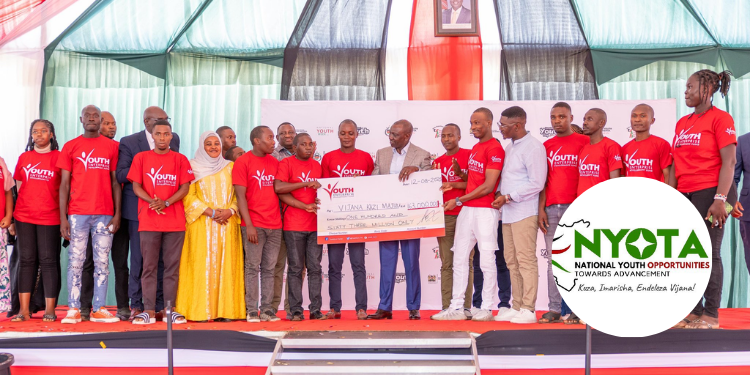
In 2025, NYOTA selected 110,000 Kenyan youths to receive Ksh 50,000 each to boost their businesses.
In the first phase, each beneficiary received Ksh 25,000, with Ksh 22,000 sent directly to mobile money accounts and Ksh 3,000 deposited into Haba na Haba savings accounts at the National Social Security Fund.
Ruto Defends NYOTA Initiative
President William Ruto has presided over the disbursement of the NYOTA Business Start-Up Capital across the country.
During the events, President Ruto also took a swipe at the united opposition, who have criticized the project, calling them a visionless, planless group that is misusing youth to advance their interests.
“Some naysayers have been criticising the NYOTA programme, yet they have no mission, agenda, or alternative plan to transform the lives of our young people,” he said at a disbursement rally in Kisii.
“We are going to shame them because the reality of our programmes is taking shape.”
Deputy President Kithure Kindiki has also defended the project, saying young people have long been misused by politicians as hecklers, goons, and bloggers to push their agendas.
In February, the World Bank defended its support for NYOTA, describing it as a strategic intervention to address Kenya’s most pressing development challenges.
World Bank Kenya Director Qimiao Fan said the programme is designed to equip youth with skills, entrepreneurship support, and start-up funds, providing them with tools to become employable and create opportunities for others.