Friday, July 10, 2026
  • News
    • Latest News
    • Breaking News
    • Fact Check
    • Investigations
    • Explainers
  • Politics
    • Global Politics
    • Elections
    • Government & Policy
    • Diplomacy
    • Conflicts & Security
    • Political Analysis
  • Business
    • Global Economy
    • Markets
    • Technology
    • Startups
    • Energy
    • Finance
  • World News
    • Americas
    • Asia
    • Asia Pacific
    • Africa
    • Europe
    • Middle East
  • Africa
    • Central Africa
    • East Africa
    • West Africa
    • Southern Africa
  • Health
    • Global Health
    • Public Health
    • Health Policy
    • Medical Research
    • Diseases & Conditions
    • Mental Health
    • Nutrition
    • Climate & Health
    • Health Explainers
  • Sports
    • World Cup 2026
    • Athletics
    • Basketball
    • Boxing
    • Cricket
    • Football
    • Formula 1
    • Golf
    • Rugby
  • Weather
    • Climate Business
    • Climate Change
    • Climate Solutions
    • Living Green
  • Culture
    • Arts
    • Film & TV
    • Food
    • Music
    • Lifestyle
    • Travel
  • Opinion
    • Editorials
    • Letters
  • Behind The Brand
REGISTER
LOGIN
No Result
View All Result
The Kenya Times
  • News
    • Latest News
    • Breaking News
    • Fact Check
    • Investigations
    • Explainers
  • Politics
    • Global Politics
    • Elections
    • Government & Policy
    • Diplomacy
    • Conflicts & Security
    • Political Analysis
  • Business
    • Global Economy
    • Markets
    • Technology
    • Startups
    • Energy
    • Finance
  • World News
    • Americas
    • Asia
    • Asia Pacific
    • Africa
    • Europe
    • Middle East
  • Africa
    • Central Africa
    • East Africa
    • West Africa
    • Southern Africa
  • Health
    • Global Health
    • Public Health
    • Health Policy
    • Medical Research
    • Diseases & Conditions
    • Mental Health
    • Nutrition
    • Climate & Health
    • Health Explainers
  • Sports
    • World Cup 2026
    • Athletics
    • Basketball
    • Boxing
    • Cricket
    • Football
    • Formula 1
    • Golf
    • Rugby
  • Weather
    • Climate Business
    • Climate Change
    • Climate Solutions
    • Living Green
  • Culture
    • Arts
    • Film & TV
    • Food
    • Music
    • Lifestyle
    • Travel
  • Opinion
    • Editorials
    • Letters
  • Behind The Brand
  • News
    • Latest News
    • Breaking News
    • Fact Check
    • Investigations
    • Explainers
  • Politics
    • Global Politics
    • Elections
    • Government & Policy
    • Diplomacy
    • Conflicts & Security
    • Political Analysis
  • Business
    • Global Economy
    • Markets
    • Technology
    • Startups
    • Energy
    • Finance
  • World News
    • Americas
    • Asia
    • Asia Pacific
    • Africa
    • Europe
    • Middle East
  • Africa
    • Central Africa
    • East Africa
    • West Africa
    • Southern Africa
  • Health
    • Global Health
    • Public Health
    • Health Policy
    • Medical Research
    • Diseases & Conditions
    • Mental Health
    • Nutrition
    • Climate & Health
    • Health Explainers
  • Sports
    • World Cup 2026
    • Athletics
    • Basketball
    • Boxing
    • Cricket
    • Football
    • Formula 1
    • Golf
    • Rugby
  • Weather
    • Climate Business
    • Climate Change
    • Climate Solutions
    • Living Green
  • Culture
    • Arts
    • Film & TV
    • Food
    • Music
    • Lifestyle
    • Travel
  • Opinion
    • Editorials
    • Letters
  • Behind The Brand
No Result
View All Result
The Kenya Times ~ Trending, Breaking News and Videos
No Result
View All Result
ADVERTISEMENT

Study Reveals Risks Associated with Digital IDs Being Adopted by African Countries Like Kenya 

The ConversationbyThe Conversation
March 8, 2026
Reading Time: 8 mins read
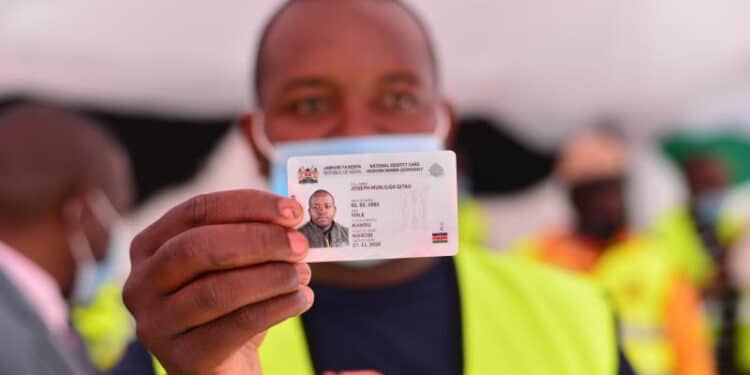
Kenya Is Among Countries That Have Rolled Out Digital Ids Known As Maisha Cards.

A Kenyan holding an identification card. PHOTO/Immigration Department.

FacebookTwitterLinkedInRedditWhatsApp
Advertisement

Across Africa, governments are introducing digital systems that use individuals’ unique physical measurements to identify them. These systems collect citizens’ biometric and personal data and use it to give people access to essential public services like voting, healthcare, education and social protection. Biometric digital identification systems are often promoted as tools to improve efficiency, inclusion and service delivery.

But a new report by the African Digital Rights Network, published by the Institute of Development Studies, highlights serious concerns about exclusion, rights violations, data protection and accountability. Drawing on evidence from ten African countries, the report shows how millions of people are struggling to enrol in or safely use these systems, or are choosing not to participate due to fear and mistrust.

The report draws on the expertise of researchers based in each of the ten countries studied. Tony Roberts, co-editor of the report, takes us through what they found.

What are biometric digital IDs and why are they both useful and problematic?

Digital-ID is a form of identification that can hold large amounts of sensitive personal data. This includes biographic data like name, date of birth and address, as well as biometric data such as fingerprints and facial recognition. What makes digital-ID distinct from paper-based IDs is that it is machine readable. And, when it’s connected to the internet, millions of people can be identified and verified, instantly and remotely.

Biometric digital-ID includes facial recognition, fingerprints, iris scans and voice patterns that are unique to individuals. It can verify that an individual is who they claim to be.

Increasingly, biometric digital-ID systems are being imposed across Africa and used to determine who gets services or entitlements. For example, fingerprint or iris scans are used during elections to confirm that a person is entitled to vote. In Botswana and in Malawi there are examples of ID chaos threatening voter registration.


Also Read: Explained: What the Chip on Kenya’s New Maisha ID Card Does


But these systems are leaving millions of citizens in Africa unable to obtain essential services. Some people struggle to register for biometric digital-ID due to disability or illiteracy. There are costs to use online systems, including phone access, mobile data, or electric power for phone charging. This is deepening existing inequalities.

How is uptake happening in Africa?

Our report includes ten country studies. The research was coordinated by the African Digital Rights Network, bringing together 75 digital rights researchers from 30 African countries, in collaboration with Paradigm Initiative, a non-profit organisation.

We found that pressure to adopt biometric systems often comes from foreign funders and creates dependencies on foreign technology providers.

The World Bank claims that the motivation for spending billions of dollars on digital-ID is to meet the Sustainable Development Goal of “identity for all”. But the role of private vendors, international funders and even state actors may also reflect interests in profit generation, data control, or surveillance of populations.

The introduction of biometric digital IDs varies between countries. Between 2017 and 2025, Ghana registered 19 million people (around 95% of the adult population) to a system called GhanaCard. In Ethiopia, 28 million people (around 35%) have enrolled in the Fayda-ID scheme. In the Democratic Republic of Congo there is still no digital-ID system despite repeated announcements and legislation introduced to enable it since 2011.

In Senegal, biometric digital-ID, with fingerprint data, was introduced in law in 2016. Citizens need it to obtain a phone number, bank account and public services, such as electricity and water. Based on 2025 data, it’s estimated that around 10 million citizens hold a biometric national ID card, just over 90% of the population aged 15 and over.

But this suggests that around 10% of the population over 15 – over 1 million people – lack ID and therefore lack access to essential services and entitlements.

What are the challenges of rolling them out?

One of the challenges is that universal human rights which should be unconditional become conditional on enrolment in a biometric digital-ID scheme. These include access to education, healthcare, social security and voting. Withholding access is a violation of fundamental human rights.

The report includes the case of Ethiopia, where registration in the Fayda digital-ID system is a condition of access to government services, banking and mobile telecoms.

Millions of citizens cannot enrol, particularly those with disabilities. For example, some people don’t have fingerprints due to amputation, diseases including leprosy, years of hard manual labour or old age. Some people cannot provide iris scans due to vision problems.

Millions of Africans are also denied legal ID because government officials dispute their citizenship. The project of digital-ID is sold as a solution. But research shows that it reproduces this form of discrimination and injustice.


Also Read: How to Check All Numbers Registered With Your ID on Safaricom and Other Telcos


For example, in Kenya, members of the Somali, Nubian and Pemba communities who have lived in the country for five or six generations and inter-married are discriminated against and rendered stateless. They are denied digital-ID and so cannot access education, healthcare, voting and social protection.

Some do not want to enrol for a biometric digital-ID because they have good reason not to trust their governments with their personal information. In countries like Sudan and Ethiopia the state is targeting people based on their ethnic group or on other identifiers such as surname, address or religion which are used as proxies for ethnicity.

Are there any dangers?

The use of biometric digital-ID introduces new challenges and risks. These include risks to privacy caused by data leakage or sharing and risks of exclusion due to poor data quality or mismatches.

There are also privacy risks involved because biometrics are permanent. People need to be aware and give informed consent. Data protection principles should be followed.

There is a lack of adequate legal frameworks and robust digital security to prevent unauthorised access to sensitive data. Countries also lack accountability mechanisms for when data entry errors, breaches or system failures occur.

The Universal Digital Public Infrastructure Safeguards Initiative has a framework of 18 core principles to ensure that digital-ID is secure, inclusive and rights-based.

Eight out of ten countries studied in the report have no law specifically governing digital-ID, and none include special protection. In some cases, where legal provisions exist, enforcement is weak or symbolic.

Independent oversight bodies are rare, as are judicial mechanisms to contain function creep – where ID systems expand beyond their original scope. Governments could secure consent by saying that digital-ID will only be used for a single purpose, such as voting. But then they could make it mandatory for accessing education, healthcare, employment and banking.

Without stronger legislation, clearer accountability and harmonised regional standards, digital-ID projects risk entrenching inequality and mistrust rather than delivering inclusion or security.The Conversation

Tony Roberts, Digital Research Fellow, Institute of Development Studies

This article is republished from The Conversation under a Creative Commons license. Read the original article.


Tags: AfricaKenya
The Conversation

The Conversation

The Conversation is an independent news organization that publishes evidence-based articles written by experts to help readers understand diverse topics. We cover a wide range of areas including arts, culture, education, health, politics, science, and more¹. Their content is characterized by in-depth analysis, research, news, and ideas from leading academics and researchers. The Conversation aims to provide academic rigor with journalistic flair.

Related Posts

Expert Explains Why Kenya Must Choose Peace: Stop Political Violence And Goonism Before 2027 Elections

When Violence Becomes Politics, Kenya Must Choose Peace

July 9, 2026
President William Ruto At A Previous Rally. Photo/Pcs.

Opinion | The Political Cost of Unfinished Grief in Ruto’s Re-election Calculus

July 8, 2026
Kenyans To Pay More For Uber And Bolt In Govt'S Move To Set New Minimum Fares

Kenya Is Becoming a Compliance State Instead of a Developmental State

July 6, 2026
A Photo Collage Of Cbk Governor Kamau Thugge And Kenya Bankers Association Ceo Raimond Molenje. Photo/Kba/Cbk.

Why Your Money in the Bank May Not Be Safe – The Power of Strong Bank Boards

July 3, 2026
ADVERTISEMENT

The Kenya Times Facebook

LATEST NEWS

  • Americans Contribute Nearly $125 Million to Trump Accounts in First Five Days
  • Who Qualifies for Phoenix’s New $700 Assistance After SNAP Benefits End?
  • It would be difficult to beat Ruto in 2027 – Ken Mijungu
  • Americans Can Earn Up to $275,000 at Buc-ee’s Without a College Degree, Viral Sign Reveals
  • GOP Congressman Blasts Trump’s Greenland Push as ‘Foolish,’ Warns of Damage to NATO Allies
  • Karoline Leavitt Attacked Over Marriage to 61-Year-Old Husband After Calling Gen Z ‘Lazy’
  • Americans Born Under Birthright Citizenship Face New Court Battle as Trump Seeks Rehearing
  • Hunter Biden Launches Substack Series With Fresh Claims About Laptop Saga
  • A Guide to Mastering Blockchain Intelligence and Analytics Tools
  • Questions Arise as Postmortem Fails to Establish Cause of Death in KFS Legal Manager
  • Why Many Kenyans Prefer Android Over iPhone
  • ‘We Are Waiting for the Americans to Save Us’ – In Crisis, Cubans Have Given Up on Reform From Within
  • Why Dangote Overlooked Isiolo When Choosing Location of His Giant 700,000 bpd Single Train Refinery
  • IEBC Reveals Plan to Delay Ol Kalou By-Election Until 2027
  • Multi-Vehicle Collision Disrupts Traffic on Naivasha–Nakuru Highway
ADVERTISEMENT

Company

About Us

Our Authors

Our Experts

Social Media

Policies

Privacy Policy

House Rules

Standards and Policies

Terms and Conditions

Subscription

My Account

Contact Us

Contact Us

Join Our Team

Advertise With Us

© Copyright 2026 | The Kenya Times | All Rights Reserved

Welcome Back!

Sign In with Facebook
Sign In with Google
Sign In with Linked In
OR

Login to your account below

Forgotten Password? Sign Up

Create New Account!

Sign Up with Facebook
Sign Up with Google
Sign Up with Linked In
OR

Fill the forms below to register

All fields are required. Log In

Retrieve your password

Please enter your username or email address to reset your password.

Log In
Your Privacy and Cookies
We use cookies on our website to give you the most relevant experience by remembering your preferences and repeat visits. By clicking “Accept”, you consent to the use of ALL the cookies.
Do not sell my personal information.
Cookie settingsACCEPT
Privacy & Cookies Policy

Privacy Overview

This website uses cookies to improve your experience while you navigate through the website. Out of these cookies, the cookies that are categorized as necessary are stored on your browser as they are essential for the working of basic functionalities of the website. We also use third-party cookies that help us analyze and understand how you use this website. These cookies will be stored in your browser only with your consent. You also have the option to opt-out of these cookies. But opting out of some of these cookies may have an effect on your browsing experience.
Necessary
Always Enabled
Necessary cookies are absolutely essential for the website to function properly. This category only includes cookies that ensures basic functionalities and security features of the website. These cookies do not store any personal information.
Functional
Functional cookies help to perform certain functionalities like sharing the content of the website on social media platforms, collect feedbacks, and other third-party features.
Performance
Performance cookies are used to understand and analyze the key performance indexes of the website which helps in delivering a better user experience for the visitors.
Analytics
Analytical cookies are used to understand how visitors interact with the website. These cookies help provide information on metrics the number of visitors, bounce rate, traffic source, etc.
Advertisement
Advertisement cookies are used to provide visitors with relevant ads and marketing campaigns. These cookies track visitors across websites and collect information to provide customized ads.
Others
Other uncategorized cookies are those that are being analyzed and have not been classified into a category as yet.
SAVE & ACCEPT
LOGIN | REGISTER
  • Login
  • Sign Up
  • Cart
No Result
View All Result
  • News
    • Latest News
    • Breaking News
    • Investigations
    • Explainers
    • Fact Check
  • Politics
    • Global Politics
    • Conflicts & Security
    • Elections
    • Diplomacy
    • Government & Policy
    • Political Analysis
  • Business
    • Global Economy
    • Markets
    • Technology
    • Startups
    • Energy
    • Finance
  • World News
    • Americas
    • Asia
    • Asia Pacific
    • Africa
    • Europe
    • Middle East
  • Africa
    • East Africa
    • West Africa
    • Southern Africa
    • Central Africa
  • Health
    • Global Health
    • Public Health
    • Health Policy
    • Medical Research
    • Diseases & Conditions
    • Mental Health
    • Nutrition
    • Climate & Health
    • Health Explainers
  • Sports
    • World Cup 2026
    • Athletics
    • Basketball
    • Boxing
    • Cricket
    • Football
    • Formula 1
    • Golf
    • Rugby
  • Weather
    • Climate Business
    • Climate Change
    • Climate Solutions
    • Living Green
  • Culture
    • Arts
    • Film & TV
    • Food
    • Lifestyle
    • Music
    • Travel
  • Opinion
    • Editorials
    • Letters
  • Behind The Brand
  • Contact Us

Not enough quota to unlock this post
Unlock left : 0
Are you sure want to cancel subscription?