



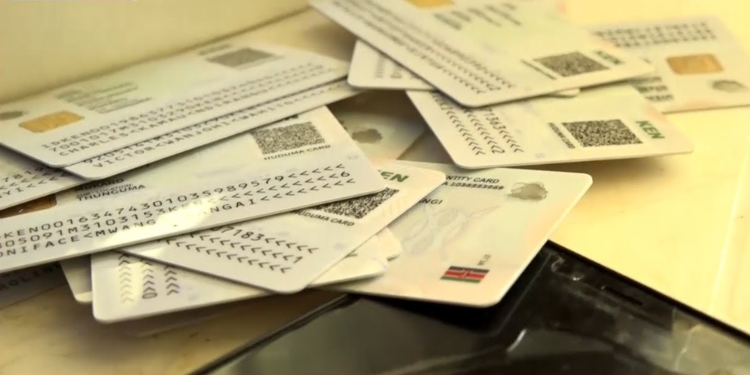
Many Kenyans receiving their new IDs, now called Maisha Cards, are noticing a small metallic chip that resembles a SIM card.
The main concern for many Kenyans is understanding what the chip does and why it has been built into the new digital ID.
The ID was launched on September 29, 2023, under directives from President William Ruto, with the then-Immigration and Citizen Services Principal Secretary, Julius Bitok, leading the rollout.
The government stated that it moved to this system to replace outdated and vulnerable technology.
What the Chip Actually Is
The chip on the new ID is a microprocessor electronic chip built into the third‑generation ID.
It stores encrypted personal information, including the holder’s biometric data, photo image, card serial number, and residential details.
The chip is designed to make the ID difficult to forge, reduce identity crime, and align Kenya with international electronic identification standards.
It is the core of the new ID system.
The chip also supports the Maisha Namba system, which assigns each Kenyan a permanent identification number from birth.
This number connects to school records, NHIF, NSSF, tax registration and other government services.
The chip holds the same identity information, allowing quick and secure verification when the card is used.
Institutions can confirm identity without manual searches or outdated files.
The chip also enables secure digital authentication.
It allows citizens to access online services through verified digital channels, reducing impersonation and tightening identity-based security gaps that have long affected government and financial systems.
Also Read: Explained: Why KRA Cannot Tax Bank Deposits
This is part of the government’s plan to modernize public services and reduce fraud in high-risk platforms, including welfare systems and digital transactions.
The Chip Is Not a SIM Card
Despite its appearance, the chip has no mobile network function. It cannot connect to telecom infrastructure, transmit data, or perform any SIM-related activity.
Its design follows International Civil Aviation Organization (ICAO) standards for modern electronic identification used globally.
The microprocessor stores encrypted data and supports secure verification only, and it has no role in communication, tracking, or telephony.
The old second‑generation IDs used Teslin cards that could not support embedded security features.
According to a government report, the IDs’ production technology was nearly three decades old, which led to a rise in fraud cases because the cards could be easily manipulated.
The move also followed the collapse of the Huduma Namba project, which was halted due to legal and privacy concerns.
Instead of restarting mass biometric registration, the government chose a system that uses existing databases to avoid the challenges that led to the collapse of the previous initiative.
According to the State Department for Immigration and Citizen Services, the embedded microchip has a maximum shelf life of about 10 years, similar to ATM cards and other chip‑based identity documents.
Also Read: IG Kanja Unveils New Command Structure for Police
If the chip is confirmed to be damaged, the holder must apply for a replacement card through the Directorate of Immigration and Citizen Services.
Maisha ID Data Protection & Privacy Safeguards
The government stated that the card does not enable real-time tracking and does not transmit data independently.
It functions as a secure verification tool.
When used, identity confirmation is conducted through approved systems linked to existing government databases.
The Office of the Data Protection Commissioner (ODPC) is mandated to oversee compliance, investigate complaints, and impose penalties for misuse of personal information.
Follow our WhatsApp Channel and X Account for real-time news updates.




The information was more beneficial than any other in the media