It must have its own rupture. It is inevitable. Our political freedoms have proved inadequate without our economic freedom. We can’t live like that anymore. We must build a new political order based on our constitutional economic order statecraft.
Building a strong domestic economy is a consequential imperative. It is a new transactional, fragile, and unpredictable multipolar competitive world order. In such an ambiguous global environment, Kenya must make clear choices.
Countries without a futuristic strategy rooted in preparedness, vigilance, and realism will be left behind. We must see the world as it is emerging. Change is unavoidable.
Old politics of our person, ethnicity, regionalism, and kingpinship are over. It is completely irrelevant.
We are in a world of competition of ideas, visions, and values. A strong national economic resilience and the ability to chart a strategic and pragmatic course are critical.
The Lie We Were Sold, Bottom-up
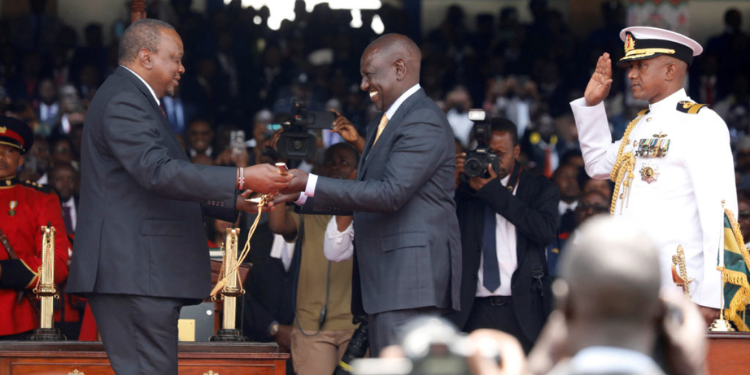
President Ruto never changed the structure of economic system. There was never a hustler bottom-up economy.
He sold a political narrative packaged as a hustler economy (bottom-up). It was a big lie. It was never the case.
Within months of being sworn in, President William Ruto returned to the status quo. What he knew and was comfortable with. He quickly abandoned his political hustler economy narrative.
He returned to establishment politics and the economy, leaving us waiting for bottom-up.
President Ruto has exacerbated the structural problems undermining the economy, such as spiraling public debt, institutional weaknesses, financial system issues, and human capital deficits. He stabilized the macroeconomy but fundamentally failed to address the daily economic realities of the people.
People don’t eat GDP growth numbers.
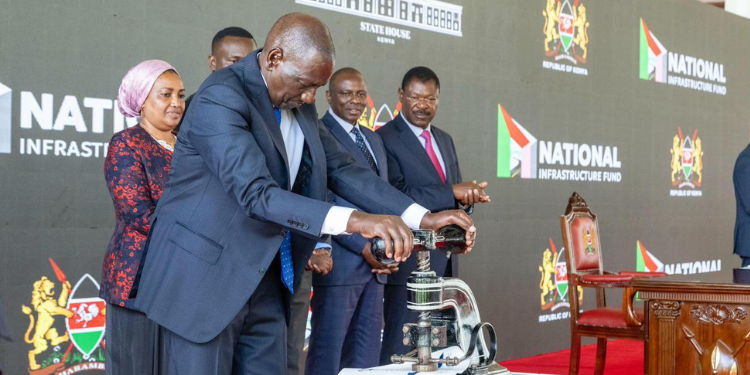
But to politically survive and appear not to have betrayed his hustler political promise, President Ruto has formalized a costly, unsustainable handout economy funded by debt and punitive taxes.
Also Read: Kenyans Among Journalists Rendered Jobless as CNBC East Africa Bureau Shuts Down
Because of his betrayal of hustlers, within one year in office, his campaign-based government (cabinet) could not hold and deliver.
A Vacuum of Order
Secondly, he faced a revolt from his voting base that brought him to power, as well as from young people (Gen Z).
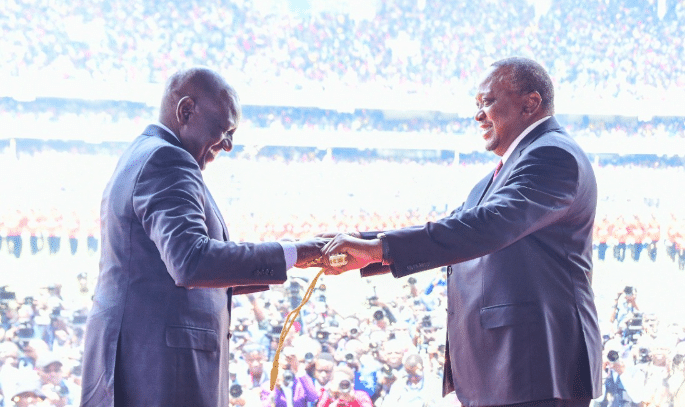
His political narrative of the hustler economy was never a new economic order. It was a political narrative for a new win in an old wine skin. There was never a Bottom-Up economic model. There was continuity in why people told former President Uhuru Kenyatta, “Maliza Uende.”
People of Kenya must elect a legitimate government that fundamentally dismantles and dismembers the Mbeberu (Settler) economy and its pillars of extraction, exploitation, and domination.
People must free the economy by removing the structural chokeholds. People must end an economic system that has existed for the last 120 years.
A new political order must unlock the people’s capabilities, potential, and ingenuity in driving the economy. People must have true economic freedom, not a fake hustler economy.
Later, President Kibaki only shook the Mbeberu economy, and people felt like they had seen economic liberation. But the system held its ground. We must end this dehumanizing economic system.
We must establish a new economic order based on people’s values of entrepreneurship, innovation, and productivity. It is people driving a resilient, competitive economy. The state is the referee, not the player. It creates fair rules and a level playing field for everyone while making sure the essential public goods are provided. People grow it.
The West has admitted that it created a USA-led, international-rules-based economic order hegemony for its own interests. That system is facing rupture. It is over. It is time to establish a new economic system informed by the realities of what the world is today.
Also Read: Will Forgery Claims Stall Division of Karugu’s Multibillion Estate
The era of the Mbeberu economic order is over. We must have a new economic order based on our interest, values and issues.
A Life Earned, Not Given
Kenya has very hardworking, industrious, and entrepreneurial people. They don’t give up easily. They turn turbulence into resilience. Theirs is not just hope and faith. It is faith in action. This is what makes the country remain resilient.
Kenya is a country experiencing economic growth without broad-based transformation. Many Kenyans want a change in direction to a more inclusive and responsive economic growth model.
The growth model, largely state-led, debt-financed, and underpowered by the private sector, must end.
A new economic and fiscal compact model is non-negotiable, driven by the strengths of a debt-free economy, human capital, investment, innovation, and entrepreneurial energy.
To make Kenya an economic crucible of possibilities and infinite opportunities, it will require a leader with vision, the ability to innovate with purpose, and the capacity to grow with equity.
Competitiveness, innovation, entrepreneurialism, and a dynamic, supportive ecosystem must be the fundamental drivers.
People’s economy is possible. It is driven by investment in people, productivity, and enterprise. People have real opportunities to earn, save, and prosper with a credible government enjoying legitimacy and trust.
You can’t grow an economy by taxing the poor. Tax is a consequence of value creation, not extraction.
The linchpin of the people economy principle is human needs, dignity, and choice, emphasizing that the economic system should fundamentally serve people, not the other way around.
It prioritizes essential provisions such as food, housing, health, education, and economic sovereignty for well-being, serving as a bedrock for sustainable and equitable development.
The country must adopt smarter spending and capital allocation with the complete elimination of inefficiencies.
Revenue must be mobilized fairly, with lower taxes and fewer regulatory burdens. The private sector needs stronger empowerment by cutting off government local-market borrowing and reducing credit costs.
Skilled human capital is key. Making education and training more accessible and quality is pivotal.
Finally, energy costs must come down drastically by tackling structural problems such as cartel pricing and capacity constraints.
Investment in the green economy and energy will be pivotal. We must have a strict, clean governance system with stricter rules of law.
The country needs political leadership with foresight, steel, and unchained.
This article was written by Ndung’u Wainaina. The Writer is a Transitional Justice and Human Security Fellow @NdunguWainaina. The views expressed in this opinion piece are the author’s own and do not represent The Kenya Times’ editorial position.
Follow our WhatsApp Channel and X Account for real-time news updates.