Monday, June 1, 2026
  • News
    • Latest News
    • Breaking News
    • Fact Check
    • Investigations
    • Explainers
  • Politics
    • Global Politics
    • Elections
    • Government & Policy
    • Diplomacy
    • Conflicts & Security
    • Political Analysis
  • Business
    • Global Economy
    • Markets
    • Technology
    • Startups
    • Energy
    • Finance
  • World News
    • Americas
    • Asia
    • Asia Pacific
    • Africa
    • Europe
    • Middle East
  • Africa
    • Central Africa
    • East Africa
    • West Africa
    • Southern Africa
  • Health
    • Global Health
    • Public Health
    • Health Policy
    • Medical Research
    • Diseases & Conditions
    • Mental Health
    • Nutrition
    • Climate & Health
    • Health Explainers
  • Sports
    • Athletics
    • Basketball
    • Boxing
    • Cricket
    • Football
    • Formula 1
    • Golf
    • Rugby
  • Weather
    • Climate Business
    • Climate Change
    • Climate Solutions
    • Living Green
  • Culture
    • Arts
    • Film & TV
    • Food
    • Music
    • Lifestyle
    • Travel
  • Opinion
    • Editorials
    • Letters
  • Behind The Brand
REGISTER
LOGIN
No Result
View All Result
The Kenya Times
  • News
    • Latest News
    • Breaking News
    • Fact Check
    • Investigations
    • Explainers
  • Politics
    • Global Politics
    • Elections
    • Government & Policy
    • Diplomacy
    • Conflicts & Security
    • Political Analysis
  • Business
    • Global Economy
    • Markets
    • Technology
    • Startups
    • Energy
    • Finance
  • World News
    • Americas
    • Asia
    • Asia Pacific
    • Africa
    • Europe
    • Middle East
  • Africa
    • Central Africa
    • East Africa
    • West Africa
    • Southern Africa
  • Health
    • Global Health
    • Public Health
    • Health Policy
    • Medical Research
    • Diseases & Conditions
    • Mental Health
    • Nutrition
    • Climate & Health
    • Health Explainers
  • Sports
    • Athletics
    • Basketball
    • Boxing
    • Cricket
    • Football
    • Formula 1
    • Golf
    • Rugby
  • Weather
    • Climate Business
    • Climate Change
    • Climate Solutions
    • Living Green
  • Culture
    • Arts
    • Film & TV
    • Food
    • Music
    • Lifestyle
    • Travel
  • Opinion
    • Editorials
    • Letters
  • Behind The Brand
  • News
    • Latest News
    • Breaking News
    • Fact Check
    • Investigations
    • Explainers
  • Politics
    • Global Politics
    • Elections
    • Government & Policy
    • Diplomacy
    • Conflicts & Security
    • Political Analysis
  • Business
    • Global Economy
    • Markets
    • Technology
    • Startups
    • Energy
    • Finance
  • World News
    • Americas
    • Asia
    • Asia Pacific
    • Africa
    • Europe
    • Middle East
  • Africa
    • Central Africa
    • East Africa
    • West Africa
    • Southern Africa
  • Health
    • Global Health
    • Public Health
    • Health Policy
    • Medical Research
    • Diseases & Conditions
    • Mental Health
    • Nutrition
    • Climate & Health
    • Health Explainers
  • Sports
    • Athletics
    • Basketball
    • Boxing
    • Cricket
    • Football
    • Formula 1
    • Golf
    • Rugby
  • Weather
    • Climate Business
    • Climate Change
    • Climate Solutions
    • Living Green
  • Culture
    • Arts
    • Film & TV
    • Food
    • Music
    • Lifestyle
    • Travel
  • Opinion
    • Editorials
    • Letters
  • Behind The Brand
No Result
View All Result
The Kenya Times ~ Trending, Breaking News and Videos
No Result
View All Result
ADVERTISEMENT

Kenya’s Former President Daniel Arap Moi Mastered the Art of Silencing Critics

Why His Tactics Wouldn’t Work Today

Gabrielle LynchbyGabrielle Lynch
July 28, 2024
Reading Time: 9 mins read
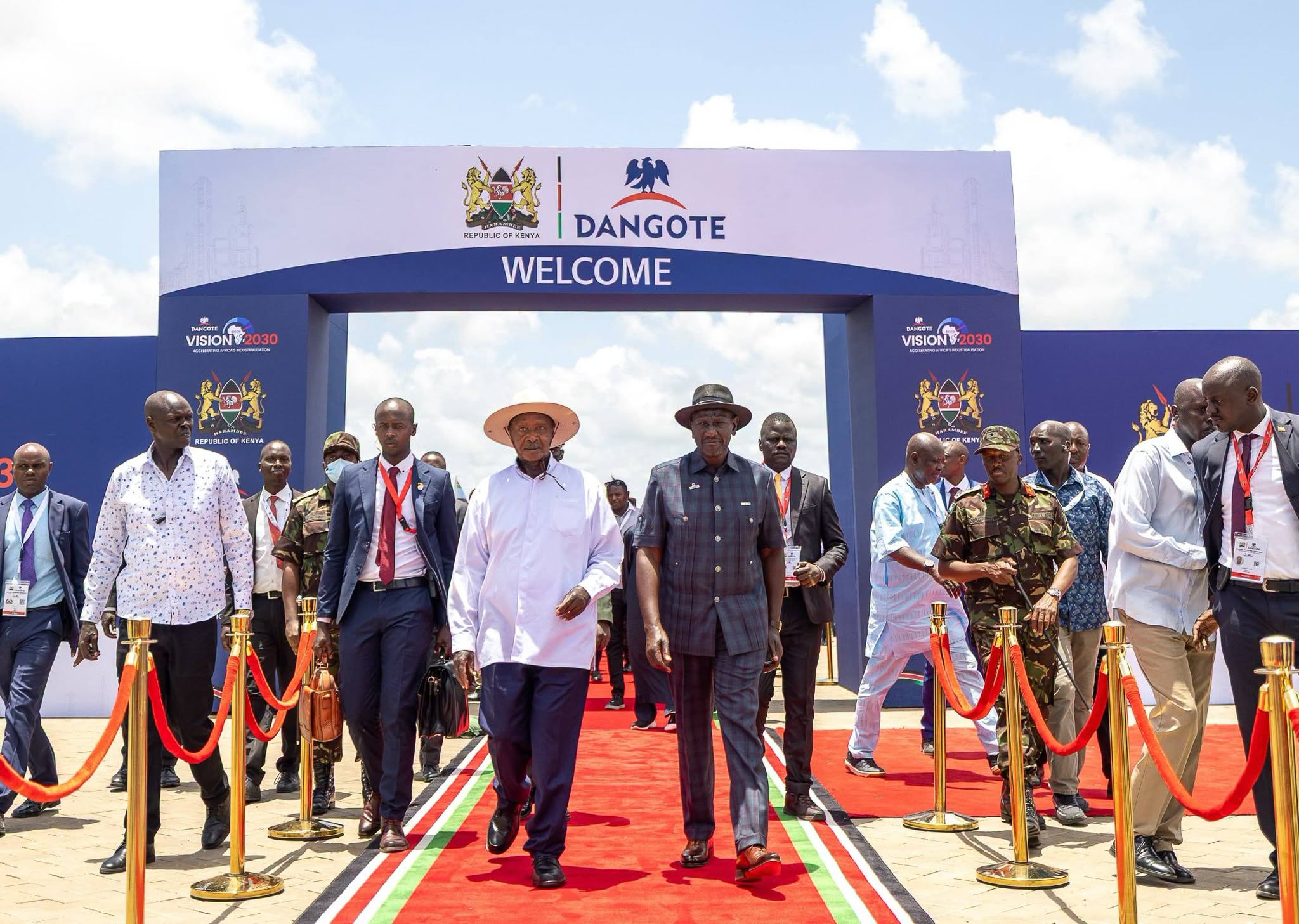
Kenya’s President William Ruto During His Campaign In 2022. Ed Ram/Getty Images

Kenya’s President William Ruto during his campaign in 2022. Ed Ram/Getty Images

FacebookTwitterLinkedInRedditWhatsApp
Advertisement

Countrywide protests, police killings, mass arrests and calls for the president to stand down. This is Kenya in 2024 – and, for many, it’s evoking memories of another era: the 24-year-rule of Daniel arap Moi.

However, Kenya is a very different country today with a new constitution, an array of institutional reforms and a freer media environment. This means that Moi-era strategies are no longer available to, or will no longer work for, Kenya’s current president, William Ruto.

During his presidency, which lasted from 1978 to 2002, Moi ruled with an iron fist. His obsession with control and loyalty, or at least subservience, presented a substantive shift from his predecessor, Jomo Kenyatta, Kenya’s first post-independence president.

It might be tempting to think that Moi’s 24-year rule – and the fact that it took 12 years for Kenyans to publicly demand an end to the one-party state during this time – reflected a lack of opposition.

I am a political scientist who has studied Kenya’s democratic transition for over 20 years. My research over this period, and particularly for my book I Say to You: Ethnic Politics and the Kalenjin of Kenya, illustrates that Moi’s longevity instead reflects effective strategies of repression and control.

Silencing dissent

Moi came to power in August 1978 after Kenyatta died. He promised to follow in his predecessor’s footsteps under the slogan “nyayo” (Swahili for footsteps).

This rhetoric found immediate demonstration in the retention of incumbent ministers. But Moi quickly showed his true colors, with nyayo reinterpreted as an official dictate to follow the president.


Also Read: U.S Breaks Silence on Uganda Protests After Museveni Threats


Only a year after he came into office on 7 October 1979, university students demonstrated against the government’s decision to bar two prominent politicians from standing for parliamentary seats in the forthcoming election. Oginga Odinga and Achieng Oneko had a reputation for criticizing Kenyatta. The year after this, the Nairobi University Students’ Organization was banned.

The University Academic Staff Union and Kenya Civil Servants Union were deregistered. Ethnic associations were directed to wind up their affairs.

In 1982, after Odinga announced plans to form a new political party, a constitutional amendment was rushed through parliament. It legally rendered Kenya a one-party state.

Presidential interference reached new heights following an attempted coup d’état by rank-and-file members of the Kenya Air Force on 1 August. Although the coup was quickly quelled, the delayed response of the army and police revealed the dubious loyalty of their respective high commands. Student demonstrations in support of the attempted coup further exposed Moi’s insecure position.

Subsequently, the president’s predilection for personal control morphed into an obsession. He became hostile to criticism, dissent and opposition of any kind. He was increasingly reliant on loyal lieutenants. Known opposition politicians were arrested and student activism was delegitimized. Suppression of the media was accompanied by an increase in mass arrests, illegal detentions and state torture.


Also Read: Kenyan Police and Protests: Researchers on a Violent, Corrupt Security Force That’s Beyond Reform


Moi also revived the ruling party, the Kenya African National Union (KANU). He added it to a growing arsenal of instruments of control. These included the provincial administration, intelligence and security forces, and local power brokers. He also developed an increasingly personalized system of patronage driven largely by presidential directives, appointments and “generous” donations to harambees (public fundraisers) around the country.

In 1988, a significant increase in blatant rigging was witnessed during the country’s “queue voting” elections. In an important sense, this election marked the beginning of the end for Kenya’s one-party state.

Rigging added to popular disillusionment with the Moi order. The removal of prominent politicians – such as Charles Rubia and Martin Shikuku – marginalized wealthy and popular elites who later came to help spearhead the pro-reform movement.

Public political spaces were squeezed and monitored as frustrations and grievances with Moi’s regime grew. To express their dissent, people turned to music and the pulpit. But even these platforms attracted state reprisals.

In May 1990, Rubia and ex-minister Kenneth Matiba launched a major campaign for the restoration of multiparty democracy. They were detained two days before a planned pro-democracy rally on 7 July. The demonstrations went ahead anyway, resulting in the infamous Saba Saba (saba is Swahili for seven) demonstrations that raged for three days in Nairobi and major towns in Central and Nyanza provinces.


Also Read: Can Kenyans Use a Referendum to Remove Ruto & Gachagua from Office – Expert Explains


In the face of the repression of these popular demands for reform – and with the collapse of the Cold War and a wave of democratization in eastern Europe – donors announced the suspension of US$350 million of rapidly dispensable aid in November 1991.

Weeks later, Moi informed a KANU delegates conference that there was no alternative but to confront multiparty competition. A constitutional amendment was rushed through parliament the following week.

A mix of state repression and violence, electoral manipulation, and massive state expenditure was then used to ensure that Moi and KANU won the 1992 and 1997 elections. Moi was reelected with 36% and 40% of the popular vote in 1992 and 1997 respectively, against a divided opposition.

A different country

Kenya today shows some worrying similarities to this past – from police shootings and mass arrests to Ruto’s efforts to blame “outside forces” for the mass protests.

The country is a very different place, however.

For one thing, the constitution, adopted in 2010, safeguards the people’s right to protest and has provided for a more independent judiciary. The youth have focused their ire on a wealthy and corrupt political elite, and can mobilize and share information much more easily.

In this context, many of the old tactics that rely on a partially reformed security sector are backfiring.

Cases of police shootings and abductions have enraged Kenyans. Efforts by the regime to reach out to vocal voices in the protest movement have been rejected.

Ruto continues to make important concessions – from shelving the widely unpopular finance bill that sought to introduce new taxes to making changes to his cabinet. However, he will have to think more innovatively about how to address the country’s economic troubles and his crisis of legitimacy if he’s to address the protest movement. Since June 2024, the protests have led to the loss of life and destruction of property, taking a toll on the economy and creating a serious crisis for his regime.

Kenya has changed. Ruto will need to recognize this if he is to survive his first term.The Conversation

Gabrielle Lynch, Professor of Comparative Politics, University of Warwick

This article is republished from The Conversation under a Creative Commons license. Read the original article.
Gabrielle Lynch

Gabrielle Lynch

Gabrielle studied at the University of Oxford for a BA in Politics, Philosophy and Economics, an MPhil in Politics, and a DPhil in Politics. She joined the department in 2011 after holding posts at Newcastle University, Keele University, and the University of Leeds. Research interests Dr Gabrielle Lynch’s research interests lie in understanding the nature and political salience of ethnic identities, politics of being indigenous, causes of inter-communal violence, impact and utility of reconciliation and transitional justice mechanisms, and elections and democratisation. Her research to date has focused on Kenya, and between January 2011 and January 2013 she undertook a three-year project on ‘Truth and Justice: The search for peace and stability in modern Kenya’, which was funded through an ESRC first grant. Together with Nic Cheeseman (University of Oxford) and Justin Willis (University of Durham), Gabrielle was then awarded two further ESRC grants – an ESRC Knowledge Exhange Grant (2013-2014) to work with the UK’s Foreign and Commonwealth Office on contemporary Kenyan politics, and an ESRC Standard Grant (2012-2017) to conduct a comparative study on elections in Kenya, Uganda, and Ghana. Gabrielle is an elected member of council for the African Studies Association of the UK (ASA-UK) and the British Institute in Eastern Africa (BIEA). Gabrielle is also the chair of the editorial working group of the Review of African Political Economy, and writes a twice monthly column for the Saturday Nation (the Saturday edition of Kenya's leading national newspaper). You can follow Gabrielle on twitter @GabrielleLynch6. Teaching and Supervision Gabrielle is on research leave in 2016/17. She is interested in supervising PhDs in a range of comparative and African politics fields.

Related Posts

Treasury Invites Applications For Board Recruitment Across 39 State-Owned Enterprises

Opinion | How New Taxes on Bank Card Transactions Charges Will Raise the Costs for Ordinary Kenyans if Adopted by Parliament

June 1, 2026
Artificial Intelligence Esther Muoria Is A Seasoned Manager And Phd Holder Appointed By President William Ruto As The Tvet Principal Secretary.

Opinion | AI Mistakes That Could Destroy Kenya’s Future — Global Lessons Every Leader, Business and Citizen Must See Now

May 31, 2026
Health Cs Aden Duale Denies Claims Sha Will Shut Down. Ebola Storm Rages On

Opinion | Kenya Should Think Before Rejecting the Laikipia Ebola Facility

May 31, 2026
Low Wages Squeeze Kenyans As As Computer Misuse And Cybercrimes Act Establishes Penalties For Unauthorized Access To Computer Systems, As Well The Legal Cybersecurity Practices.

Opinion | Why Wage Increases Won’t Fix What’s Broken in Kenya’s Economy

May 29, 2026
ADVERTISEMENT

The Kenya Times Facebook

LATEST ARTICLES

  • Doctors Question Transparency of Trump’s Heart Test Results
  • Corazone Aquino: Kenyan Star Named After Philippines’ Former President
  • KMA Reveals How to Know Licensed Doctors After Deadly Kitale Surgery
  • Iran Ends All Negotiations With US, Vows to “Completely” Block the Strait of Hormuz
  • Wise vs Remitly vs Western Union: Best International Transfer in 2026
  • KDF Soldiers Take Charge as Protests Erupt in Nanyuki Over Ebola Quarantine Facility
  • End of an Era as Paris Lounge & Grill Rebrands, Kentwood Address Undergoes Renovation
  • Benny McCarthy Makes Changes to Harambee Stars Squad Days After Unveiling 24 Players
  • Ruto Delivers Weighty Apology During Madaraka Day Speech [FULL TEXT SPEECH]
  • Njeri Maina Explains Why President Ruto Can’t Be Impeached
  • Plane Crashes in Maasai Mara
  • How “And” Lost to “Or” in the Finance Bill 2026
  • Opinion | How New Taxes on Bank Card Transactions Charges Will Raise the Costs for Ordinary Kenyans if Adopted by Parliament
  • IEBC Releases Strict Guidelines for Ballot Box Mix-ups Ahead of Next Polls
  • Governor Nyong’o Announces Major Transfer of Functions Including Staff Restructuring
ADVERTISEMENT

Company

About Us

Our Authors

Our Experts

Social Media

Policies

Privacy Policy

House Rules

Standards and Policies

Terms and Conditions

Subscription

My Account

Contact Us

Contact Us

Join Our Team

Advertise With Us

© Copyright 2026 | The Kenya Times | All Rights Reserved

Welcome Back!

Sign In with Facebook
Sign In with Google
Sign In with Linked In
OR

Login to your account below

Forgotten Password? Sign Up

Create New Account!

Sign Up with Facebook
Sign Up with Google
Sign Up with Linked In
OR

Fill the forms below to register

All fields are required. Log In

Retrieve your password

Please enter your username or email address to reset your password.

Log In
Your Privacy and Cookies
We use cookies on our website to give you the most relevant experience by remembering your preferences and repeat visits. By clicking “Accept”, you consent to the use of ALL the cookies.
Do not sell my personal information.
Cookie settingsACCEPT
Privacy & Cookies Policy

Privacy Overview

This website uses cookies to improve your experience while you navigate through the website. Out of these cookies, the cookies that are categorized as necessary are stored on your browser as they are essential for the working of basic functionalities of the website. We also use third-party cookies that help us analyze and understand how you use this website. These cookies will be stored in your browser only with your consent. You also have the option to opt-out of these cookies. But opting out of some of these cookies may have an effect on your browsing experience.
Necessary
Always Enabled
Necessary cookies are absolutely essential for the website to function properly. This category only includes cookies that ensures basic functionalities and security features of the website. These cookies do not store any personal information.
Functional
Functional cookies help to perform certain functionalities like sharing the content of the website on social media platforms, collect feedbacks, and other third-party features.
Performance
Performance cookies are used to understand and analyze the key performance indexes of the website which helps in delivering a better user experience for the visitors.
Analytics
Analytical cookies are used to understand how visitors interact with the website. These cookies help provide information on metrics the number of visitors, bounce rate, traffic source, etc.
Advertisement
Advertisement cookies are used to provide visitors with relevant ads and marketing campaigns. These cookies track visitors across websites and collect information to provide customized ads.
Others
Other uncategorized cookies are those that are being analyzed and have not been classified into a category as yet.
SAVE & ACCEPT
LOGIN | REGISTER
  • Login
  • Sign Up
  • Cart
No Result
View All Result
  • News
    • Latest News
    • Breaking News
    • Investigations
    • Explainers
    • Fact Check
  • Politics
    • Global Politics
    • Conflicts & Security
    • Elections
    • Diplomacy
    • Government & Policy
    • Political Analysis
  • Business
    • Global Economy
    • Markets
    • Technology
    • Startups
    • Energy
    • Finance
  • World News
    • Americas
    • Asia
    • Asia Pacific
    • Africa
    • Europe
    • Middle East
  • Africa
    • East Africa
    • West Africa
    • Southern Africa
    • Central Africa
  • Health
    • Global Health
    • Public Health
    • Health Policy
    • Medical Research
    • Diseases & Conditions
    • Mental Health
    • Nutrition
    • Climate & Health
    • Health Explainers
  • Sports
    • Athletics
    • Basketball
    • Boxing
    • Cricket
    • Football
    • Formula 1
    • Golf
    • Rugby
  • Weather
    • Climate Business
    • Climate Change
    • Climate Solutions
    • Living Green
  • Culture
    • Arts
    • Film & TV
    • Food
    • Lifestyle
    • Music
    • Travel
  • Opinion
    • Editorials
    • Letters
  • Behind The Brand
  • Contact Us

Not enough quota to unlock this post
Unlock left : 0
Are you sure want to cancel subscription?